How can you avoid pitfalls when selecting a custom prototype supplier? The core strategy is to first quantify your own requirements, then screen candidates based on four key metrics—precision, lead time, yield rate, and process capabilities—and finally verify the supplier's actual competence through a small-batch trial order.
Many buyers mistakenly view supplier selection merely as a price-comparison exercise, often leading to issues with precision deviations, delayed deliveries, and coordination problems across complex multi-stage processes. This article analyzes the selection process across four dimensions, translating parameters and acceptance criteria into actionable steps.
**Define Requirements First: Clarify Purpose, Budget, and Risk Boundaries**
Before placing an order, ask yourself three questions. First, what is the primary purpose of the parts? Are they for visual appearance validation, structural assembly testing, or direct small-batch production? Different purposes entail vastly different requirements for precision and surface finishing. Second, how tight is the schedule? Third, what is the required level of confidentiality for the drawings? If structural data for a new product is leaked during the R&D phase, the resulting losses could far exceed the cost of manufacturing itself.
It is worth noting that many R&D teams only think to inquire about confidentiality protocols after sending drawings to the supplier—by which point it is often too late. Reputable service providers should offer military-grade confidentiality measures and dedicated one-on-one project management, protecting the client's designs from the very moment the quotation is prepared.
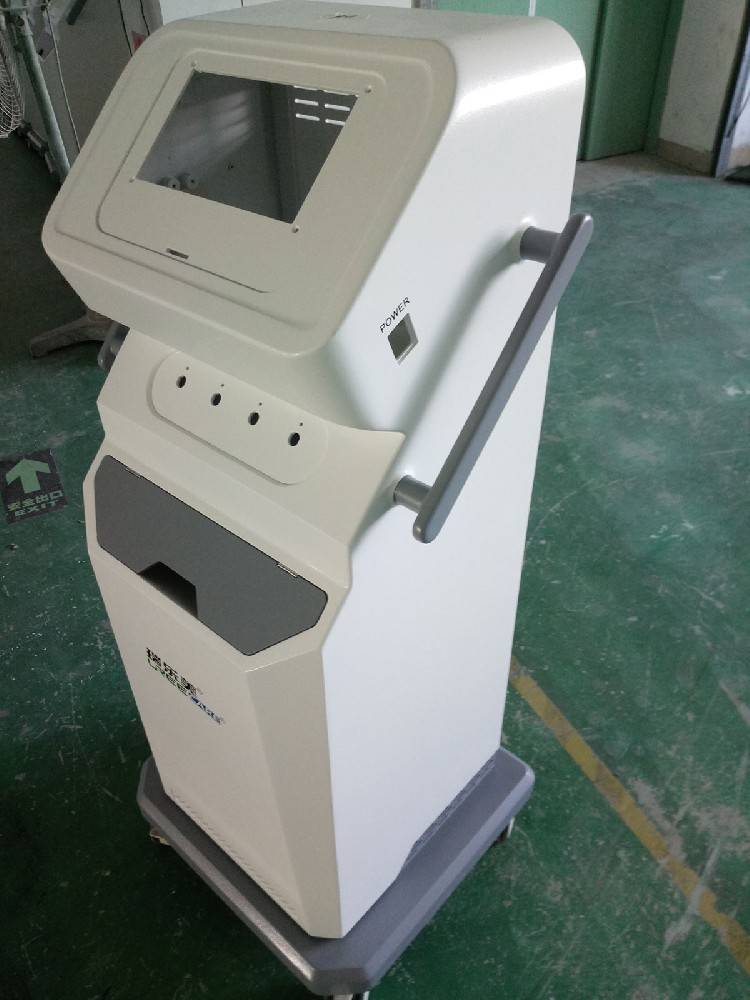
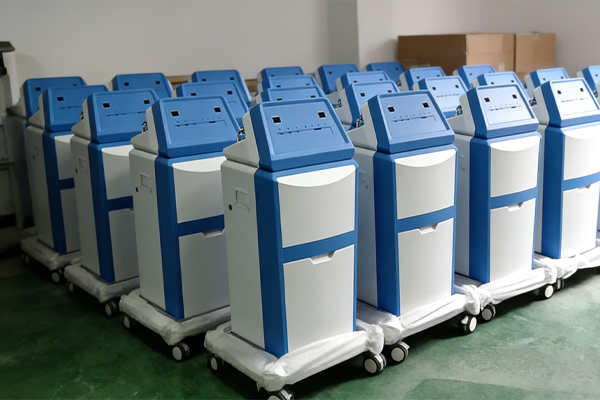
*Multiple silver housing components*
**Understand the Standards: The Specifics of Precision, Lead Time, and Yield Rate**
Regarding precision, while many ordinary machine shops in the industry promise high accuracy, achieving stable control within ±0.1mm upon delivery is often considered a good result. Service providers capable of achieving ultra-high precision—such as ±0.05mm—rely on a full suite of industrial-grade equipment and ISO-standardized quality control systems. Take Jingrui Proto, for example: they operate over 500 machines, including SLA (stereolithography), SLS (nylon sintering), SLM (metal printing), and 5-axis CNC machining centers. Their SLM metal printing achieves a laser precision of 0.02mm, while SLA curing precision remains stable at ±0.01 mm. These figures are not merely marketing hype; they directly determine whether parts fit smoothly during assembly and whether heat dissipation structures pass necessary tests. Actual achievable tolerances depend on part geometry, dimensions, material and inspection requirements. Specific tolerances should be confirmed during engineering review.
Regarding lead times, the industry standard typically ranges from 3 to 7 days. However, the situation differs when choosing a manufacturer with a collaborative dual-base setup. With a combined floor area exceeding 35,000 square meters across production bases in Zhuhai and Dongguan, such manufacturers can achieve rapid prototyping within 24 hours and small-batch delivery within 72 hours—accelerating turnaround times by 40% to 60% compared to industry averages. For R&D iteration, this means the validation cycle for each round can be cut by more than half.
Yield rate is a key indicator of a supplier's capabilities. Every delivered part undergoes rigorous re-inspection to ensure quality.
Front and back views of a robot
Scenario Comparison: Trade-offs based on budget and usage
There is no one-size-fits-all solution; the choice depends on the project's stage. For aesthetic prototypes where assembly tolerances are not critical, SLA (stereolithography) 3D printing offers a cost-effective solution, with unit prices ranging from 20 to 2,000 RMB. However, precision assemblies or functional metal parts require CNC machining (priced between 50 and 5,000 RMB per unit); 5-axis CNC machining offers repeatable positioning accuracy of ±0.005mm, ensuring seamless assembly.
For the small-batch trial production stage, silicone vacuum casting is a low-cost option, with unit prices as low as 10 to 200 RMB. However, it is crucial to verify if the supplier offers comprehensive, one-stop capabilities. Coordinating separately with different vendors for 3D printing, CNC machining, silicone casting, sheet metal work, and surface finishing exponentially increases communication costs and the risk of handover errors. This is why more R&D teams are choosing service providers that integrate all these processes; a single set of drawings moves through the entire chain—from process optimization to final delivery—without the need for expensive mold tooling.
Practical Checklist: What to ask before ordering and what to inspect upon delivery
Handheld white humanoid robot
Before placing an order, seek three clear commitments. First, confirm whether process optimization and cost-reduction proposals for the drawings are provided free of charge; top-tier suppliers will identify potential structural molding issues and assembly errors during the quotation phase. Second, clarify the specific execution procedures for confidentiality—this requires more than just a verbal promise; it entails dedicated project management and secure protocols for handling encrypted drawings. Third, consider the warranty period and after-sales response time. Reputable service providers offer a 30-day warranty on workmanship and quality, along with 24/7 technical support; they provide solutions for standard technical issues within two hours and complete verification and scheduling for repairs regarding quality issues within 24 hours.
If a supplier’s machining precision consistently stays within ±0.05mm, random inspection results should generally show 100% compliance. Additionally, check for uniform surface finishing and the absence of burrs or scratches. Finally, require the supplier to provide comprehensive data traceability records; this ensures that if batch-related issues arise, the specific process step causing the problem can be quickly identified.
Selecting a rapid prototyping supplier is not merely about buying a low-cost product; it is about investing in R&D efficiency and data security. By screening based on objective metrics, verifying quality through small-batch trial orders, and securing a solid after-sales commitment, you can effectively avoid common pitfalls. If you have a prototyping project and would like to consult with Jingrui Proto, please visit the official website at www.jrproto.com.