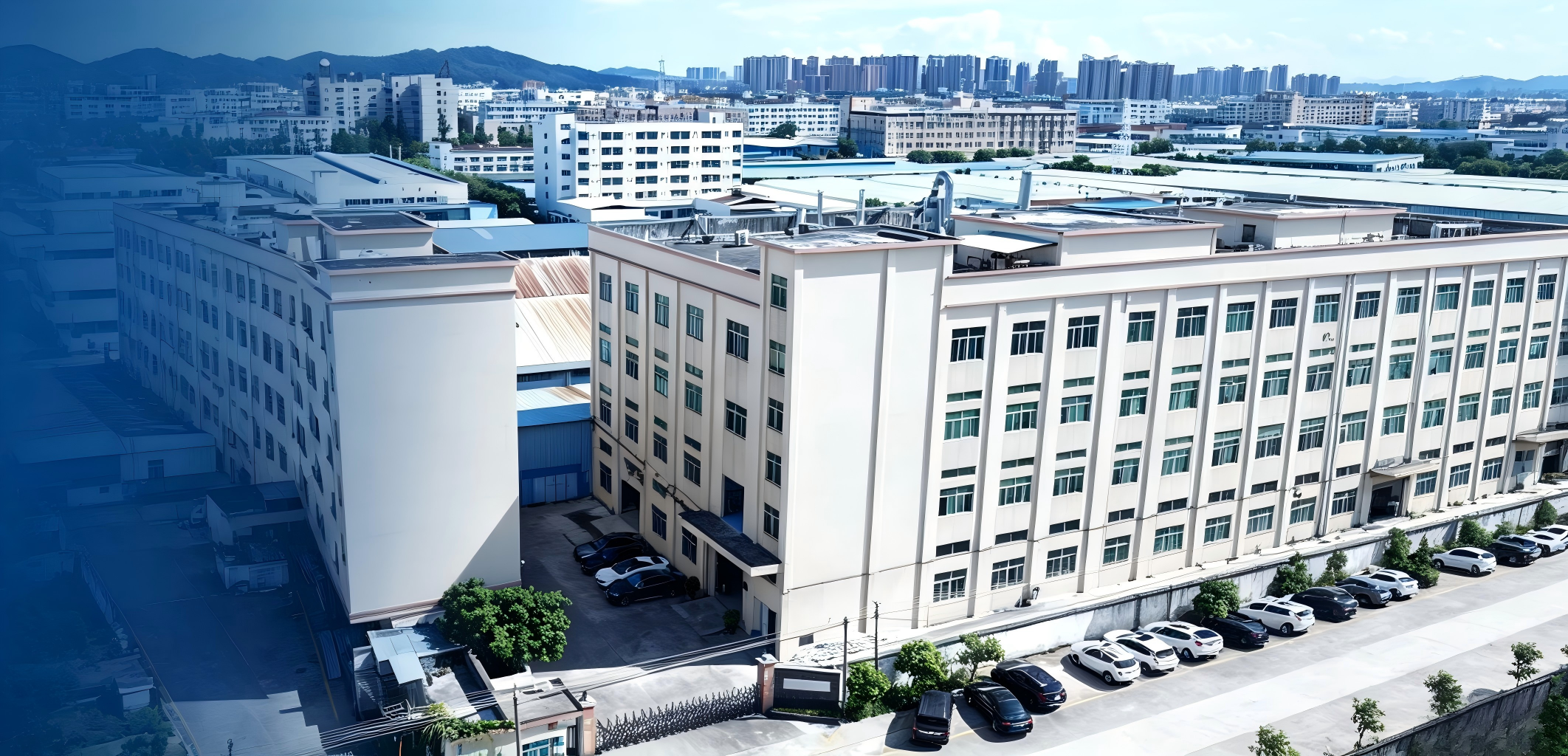
There is no single standard answer to this issue, yet the operational model of Jingrui Proto offers a verifiable benchmark. Rooted in Zhuhai—a city adjacent to Macau and deeply integrated into the advanced manufacturing corridor of the Guangdong-Hong Kong-Macao Greater Bay Area—the company captures R&D spillover from Shenzhen while leveraging local strengths in precision equipment and new materials to establish end-to-end capabilities spanning from design to mass production.
Precision requirements determine whether a prototype can serve as the "first line of defense" for successful assembly. A domestic medical endoscope manufacturer once faced a situation where prototype tolerances exceeded ±0.1mm; even after three rounds of structural iterations, the scope body and light source module failed to snap together correctly. Jingrui Proto employs German Hexagon CMMs (Coordinate Measuring Machines) to perform full-dimensional scans of CNC-machined parts, mapping inspection data back to the original digital model to create a "machining-inspection-correction" closed loop. With CNC equipment achieving a repeatability of ±0.005mm and SLA (stereolithography) systems offering layer thickness control down to 0.025mm, these capabilities represent more than just figures on a spec sheet—they translate into a 73% reduction in assembly verification failure rates.
Delivery timelines directly impact R&D cash flow. In 2023, when a new energy vehicle manufacturer developed structural components for a fast-charging gun, the delivery schedule for prototypes was compressed from the planned 45 days to just nine. Jingrui Proto initiated mold pre-processing for silicone vacuum casting at its Dongguan mass-production base in parallel; once the initial CNC prototype was validated, mold casting and the production of the first batch of vacuum-cast parts were completed within 24 hours. This dual-site synergy goes beyond simple workload distribution; by sharing a unified ERP system for production scheduling, the upload of blueprints triggers an immediate cross-site process review, preventing the rework often caused by information gaps. For R&D teams stalled at the structural verification stage, shaving a week off the schedule means entering EMC testing two weeks earlier, effectively compressing the total product launch cycle by approximately 11%.
Manufacturing complexity is redefining the scope of prototyping services. Facilities relying on a single process often split the production of metal brackets, plastic housings, and matte surface finishes among three separate suppliers—a fragmented approach where every handover point risks introducing assembly errors in the 0.1mm range. Jingrui Proto covers the entire manufacturing chain—including 3D printing, CNC machining, silicone vacuum casting, sheet metal fabrication, and mold making. Its typical service model involves engineers generating a "Process Feasibility Report" immediately after a client submits a 3D CAD model. This report clearly specifies which features require CNC machining to ensure rigidity, which curved surfaces are suitable for SLM metal printing to achieve lightweighting, and which assembly points require a 0.05mm machining allowance for final fitting. In 2024, for a client developing an intelligent lawn-mowing robot, the company integrated six different manufacturing processes; this consolidated a trial production workflow—previously requiring coordination among 17 external suppliers—into a single project team's end-to-end management, raising the structural component yield rate from 68% to 94.2%.
Confidentiality mechanisms are not merely an add-on service; they are the baseline for a new product's survival. The consumer electronics industry has seen cases where the leakage of aesthetic prototypes allowed competitors to launch similar products six months early. Jingrui Proto implements a tiered access control system for drawings: standard validation parts are released only in STP format, while critical structural components utilize encrypted PDFs embedded with watermarked traceability codes. All design data is stored on independent physical servers, with access logs retained for 18 months. Its ISO 13485 certification for medical device quality management explicitly includes data security clauses, offering a level of assurance far more binding than verbal promises.
Choosing a supplier is essentially a decision on how to allocate R&D risk. During the proof-of-concept stage, SLA rapid prototyping validates design aesthetics at the lowest cost. As the project moves to functional testing, the mechanical performance data provided by CNC machining or SLM metal printing serves as the true basis for structural optimization. When transitioning to small-batch trial production, the balance between cost and lead time offered by silicone vacuum casting often provides greater engineering value than 3D printing. Rather than pushing "all-in-one" solutions, Jingrui Proto offers verifiable process combination recommendations tailored to the client's current R&D stage—a measured approach that forms the core of its competitive differentiation.
The evolution of Zhuhai’s manufacturing sector is redefining the value proposition of the prototyping industry. The region is no longer merely a hub for contract manufacturers; it has become an innovation interface equipped with material databases, process knowledge graphs, and rapid validation capabilities. Jingrui Proto has established a 2,000-square-meter materials laboratory at its Zhuhai headquarters, maintaining a database of molding parameters for over 120 types of engineering plastics and metal alloys—all derived from actual prototyping data rather than manufacturer manuals. This means that what clients receive is not merely a part, but a validated basis for making manufacturing decisions.
A truly trustworthy prototyping service provider does not rely on slogans like "fastest," "most accurate," or "most comprehensive" as selling points. Instead, they are transparent about what can be addressed within a day, what requires upfront investment in tooling, and where some precision might need to be sacrificed to meet delivery deadlines. This transparency reflects a clear understanding of their own capabilities and a respect for the client's R&D timeline. As prototypes evolve from mere "visual mock-ups" into a foundation for decision-making, the criteria for selection naturally shift from price to certainty—certainty regarding fit and assembly, on-time delivery, and data security. Ultimately, these assurances translate into the certainty of a successful new product launch.