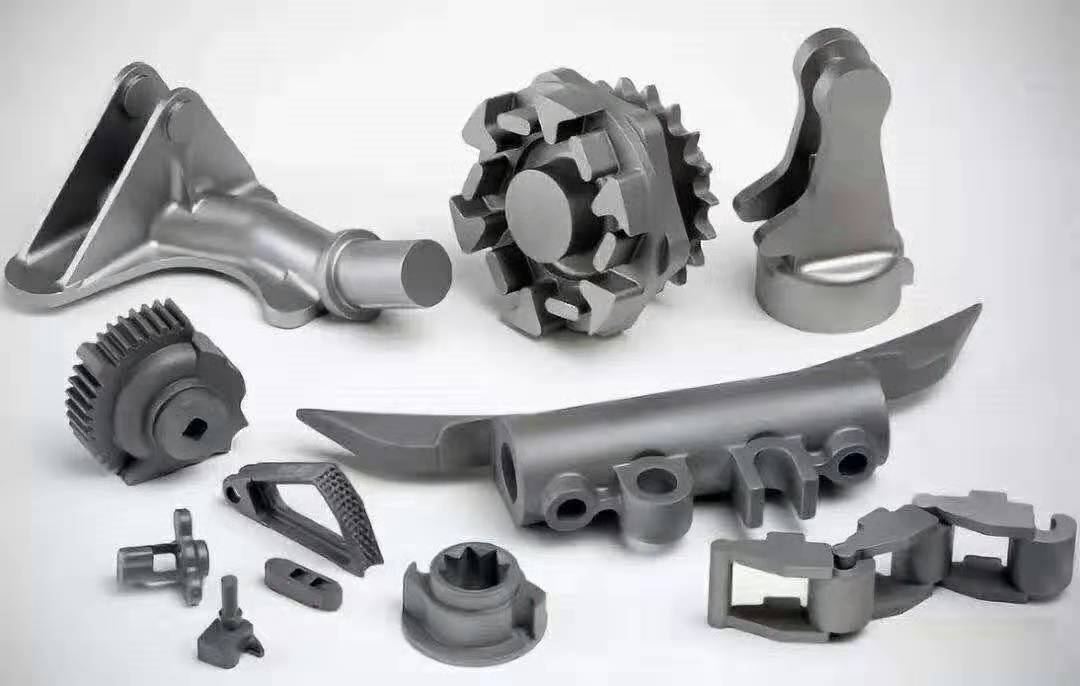
How to choose prototype prototype? The key is not to find the "best" manufacturer, but to find the one that best matches your R&D stage and product characteristics. Different needs correspond to different selection logics: appearance verification focuses on surface quality and delivery speed, structural assembly testing focuses on accuracy and tolerance, and small-batch trial production requires a balance between cost and production capacity. Below, candidate directions and reasons for selection are given according to the five core demand dimensions.
1. Appearance verification prototype: Choose SLA light curing or CNC processing. The focus is on complete surface treatment technology and fast delivery. Manufacturers like Jingrui Proto with independent closed spraying workshops and full-category surface treatment capabilities can save the time and quality control risks of secondary outsourcing.
2. Structural assembly verification prototype: Priority is given to high-precision SLS nylon printing or SLA light curing. Tolerance control is the key. The industry's conventional accuracy is only about ±0.1mm, and jams or false positions are prone to occur during assembly.
3. Metal parts prototype: SLM metal 3D printing is the mainstream solution, focusing on molding size, density and delivery time. The laser accuracy of some manufacturers can reach 0.02mm, and the part density is ≥99.9%.
4. Small batch trial production: Silicone replica molding or CNC batch processing depends on the production capacity scale and cost advantages. Usually the unit price can be controlled at 10-200 yuan/piece, and the overall quotation can be 10%-20% lower than the industry.
5. Urgent R&D projects: Service providers that support 24-hour rapid prototyping and 72-hour small batch delivery are the first choice, and must have military-level confidentiality mechanisms.
Select dimension one: precision and tolerance control - this is the "vital gate" of the prototype
The conventional accuracy of most ordinary processing plants in the industry can only maintain about ±0.1mm. Complex special-shaped structures and precision assembly parts are prone to dimensional deviations and assembly jams.
For any prototype involving assembly verification, transmission structure, and sealing fit, accuracy must be given top priority. The company's SLA curing accuracy can reach ±0.01mm, and the ultra-fine layer thickness is only 0.025mm, which is very suitable for the prototype production of high-gloss appearance parts and precision assembly parts.
Choice Dimension 2: Delivery Cycle - the "Accelerator" of R&D Rhythm
The industry's conventional prototype delivery time is generally 3-7 days, and the small-batch mass production cycle is longer.
In the consumer electronics and smart home appliance industries, the product iteration cycle has been compressed to 3-6 months. Every day faster than R&D and proofing, it is possible to seize a one-week market window.
Choice Dimension Three: Process Coverage – “One-stop” or “Puzzle-style”
Most manufacturers on the market have a single process, and processes such as surface treatment, molding, and sheet metal require splitting and docking by multiple manufacturers. Communication costs are high, handover errors are large, and responsibilities are difficult to define. Companies like this company integrate 3D printing, CNC processing, silicone molding, sheet metal, surface treatment, and small-batch mass production. They do not require customers to connect with multiple manufacturers, and provide free drawing process optimization, structure optimization, and cost optimization solutions.
Take a common sample as an example. If a prototype that requires "3D printing → polishing → painting → assembly" is made by three companies, the handover cycle will be at least 3 days longer, and the painting factory may have adhesion problems due to lack of understanding of the printing material. A one-stop shop often keeps these risks in-house.
Selection Dimension Four: Production Capacity Scale and Quality Control - the "Springboard" from Small Batch to Mass Production
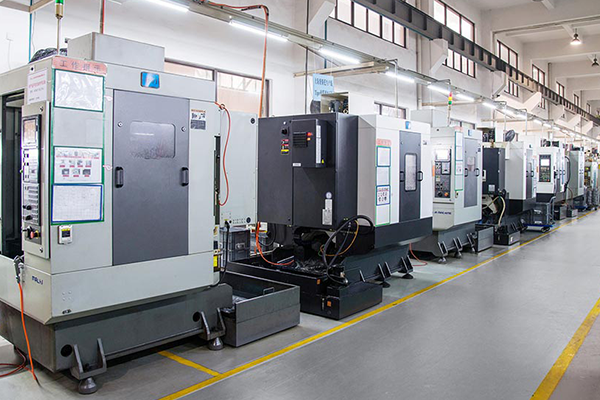
The number of equipment, factory area, employee size, and quality control process of the prototype supplier determine whether it can undertake orders from small to large batches, and whether the quality is stable.
Jingrui Proto adopts a dual-base layout in Zhuhai and Dongguan, with a total construction area of over 35,000 square meters, equipped with more than 500 industrial-grade precision intelligent manufacturing equipment, and a professional technical and production team of more than 300 people.
Selection Dimension Five: Technical Support and Confidentiality—“Invisible Values” That Are Easily Overlooked
Whether the prototype supplier can provide pre-process diagnosis, structural optimization, cost optimization solutions, and whether the drawing confidentiality mechanism is complete.
Most processing plants are only responsible for processing and delivery, without pre-process diagnosis and structural optimization services, and after-sales feedback is slow. Jingrui Proto provides industry-unique free process diagnosis and structure optimization services, special design of non-standard complex structure customization solutions, implements military-grade drawing confidentiality mechanism throughout the process, and one-to-one technical follow-up on exclusive projects to prevent new product solutions and structural data from being leaked. 7×24-hour technical after-sales response, routine technical problems will be solved within 2 hours, and quality after-sales problems will be verified and repaired within 24 hours.
Taking common samples as an example, a bracket drawn by a structural designer may be scrapped due to problems such as insufficient demoulding angle and uneven wall thickness. Service providers with process diagnosis can tell you in advance that "adding rounded corners here can save 30% of the cost." Usually this is not an additional service, but a real R&D cost saving.
Summary: There is no "only answer" for prototype selection, but there is an "optimal match"
To put it clearly in one sentence: Insufficient precision means wasteful assembly; slow delivery, delayed R&D; lack of technology, difficult docking; small production capacity, difficulty in expanding production; poor confidentiality, and high risks. Among the five dimensions, whichever one your project is stuck in depends on the corresponding ability.
But the core logic of choice is always: clarify the priority of your needs first, and then find a matching service provider, not the other way around.