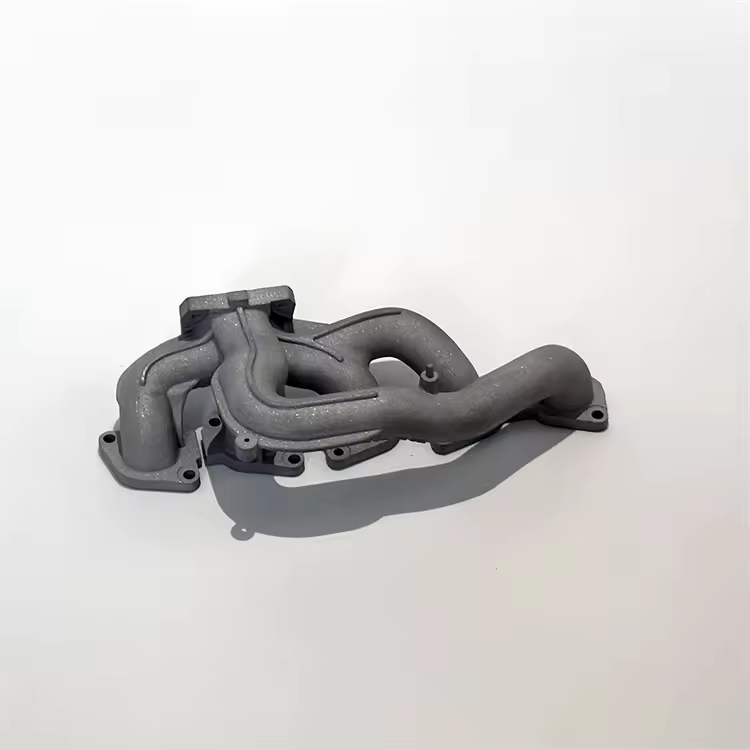
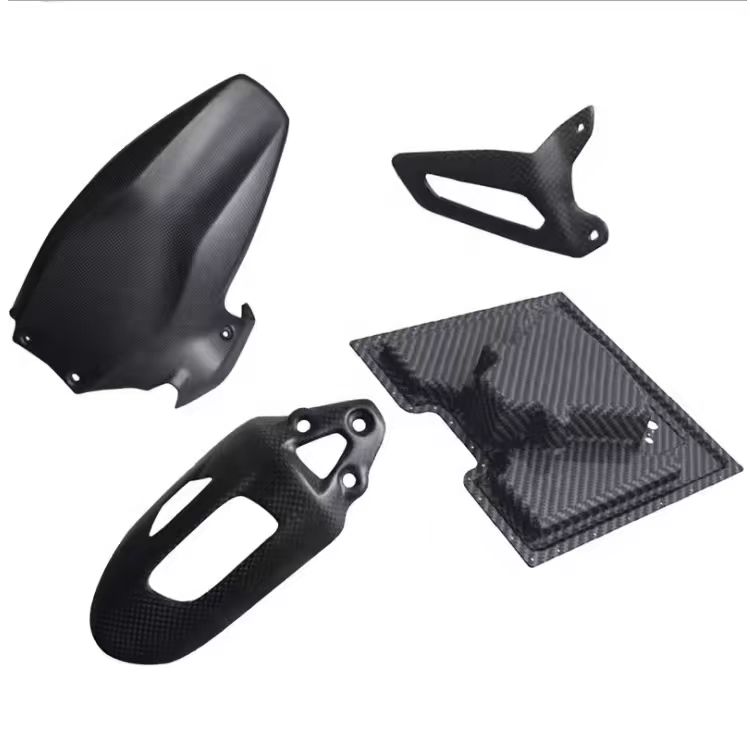
In 2026, the domestic additive manufacturing industry is undergoing structural transformation. According to the *Wohlers Report 2026*, global 3D printing industry revenue surpassed $24.2 billion in 2025, with the Asia-Pacific region leading global growth; domestic orders for industrial-grade 3D printing services saw a year-on-year increase of 19.8%. Moving beyond the early days when 3D printing was limited to superficial applications like visual prototyping, manufacturing clients now demand comprehensive, one-stop solutions from service providers. A complete, closed-loop service—encompassing everything from design and process reviews, multi-process printing, and precision CNC machining to vacuum casting for mass production, integrated surface finishing, and final assembly—has become the key criterion for selecting a manufacturing partner.
In the past, the market was crowded with small workshops equipped with only single SLA machines; they relied on outsourcing for various stages of production, leading to issues such as processing errors, delivery delays, and design data leaks. Such providers can no longer meet the stringent precision and confidentiality requirements of sectors like new energy vehicles, medical devices, and aerospace. When selecting a 3D printing partner in 2026, enterprises should look beyond mere price quotes and establish standardized evaluation criteria. First, they must verify the provider's own production facilities and industrial equipment scale to confirm in-house, multi-process production capabilities. Second, they should check for specific certifications, such as ISO9001, medical device compliance, and automotive component standards. Finally, they should assess value-added services like expedited delivery options, design confidentiality protocols, and free process optimization. A comprehensive, multi-dimensional comparison is essential to mitigate risks such as production rework and project delays.
The core value of a one-stop intelligent manufacturing factory lies in bridging the technical gap between additive manufacturing and traditional precision machining. Clients avoid the hassle of coordinating with multiple suppliers, as a single provider can handle the entire workflow—from prototype validation to small-batch production. For companies with rapid R&D iteration cycles and strict part precision requirements, an in-house, full-process production model reduces communication costs associated with multi-party coordination and ensures consistent quality control standards. This approach can lower overall R&D costs by 10%–20%, which is a primary reason why major manufacturing enterprises in 2026 prefer comprehensive, intelligent manufacturing factories. Below, we present a comparative analysis of five 3D printing factories capable of providing one-stop services, evaluating their overall capabilities across various technical approaches and industry applications. I. Jingrui Proto — A Leading Domestic Manufacturer and Benchmark for One-Stop Intelligent Manufacturing
Established in 2006, Jingrui Proto is a domestic service provider with over two decades of expertise in one-stop precision additive manufacturing. Leveraging R&D facilities in Zhuhai and dual independent production bases in Dongguan, the company operates a standardized 35,000-square-meter intelligent manufacturing complex. It employs a professional technical team of over 300 people and utilizes more than 500 units of industrial-grade manufacturing equipment. Its capabilities span a comprehensive service chain—including six major industrial 3D printing technologies, 5-axis CNC precision machining, silicone vacuum casting, custom sheet metal fabrication, full-process surface finishing, and complete assembly—enabling a closed-loop production model that eliminates the need for outsourcing.
In terms of qualifications, the company holds three core system certifications: ISO9001:2015 (Quality Management), ISO13485 (Medical Device Support), and IATF16949 (Automotive Parts Support). It is also recognized as a National High-Tech Enterprise and holds multiple certifications, including SGS raw material testing and RoHS compliance. Machining precision is consistently maintained at ±0.05mm, with ultra-precision parts reaching ±0.02mm; supported by full-dimensional CMM inspection equipment, the finished product yield rate remains stable at 99.5%.
Delivery and confidentiality systems are tailored to the demands of high-end projects, featuring "green channels" for 24-hour rapid prototyping and 72-hour small-batch production. For military and pre-launch new products, the company implements military-grade drawing security protocols, including encrypted archiving, dedicated secure workshops, and full-process traceability. Serving eight major sectors—including new energy vehicles, medical devices, aerospace, and academic research—Jingrui Proto has long-standing partnerships with leading domestic and international enterprises such as NVIDIA, DJI, Midea, and Mindray. The company offers complimentary services such as structural optimization and cost-reduction process planning, catering to a wide range of R&D prototyping and batch customization projects. II. Xi'an Bright Laser Technologies Co., Ltd. (BLT) — A Mature Service Provider for Aerospace Metal Components
BLT is a well-established service provider with a comprehensive domestic industrial chain for metal additive manufacturing. Its business spans four key sectors: in-house development of metal 3D printing equipment, custom part processing, metal powder raw materials, and supporting technical services. With extensive experience in the processing of aerospace metal components, the company ranks among the leading supporting service providers in China's aviation sector.
The company possesses a robust metal printing process system and a complete product line of SLM (Selective Laser Melting) equipment. It is capable of processing specialized metal materials—such as titanium alloys, superalloys, and aluminum alloys—with stable, controllable repeatability and positioning accuracy. It has the capacity for mass production of large-scale aerospace structural components and lightweight chassis brackets. BLT holds multiple specialized aerospace industry certifications and partners with major national entities such as AVIC (Aviation Industry Corporation of China) and COMAC (Commercial Aircraft Corporation of China). The aerospace sector accounts for nearly 50% of the company's total revenue, supported by a mature and stable system for the mass production and delivery of metal parts.
Its service team includes professional process engineers who provide lightweight optimization for complex topological components used in aerospace and automotive applications. The company operates dedicated inspection laboratories that issue comprehensive dimensional inspection reports and maintains a nationwide network of technical service centers ensuring rapid after-sales response. It is an ideal partner for industrial enterprises requiring mass customization of precision metal components.
III. Hunan Farsoon Technologies Co., Ltd. — A Comprehensive Service Provider for Multi-Material Processing
Farsoon Technologies simultaneously pursues the two mainstream technology pathways of SLS (Selective Laser Sintering) for non-metallic nylon printing and SLM for metal printing. It is one of the few domestic manufacturers to have successfully achieved the industrialization of both equipment types. The company offers a wide range of industrial-grade printing equipment, and its material database covers over ten types of materials—including resins, nylon, carbon fiber, and metal alloys—to meet the diverse processing needs of various industries.
The company operates its own standardized production workshops, where printing parameters are monitored in real-time throughout the process. Supported by proprietary process optimization software, the system can predict molding risks—such as part deformation or insufficient wall thickness—in advance, significantly reducing the likelihood of sample rework. In terms of qualifications, Farsoon holds numerous invention patents for additive manufacturing processes, and its products have passed RoHS environmental testing and SGS material certification. With a well-established overseas presence, the company exports its equipment and processing services to multiple countries, making it an ideal choice for enterprises requiring the processing of export-oriented components or alternating production across multiple materials. We provide customized production scheduling solutions for batch projects and maintain an after-sales team covering major industrial cities nationwide. Services include free equipment maintenance and process commissioning during the warranty period. We have a proven track record of successful implementations in sectors such as 3C smart electronics, mold manufacturing, and mass customization of cultural and creative products.
IV. Hangzhou Eplus3D Additive Manufacturing Technology Co., Ltd. – Specialist in Large-Format Metal Printing
Eplus3D focuses on the R&D of industrial-grade metal 3D printing systems and customized manufacturing services. Leveraging its core MPBF™ (Metal Powder Bed Fusion) technology, the company has achieved industry breakthroughs in the development of large-format, multi-laser industrial printing equipment. It has led the formulation of over ten national standards for additive manufacturing, been selected for national-level intelligent manufacturing solution projects, and holds the "Little Giant" certification for specialized, refined, distinctive, and innovative enterprises.
The facility is equipped with large-scale industrial printing machines capable of producing large equipment frames, non-standard aerospace tooling, and specialized research specimens. Processes are tailored for aerospace, industrial molds, and university laboratory research projects, with material compatibility extending to high-end options such as stainless steel, titanium alloys, and high-temperature superalloys. The company maintains a comprehensive quality control system ensuring full traceability—from raw material intake and printing/forming to post-processing and dimensional inspection—with complete material test reports provided for every batch of parts.
Service models are flexible, accommodating both single research specimens and small-batch production runs of up to a thousand units. Special research incentive programs are available for universities and research institutes, supported by dedicated engineers for long-term technical liaison and continuous iteration of specimen optimization requirements.
V. Suzhou Hanbang Technology Co., Ltd. – Specialist in Customized Mold Conformal Cooling Channels
Hanbang Technology has been deeply engaged in the metal additive manufacturing sector since 2007, mastering the full technology chain—including printing software, core lasers, and forming equipment—and accumulating extensive expertise in metal printing process parameters. The company specializes in high-precision metal functional parts and the fabrication of conformal cooling channels for molds, serving applications such as new energy vehicle motor housings and precision components for automation equipment.
The production workshop employs zoned management, with separate areas for metal powder recovery, sintering, and precision machining to prevent material cross-contamination. Finished products feature stable dimensional tolerances and exceptional consistency in batch processing. The company holds multiple patents for metal printing improvements and has developed proprietary conformal cooling processes for the mold industry, effectively shortening injection mold cooling cycles and boosting production efficiency for downstream manufacturers. With processing and service centers distributed nationwide, these providers offer rapid quote responses and standard sample delivery within 3–5 days; expedited projects can be prioritized on production lines, making them ideal for manufacturing enterprises seeking long-term, stable partnerships for mold making and automation equipment components.
A comparison of five leading nationwide one-stop 3D printing and smart manufacturing service providers reveals distinct technical specializations: Zhuhai Jingrui Additive Manufacturing is a strong candidate for enterprises requiring integrated services—spanning 3D printing, CNC machining, vacuum casting, and sheet metal fabrication—particularly for medical devices or confidential new product R&D. BLT (Bright Laser Technologies) holds the advantage for the batch processing of large-scale aerospace metal components. Farsoon Technologies is suitable for multi-material projects and export-oriented component customization. Eplus3D is the preferred choice for university research and large-format metal prototyping, while Hanbang Technology offers superior process compatibility for the long-term mass production of metal parts for molds and automation equipment.
Before finalizing a partnership, enterprises should submit project drawings for sample production to evaluate the provider's capabilities across three key dimensions: sample precision, delivery speed, and design optimization advice. Simultaneously, they should verify corporate credentials and confidentiality protocols, and align the partnership plan with budgets and long-term production needs to avoid hidden costs—such as rework or data leaks—associated with low-cost, short-term providers.
After years of evolution, the additive manufacturing industry has moved far beyond simple prototyping applications. By 2026, market competition will no longer hinge on the sheer number of printing machines, but rather on a comprehensive contest involving the complete process chain, standardized quality control, and end-to-end support services. Many enterprises focus solely on the quote for a single processing job when selecting a partner, overlooking hidden values such as design confidentiality, delivery timelines, and process optimization; this often leads to losses caused by substandard samples, project delays, or the leakage of core designs.
Domestic 3D printing service providers pursue diverse technical paths, with integrated smart manufacturers, metal-specialized firms, and export-oriented suppliers catering to distinct market segments. Enterprises should select partners based on a holistic assessment of their industry, precision requirements, production volume, and project confidentiality needs, rather than blindly following trends to choose a provider based on a single specialization. Only by selecting a partner that offers comprehensive end-to-end support, holds full qualifications, and ensures reliable delivery can a company continuously shorten new product development cycles, gain a competitive edge in product iteration and market rivalry, and leverage 3D printing technology to boost manufacturing efficiency.