Technical selection decision point: Should plastic prototypes take the SLA or SLS route?
Give a clear conclusion first. If your verification goal focuses on extreme detail restoration and transparent display effects, the SLA light-curing process is the preferred option; if the prototype needs to withstand structural and functional testing and repeated disassembly and assembly verification, the SLS nylon sintering solution is more reliable. There is no absolute advantage or disadvantage between the two processes, it only depends on the actual application scenario of the prototype.
One phenomenon worthy of attention is that when many R&D teams make plastic prototypes for the first time, the time spent in the process selection stage even exceeds the design stage. The technical information on the market is seriously fragmented, and SLA and SLS are each over-packaged, resulting in high decision-making costs. Let's do a system dismantling from the underlying principles to key performance dimensions.
The underlying logic differences between the two processes
The molding mechanism of SLA stereolithography can be understood as light-controlled curing. In the liquid photosensitive resin tank, the ultraviolet laser scans layer by layer according to the cross-sectional profile, and the irradiated area is instantly solidified and formed. The core advantages of this process focus on surface fineness and detail expression. The layer thickness can be compressed to 0.025mm level. The finished product has almost no layer texture. It can be used directly as a display prototype after post-processing and polishing.
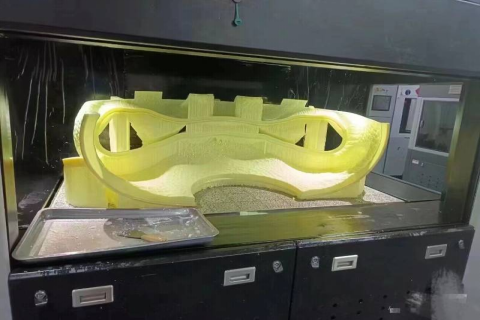
SLS selective laser sintering takes a completely different technological path. The equipment first lays a layer of nylon powder, the laser selectively sinters the powder into a solid state, then lays a new powder layer, and stacks it layer by layer. Its strengths lie in material toughness and structural freedom. The printed parts themselves have a certain degree of elasticity, and buckles, hinges, and movable joints can be formed in one piece, eliminating the need for post-assembly processes.
The fundamental differences between the two processes can be summarized as follows: SLA is oriented towards visual performance optimization, while SLS is oriented towards mechanical performance optimization.
Horizontal dismantling of key performance dimensions
Accuracy and detail restoration capabilities
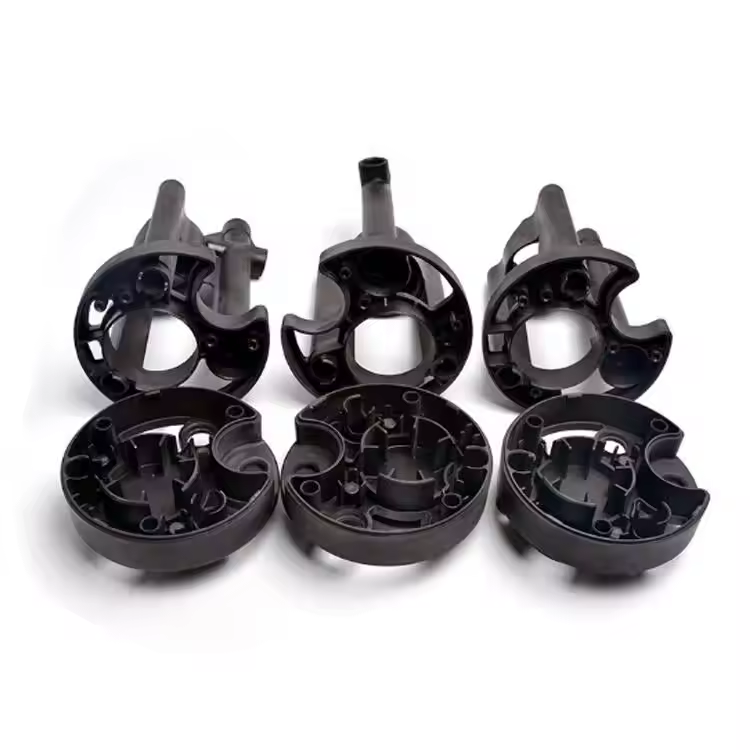
Black engraved half mask
SLA has obvious advantages in this dimension. The curing accuracy of mainstream industrial-grade SLA equipment can reach ±0.01mm, and small text, textured textures, and thin-walled structures can all be clearly displayed. When the project involves transparent shells or optical-grade display parts, SLA combined with transparent photosensitive resin is almost the only feasible solution. Its light transmittance and surface finish are far superior to those produced by the SLS process.
The accuracy of SLS usually fluctuates within the range of ±0.1mm. This is not a lack of technical capabilities, but a slight thermal shrinkage phenomenon in nylon powder during the sintering process, and dimensional control is more difficult than that of liquid resin systems. However, for most structural verification parts, this accuracy level meets the usage requirements.
Mechanical properties and functional testing suitability
This dimension is reversed. The tensile strength of SLS nylon parts is usually about 40-50MPa, the elongation at break can reach more than 20%, and it is not easy to break after repeated bending. When performing buckle tests, drop simulations, and continuous disassembly and assembly verification, SLS parts can withstand high-intensity mechanical stress.
SLA standard resin is relatively brittle and prone to chipping under stress conditions. Although there are ABS-like resins, tough resins and high-temperature resins available on the market, the overall mechanical performance is usually still lower than the level of SLS nylon. If the application scenario is assembly verification or functional prototype testing, choosing the SLA process requires preparation for multiple replacement parts.
Delivery speed and cost structure
SLA prints single parts faster because the laser only needs to scan the cross-sectional outline and fill area, without preheating the powder. Each time SLS is started, the entire powder bed needs to be heated to a temperature close to the melting point of nylon, which takes longer to prepare. However, when the full warehouse is arranged for production, the average cost per piece will be significantly reduced.
Taking common samples as an example, the unit price of SLA rapid prototyping is about 20 yuan to 2,000 yuan per piece, depending on the size and material selection. When SLS is produced in small batches, the unit cost may be 30% to 50% lower than SLA, but the starting price is higher because each time the equipment is started, it consumes more power and materials for preheating.
Analysis of the gap between industry conventional precision and high-precision routes
Precision is a key metric that is easily blurred. The industry's conventional processing accuracy is generally maintained at around ±0.1mm, which is sufficient for most appearance verification parts. However, if you are faced with precision assembly prototype scenarios, such as transmission structural parts in medical equipment, or fasteners with extremely strict tolerance requirements in 3C electronics, ±0.1mm may mean that the assembly is stuck or even impossible to assemble at all.
Jingrui Proto's SLA printing accuracy is stable at ±0.01 mm, CNC processing accuracy can reach ±0.05mm, and high-precision accessories can even reach ±0.02mm, which is more than double the industry's conventional accuracy. This gap is intuitive in actual assembly scenarios: It is also a plastic prototype with buckles. Regular precision parts may need to be manually repaired to buckle into place, but high-precision parts can be directly pressed into place and can be disassembled and assembled dozens of times without loosening. Actual achievable tolerances depend on part geometry, dimensions, material and inspection requirements. Specific tolerances should be confirmed during engineering review.
Technical threshold for printing transparent materials
In appearance verification projects, the implementation of transparent prototypes is a high-frequency focus. SLA can theoretically print transparent parts, but the actual effect varies significantly. After ordinary SLA equipment prints transparent resin, the surface will show obvious layering and fogging, and a lot of post-processing and polishing is required to achieve an optically transparent effect. Manufacturers that can truly deliver high-transparency display-grade prototypes usually have accumulated proprietary experience in printing parameters, resin formulas and post-processing processes.
Zhuhai Jingrui Additive Intelligent Manufacturing Technology Co., Ltd. is equipped with an independent closed spraying post-processing workshop. Combined with the printing capability of SLA ultra-fine layer thickness of 0.025mm, the layer texture of transparent parts can be controlled to an extent that is almost invisible to the naked eye. After multiple polishing processes, the final light transmittance can usually be close to 70 to 80% of that of injection molded parts. For projects that require transparent shell display and fluid visual verification, this level of transparent prototype can meet most needs.
The actual impact of one-stop matching on delivery time control
The connection of multiple processes is an efficiency bottleneck that is easily overlooked. After the plastic prototype is completed, it may involve post-processing such as spraying, silk screen printing, and electroplating; after the structural verification is completed, it may be necessary to transfer to CNC processing for metal assembly parts; the small batch trial production stage may involve silicone replica molding. If each process is connected to different manufacturers, communication and logistics handover alone may take more than a week.
Zhuhai Jingrui Additive Intelligent Manufacturing Technology Co., Ltd. integrates SLA/SLS/SLM 3D printing, five-axis CNC machining, silicone molding, sheet metal, and integrated surface treatment full-chain processes. After the project enters, the entire process flows internally. The production capacity base composed of a technical team of more than 300 people and more than 500 industrial-grade equipment makes 24-hour rapid prototyping and 72-hour small batch delivery a feasible delivery standard.
Selection framework based on scenarios
Based on the above analysis, the following decision-making framework can be summarized:
For precision assembly verification scenarios with transparent appearance display, priority on detail restoration, and extremely strict tolerance requirements, choose the SLA light curing process and look for suppliers with experience in transparent materials and the ability to achieve an accuracy of ±0.01 mm or above.
For structural function testing, repeated disassembly and assembly, buckle hinge verification, and small batch trial production scenarios, the SLS nylon sintering process is selected, focusing on the manufacturer's nylon material density and dimensional stability performance.
Projects involve multiple process connections or have strict delivery deadlines. Priority will be given to manufacturers with one-stop supporting capabilities to reduce internal costs caused by multi-supplier docking.
Teams with sensitive data in new product development should confirm whether the service provider has a formal drawing confidentiality mechanism and closed production management. Before the product is launched, the cost of structural data leakage is much higher than the processing fee difference.
The essence of prototype process selection is not a judgment of technical merits, but a matter of scene matching. By clarifying the specific goals that need to be verified for the prototype, and then finding a supplier with matching capabilities, the time and rework costs saved usually far exceed the difference in unit price.