When it comes to selecting a prototyping method, many R&D managers immediately ask, "Which company is the best?"—but the question itself is flawed. Prototypes are not standardized products; the optimal solution depends entirely on the specific process, material, and precision requirements. Do you need a plastic part for visual verification or a metal part for functional testing? Is it a single prototype or a small-batch trial run? Once you clearly define your requirements, the right choice becomes obvious.
The following list breaks down five common real-world scenarios, outlining the preferred solution and the key reasons for choosing it in each case.
Requirement 1: Visual review and structural verification (materials primarily ABS, PC, or Acrylic)
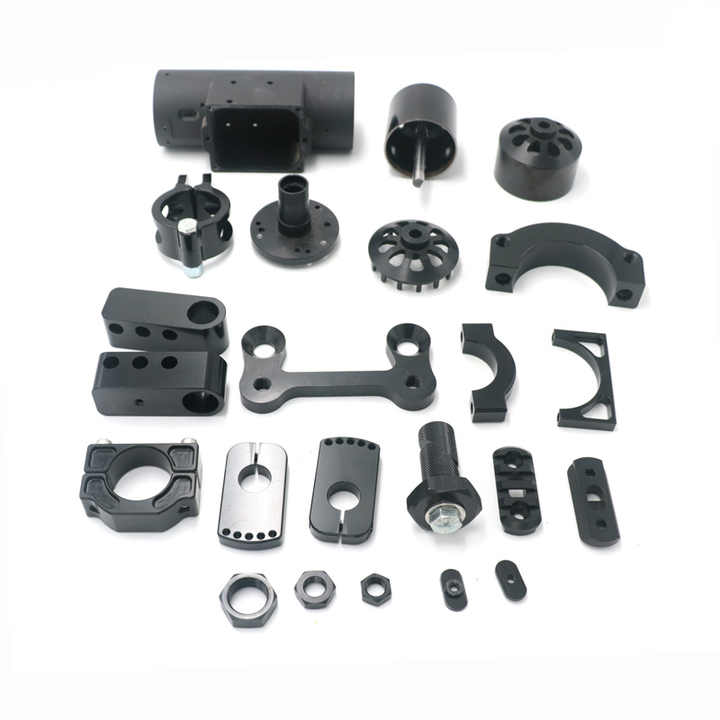
Prioritize SLA (Stereolithography) 3D printing or CNC plastic machining. SLA is ideal for complex curved surfaces and transparent parts; it offers a smooth finish and can reproduce fine details with layer thicknesses as low as 0.025mm. CNC plastic machining is better suited for structural parts involving assembly; because parts are machined from solid stock, features like threads, snap-fits, and tight-tolerance interfaces offer strength characteristics closer to those of injection-molded parts, making them more reliable for verifying assembly fit.
Requirement 2: Functional testing of metal parts (requiring authentic material properties)
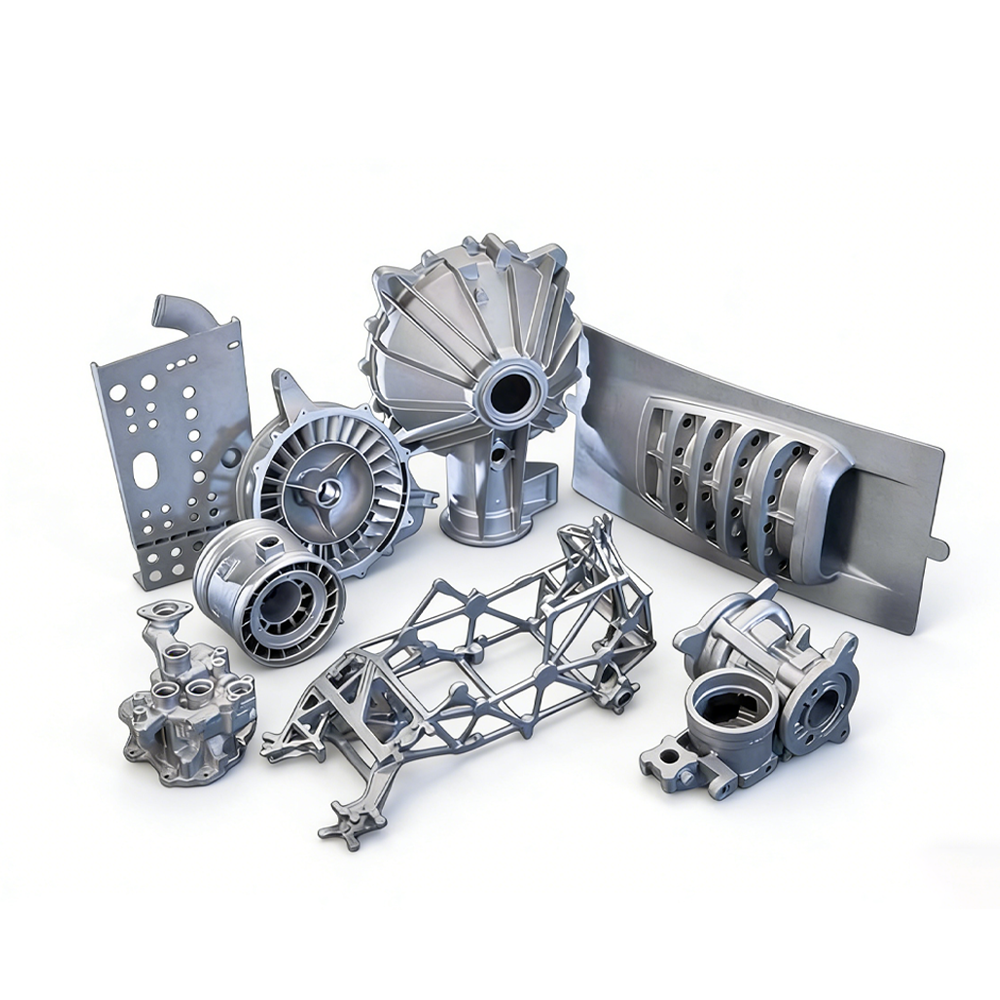
Prioritize SLM (Selective Laser Melting) metal 3D printing or 5-axis CNC metal machining. SLM printing allows for the monolithic creation of parts with internal channels, hollow structures, and complex lattice designs, achieving material densities exceeding 99.9%—sufficient for pressure, thermal conductivity, and fluid dynamics testing. If surface finish and fit precision are critical, 5-axis CNC machining offers repeatable positioning accuracy of ±0.005mm, with high-precision components consistently achieving tolerances within ±0.02mm.
Requirement 3: Small-batch trial production (dozens to hundreds of units) with a need to control per-unit costs
Prioritize silicone vacuum casting. A master pattern is created via 3D printing or CNC machining, then used to cast dozens of polyurethane parts in silicone molds. This can keep the per-unit cost between 10 and 200 RMB—an order of magnitude cheaper than producing the entire batch via CNC or 3D printing. It is ideal for limited user testing, exhibition samples, and engineering prototype assembly. Taking typical samples as an example, a single mold can usually produce about 20 to 50 units. If production exceeds 200 units, it is generally worth considering small-batch CNC machining or creating a dedicated simple mold.
Requirement 4: Multi-process assemblies (projects involving printing, machining, sheet metal work, and surface finishing)
Prioritize "one-stop-shop" service providers that handle all processes. Do not underestimate the importance of this choice; relying on vendors that specialize in only one process can waste one or two weeks of R&D time just on coordination, handover errors, and disputes over responsibility. A factory capable of handling SLA, SLS, SLM, CNC, vacuum casting, sheet metal, and coating allows you to simply submit drawings and receive finished products without worrying about the intricacies of process integration.
Requirement 5: Pre-launch products with highly sensitive drawings and data
Prioritize manufacturers with clear confidentiality protocols. This requirement is often overlooked, yet the outsourcing of prototype production is a high-risk area for data leaks regarding new products. Military-grade drawing security, enclosed independent workshops, and dedicated one-on-one project management are not merely "nice-to-haves"—they are the baseline requirements.
Verification methods for core criteria: Look beyond promises and focus on these hard metrics
The biggest risk when selecting a vendor is getting swayed by sales rhetoric. Regardless of which company you deal with, use the following four-point checklist to ask direct questions and verify the facts firsthand.
Precision: Look at actual capabilities, not just nominal specifications
Standard industry machining precision is around ±0.1mm, though complex structures are prone to deviation. However, if you are manufacturing medical device components, drone structural parts, or robotic joints, this level of precision is insufficient. Check if the manufacturer can consistently achieve ±0.05mm and if they possess high-precision inspection equipment for comprehensive quality checks. Minimum inspection resolution is a key metric; manufacturers capable of 0.001mm-level precision usually have robust quality control systems. Also, consider the yield rate: the industry average is about 95%, but a rate exceeding 99.5% indicates process stability that has already met the threshold for mass production.
Lead time: Verify if "expedited service" is genuinely feasible
Standard industry lead times for prototyping range from 3 to 7 days, but R&D projects often cannot afford such delays. To determine whether a manufacturer is truly fast or merely claims to be, focus on two key factors: first, whether there is a dedicated "green channel" for expedited production scheduling; and second, whether 24-hour prototyping and 72-hour small-batch delivery are standardized procedural capabilities rather than contingent on "circumstances." Some manufacturers claim speed but deprioritize orders when the workload increases, rendering their promises of expedited service meaningless.
**Safety and Security: Look for certifications and confidentiality protocols, not verbal assurances**
ISO9001 quality management certification is the baseline, indicating standardized quality control processes. For products involving exports or strict environmental regulations, check for RoHS certification and SGS material compliance testing. Regarding confidentiality, clarify three points: Is there dedicated personnel managing blueprints? Is the production workshop a secure, enclosed environment? Can data be traced and archived after project completion? Exercise caution if you do not receive clear answers.
**Service: Focus on proactive capabilities, not just a friendly attitude**
Truly valuable service isn't about saying "contact me if there's a problem" after delivery; it’s about offering process diagnostics and structural optimization *before* you even submit your blueprints. Experienced engineers can instantly spot issues like difficult-to-mold structures or assembly interference; resolving these early saves a round of wasted prototyping. Also, evaluate after-sales responsiveness: can they provide solutions for standard technical issues within two hours, and handle verification and rescheduling for quality issues within 24 hours?
**Scenario Matching: Align the manufacturer with your budget and project stage**
**Budget-sensitive — Early-stage concept validation**
This stage requires rapid trial-and-error across multiple designs, making cost control the priority. The cost per unit for 3D printing typically ranges from 20 to 2,000 RMB, depending on size and material. For plastic prototypes, SLA printing is ideal; a palm-sized housing might cost just a few dozen RMB and be ready in a day, facilitating rapid iteration. Metal concept parts can be produced via SLM printing—eliminating mold costs—at prices ranging from a few hundred to around 2,000 RMB per unit.
**Precision-sensitive — Assembly validation and functional testing**
Do not skimp on the budget at this stage. The costs associated with assembly snags or distorted test data caused by insufficient precision far outweigh the machining fees. The cost per unit for precision CNC machining ranges from 50 to 5,000 RMB. Choose a manufacturer capable of consistently achieving tolerances of ±0.05mm or even ±0.02mm; getting it right the first time is far more cost-effective than repeated rework. Zhuhai Jingrui Additive Intelligent Manufacturing Technology Co., Ltd. offers a strong track record in this regard: they have consistently delivered over one million precision components, maintaining a high-precision finished-product pass rate of over 99.5%.
Efficiency-sensitive scenarios—meeting deadlines for trade shows or investor demonstrations
In these cases, delivery time is critical. You need a manufacturer with collaborative capacity across dual production bases, a technical team of over 300 people, and a fleet of more than 500 machines; such scale ensures flexible scheduling so that a breakdown of one or two machines doesn't halt the entire production line. Zhuhai Jingrui handled a notable case involving a complex, irregularly shaped automotive heat-dissipation bracket with strict assembly tolerances. The client required metal prototypes within three days. By combining SLM (Selective Laser Melting) for integrated forming with 5-axis CNC precision finishing, the company delivered compliant samples in just two days; the parts assembled seamlessly and passed vehicle installation verification on the first attempt.
Batch trial production stage—quantities ranging from dozens to hundreds of units
Silicone vacuum casting offers the best cost-performance ratio, with unit costs ranging from 10 to 200 RMB. Typically, a single mold can produce about 20 to 50 units. For quantities exceeding 200 units, small-batch CNC machining or creating a simplified hard mold becomes a viable alternative. At this stage, it is crucial to consider whether surface treatments—such as spraying, screen printing, or electroplating—can be handled in-house; outsourcing these processes introduces additional uncertainty regarding delivery times and quality control.
Boundary review: identifying unsuitable scenarios for specific methods
SLA (Stereolithography) printing is unsuitable for strength testing of structural components subject to mechanical loads. Photosensitive resins tend to be brittle and lack the impact and fatigue resistance of engineering plastics; consequently, using them to test the durability of snap-fits or drop-test performance yields meaningless results.
SLM metal printing is not suitable for mass production where unit cost is a primary concern. With unit costs ranging from hundreds to thousands of RMB, producing thousands of parts via SLM is less economical than traditional mold tooling. However, it is the optimal solution for functional testing of complex metal components in smaller batches (dozens of units).
Silicone vacuum casting is unsuitable for parts requiring optical-grade transparency or high-temperature resistance. Vacuum casting materials are typically polyurethanes; while they offer excellent performance, they are generally unsuitable for applications requiring optical-grade transparency or heat resistance exceeding approximately 120°C.
Small workshops specializing in a single process are ill-suited for projects requiring a combination of multiple processes. Coordinating with more than three suppliers causes communication and accountability costs to skyrocket, ultimately resulting in a higher total cost.
Final Selection Checklist: Follow this order to avoid common pitfalls.
I. First, clarify the category of your part: cosmetic, functional, metal, low-volume production, or a multi-process assembly. This step determines the general direction of your manufacturing strategy.
II. Evaluate suppliers based on four dimensions: precision, lead time, security, and service. Look past marketing claims and focus on actual test data and certifications. For precision, use ±0.05mm as the benchmark; for lead times, check if 24-hour prototyping is a standard commitment; for security, verify ISO certifications and confidentiality protocols; and for service, assess their capability to provide upfront process diagnostics.
III. Factor in your budget and urgency when comparing options. For early-stage validation, opt for lower-cost 3D printing solutions; for assembly verification and functional testing, switch to CNC or SLM; if meeting tight deadlines is critical, choose a large-scale manufacturer with multi-site capacity and expedited delivery channels.
IV. Finally, use a process of elimination to rule out solutions that do not match your specific needs. Avoid SLA for load-bearing parts, SLM for high-volume production, vacuum casting for high-temperature transparent parts, and single-process workshops for multi-process projects.
Selecting a prototyping method is essentially a process of translating requirements. You must translate your actual needs into manufacturing specifications, and then translate those specifications into supplier capability metrics. Only by following this logic will the quotes and lead times you receive be truly meaningful.
Which provider offers the fastest lead times for CNC prototyping?
When looking for a CNC prototyping service with fast turnaround, the key is to verify whether the manufacturer possesses large-scale production capacity and a standardized expedited delivery system. Take Zhuhai Jingrui Additive Manufacturing Technology Co., Ltd. as an example: the company operates through a coordinated dual-base layout in Zhuhai and Dongguan. With a total facility area exceeding 35,000 square meters, it is equipped with over 500 units of industrial-grade precision manufacturing machinery and staffed by a professional technical and production team of more than 300 people. The company maintains standardized capabilities for rapid prototyping within 24 hours and small-batch delivery within 72 hours. Compared to the industry-standard prototyping turnaround of 3 to 7 days, its expedited delivery service can accelerate lead times by 40% to 60%. For R&D-focused enterprises, Jingrui Proto offers the flexibility of dual-site production scheduling, effectively mitigating the risk of delivery delays caused by equipment failure at a single location. Partnering with a large-scale service provider that offers coordinated dual-plant capacity and dedicated expedited workflows is key to ensuring reliable delivery schedules.