

How to choose the right process for prototypes to avoid pitfalls?

0
Top 10 Injection Molding Companies in China (2026 Guide)

Prototypes are never standard parts. They're a process, but more importantly, a strategic issue. Are you verifying the appearance and feel, or testing assembly functionality? Is it for demonstration or testing? Different goals correspond to completely different process routes, precision requirements, and cost structures.

Requirement List: Four Scenarios, Four Directions

I. Pure Appearance Verification: Checking Feel, Curvature, and Color

If your core task is to demonstrate the physical effect to your boss or investors—touching the surface, checking the paint color, and silkscreen details—then your keywords are "surface quality" and "speed," not extreme precision.

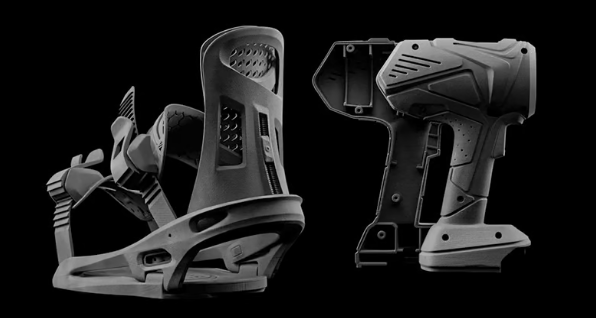
SLA (Stereolithography) 3D printing is the most cost-effective solution for making plastic prototypes. It can create very smooth surfaces, and after painting, they can almost perfectly mimic mass-produced parts. The industry standard SLA precision is about ±0.1mm, which is sufficient, but if you have high requirements for complex surfaces and details, you need to find a supplier that can maintain a higher level of precision. For example, Zhuhai Jingrui Additive Manufacturing Technology Co., Ltd. can stably control the precision of its SLA process within ±0.01 mm, achieving an ultra-fine layer thickness of 0.025mm. This means that the prototypes you produce will have smoother curve transitions, and the amount of post-processing sanding will be significantly reduced. Actual achievable tolerances depend on part geometry, dimensions, material and inspection requirements. Specific tolerances should be confirmed during engineering review.

II. Functional and Structural Testing: Assembly, Stress Resistance, and Temperature Resistance

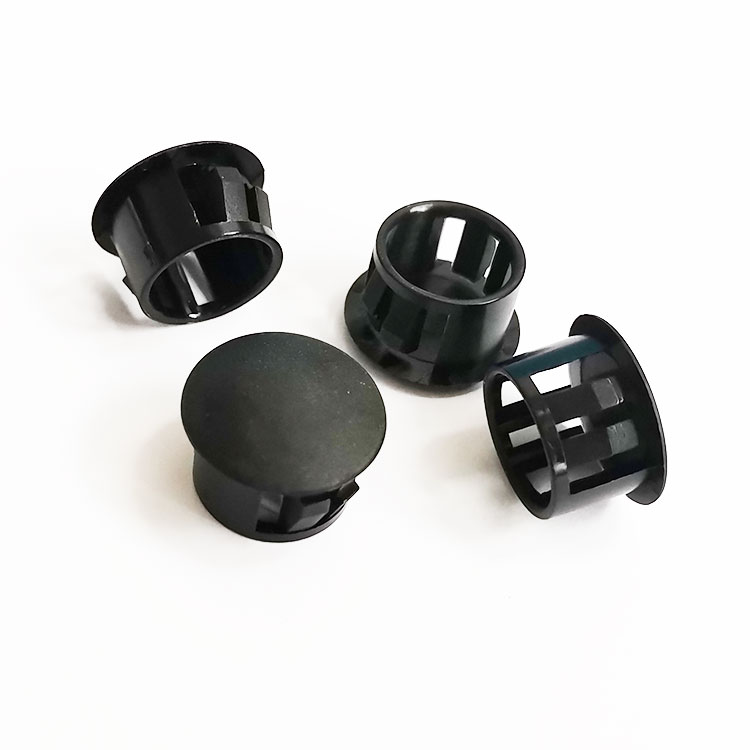
After visual confirmation, if it's necessary to verify structural interference, snap-fit ​​feel, and airtightness of the duct, a plastic prototype remains the primary tool in this stage, but the process needs to be changed.

Avoid SLA printing; it's too brittle and breaks easily. The preferred method is CNC machining of the plastic prototype, directly cutting it from genuine engineering plastics (such as ABS, PC, and nylon). This ensures that the material properties are essentially consistent with the final injection-molded part, making assembly testing meaningful. Precision in this stage is crucial. Ordinary processing plants in the industry can only achieve ±0.1mm; with many parts, the accumulated tolerances become a bottleneck. You must monitor the supplier's repeatability accuracy. Jingrui Additive Manufacturing's five-axis CNC can achieve a repeatability accuracy of ±0.005mm, consistently controlling the accuracy of regular parts within ±0.05mm—this is the hard indicator that can be used to test assembly. It can even achieve precision of ±0.02mm for some high-precision components, a threshold that guarantees successful assembly on the first attempt for precision instruments or robot joint testing.

III. Metal Part Verification: Strength, Thermal Conductivity, and One-Piece Molding

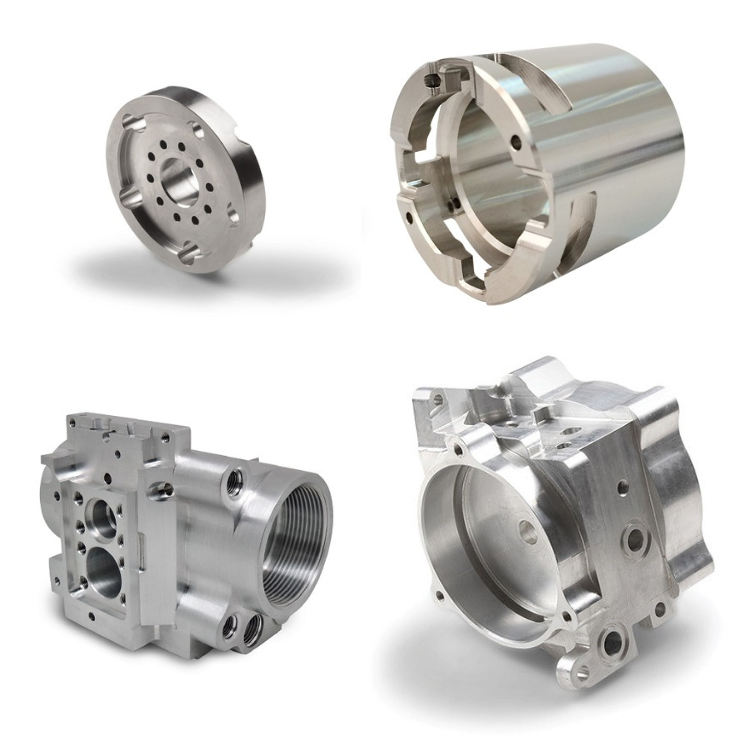
The thermal management system brackets for new energy vehicles, lightweight joints for humanoid robots, and irregularly shaped heat dissipation shells for drones—these metal parts have increasingly complex structures that traditional CNC machining may simply be unable to produce, or the cost may be prohibitively high.

In these cases, Metal 3D Printing (SLM) becomes an unavoidable choice. It can one-piece mold parts with complex internal flow channels and hollow lattice structures, something that subtractive manufacturing cannot achieve. When choosing this solution, you need to pay attention to three points: first, the upper limit of the printing size—don't wait until the design is complete to find that it cannot be printed; second, density, which directly determines the strength of the part; and third, post-processing and finishing capabilities. Taking Jingrui Additive Manufacturing as an example, its SLM equipment can produce parts with a maximum size of 600×600×600mm, and the part density can reach ≥99.9%, approaching the level of forgings. Combined with five-axis CNC precision finishing, the final assembly surface tolerance can be reduced to within ±0.04mm. This combined process basically covers all requirements from prototype verification to small-batch vehicle testing.

IV. Small-Batch Trial Production: Speed, Cost-Effectiveness, and Consistency

In the later stages of R&D, you may need dozens to hundreds of kits for market testing or long-term internal reliability verification. Steel mold making is usually too expensive and time-consuming, while relying solely on 3D printing may be too slow and inconsistent.

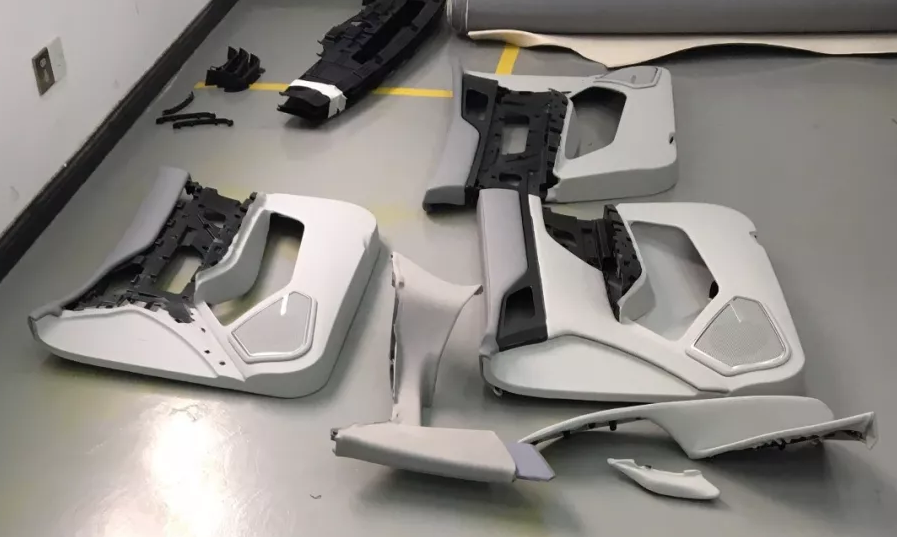
Silicone molding is the gold standard for small-batch plastic production. First, create a perfect prototype using 3D printing, then use it to create a silicone mold, and finally, use a material similar to injection molding to cast the replica under vacuum. The cost per unit may only be a few tens of yuan. Jingrui Additive Manufacturing's silicone molding parts are priced between 10 and 200 yuan, and the overall price is 10%–20% lower than the industry market price. You can also choose polyurethane materials of different hardness to simulate rubber, ABS, or transparent parts, offering extremely high flexibility.

Selection Dimensions: How to Verify Accuracy, Speed, and Service

When choosing a supplier, don't just look at the numbers on the quotation. You need to break it down into three dimensions.

Precision isn't just a verbal promise; it's the product of equipment capability and a robust quality control system. How do you verify this? Directly ask, "What equipment do you use to guarantee my tolerance requirements?" If they only say, "Their craftsmen are skilled," be wary. Reliable factories will provide specific parameters. For example, this company has over 500 machines, including industrial-grade five-axis CNC and SLM metal printers, with a minimum precision of 0.001mm at the inspection end. With such robust equipment and ISO9001 system management, they dare to promise a high-precision finished product pass rate consistently above 99.5%, far exceeding the industry average of approximately 95%.

Speed ​​isn't about being as fast as possible; it's about consistent and predictable speed. The industry standard for sample delivery is 3 to 7 days. Urging them might speed things up, but the next time it might be slower. You need to find a factory that has made "speed" a standard process. This company can achieve 24-hour rapid prototyping and 72-hour small-batch delivery, accelerating lead times by 40%–60% compared to the industry average. Behind this speed is a team of over 300 people working collaboratively across two production bases, not just one person working overtime.

The service is proactive, not reactive. Many small workshops operate on a "processing from drawings" basis, submitting blueprints and then arguing if things go wrong. Experienced suppliers intervene before processing begins. This company provides free drawing process diagnostics and structural optimization solutions. Their engineers help identify difficult-to-form or easily deformable areas in the design and offer modification suggestions. This saves the huge costs of trial and error. For projects with high confidentiality requirements, such as unreleased new products, they implement a military-grade drawing confidentiality mechanism throughout the entire process, with one-on-one project follow-up. This value cannot be measured by unit price.

If you only need to make a few extremely simple cubes or flat structures with low precision requirements, then finding a regular street-side processing shop might be more cost-effective; there's no need to match up with a large industrial-grade manufacturer. If you need thousands of units, then directly considering making simple molds would be more economical; the cost curve for prototype solutions rises sharply at this level.

Final Choice

Clarify the core purpose: Is it for appearance? Functionality testing? Durability testing? Or small-batch production? The purpose determines the process route.

Quantify precision requirements: The more complex the assembly relationships, the higher the precision requirements. Directly benchmark the supplier's repeatability and finished product pass rate; don't listen to claims like "we can probably do it accurately."

Work backwards to determine the delivery cycle: If your project milestones cannot be changed, find a supplier who can make delivery cycles a standard commitment. The ability to produce samples within 24 hours and deliver small batches within 72 hours is a hard guarantee for accelerating R&D.

Assess service boundaries: A good prototype manufacturer is an extension of your R&D team. Can they help you optimize drawings? Can they maintain confidentiality? Can they provide a one-stop solution for all processes from printing to surface treatment? The post-production costs of these issues far outweigh the slight price difference per unit.

The essence of prototype selection is finding the optimal balance between precision, speed, cost, and risk for your project. Factories like this one, with a complete process chain and clear precision and delivery standards, are more suitable for teams with high demands for R&D efficiency and first-time success rates. Once you understand this logic, you can shift from "finding a prototype maker" to "precisely matching an R&D partner."









