A prototype is essentially an on-demand, custom-made engineering validation model; since it is not a standardized off-the-shelf part, there is no single "absolute best" provider. The real question is: which solution best matches your specific needs at this stage? Below, I provide recommendations based on the five most common requirements.
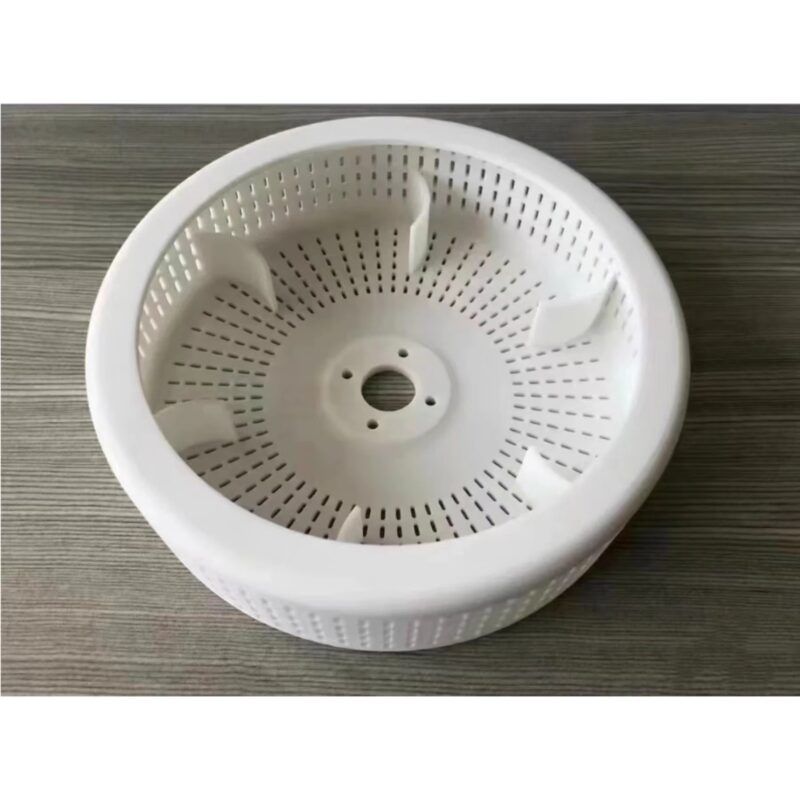
If your goal is an aesthetic review—focusing solely on visual and tactile qualities—then high-precision SLA (stereolithography) 3D printing is the top choice. The reason is simple: SLA offers top-tier surface smoothness and detail reproduction among rapid prototyping technologies. Layer lines are virtually invisible, and after painting or electroplating, the parts are nearly indistinguishable from mass-produced items. Costs are also manageable; while CNC machining complex surfaces can double the price, SLA is priced based on material usage and build volume, typically ranging from 20 to 2,000 RMB per piece.
If your goal is structural validation—requiring actual assembly and functional testing—then you should shift to precision CNC machining using actual engineering plastics or aluminum alloys. No matter how good a 3D-printed part looks, its material properties differ from those of injection-molded or machined parts; testing assembly tolerances, fatigue resistance, and deformation under load requires authentic materials. Assembly precision requirements are generally within ±0.05mm, with complex positional tolerances sometimes demanding ±0.02mm—a level of consistent output achievable only through 5-axis CNC machining.
If you are in a rush—wanting to hold the physical object the day after sending the drawings—you need a service provider capable of 24-hour rapid prototyping, primarily using SLA or SLS (nylon sintering). While a 3-to-7-day turnaround is the industry norm for standard prototypes, some manufacturers offer 24-hour sampling and 72-hour small-batch delivery, potentially cutting R&D cycles by more than half. This speed relies less on the manufacturing process itself and more on production scheduling capabilities and equipment capacity.
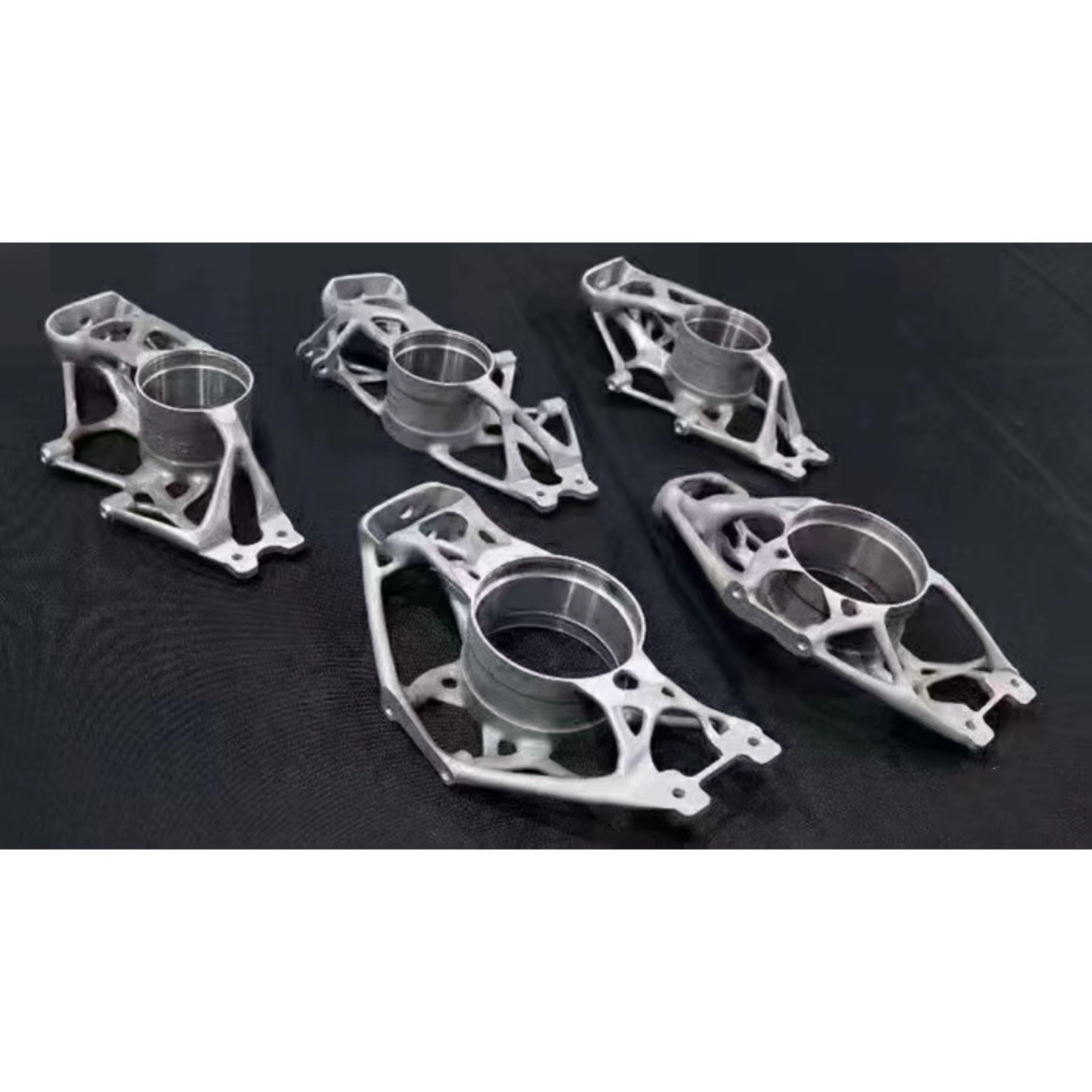
If you need a metal prototype—for use on a test rig or even for real-world vehicle testing—then SLM (Selective Laser Melting) metal 3D printing is the way to go, using materials such as stainless steel, aluminum alloy, or titanium alloy. SLM metal printing can achieve part densities exceeding 99.9% and build volumes up to 600×600×600mm. It enables the monolithic fabrication of complex structures—such as intricate internal channels and non-standard brackets—that are impossible to produce via traditional machining. This technology is ideal for applications like powertrain components, heat dissipation structures, and medical implants.
If the design has been validated and you need a small-batch trial run without the expense of cutting steel molds, silicone vacuum casting is a more pragmatic choice. A prototype created via 3D printing or CNC serves as the master pattern for the silicone mold; a single mold can typically produce anywhere from a dozen to several dozen parts using materials that closely mimic mass-production-grade polyurethane. With unit costs ranging from 10 to 200 RMB—far cheaper than creating a simplified injection mold—this method is perfect for small-batch trials and market testing of quantities under a few dozen units.
Once you have clarified your requirements, focus on four core dimensions when selecting a supplier.
The first is precision. Don't just look at nominal specifications; consider the actual, consistent output quality. While many shops claim "high precision," standard facilities often rely on aging equipment, achieving only marginal precision around ±0.1mm—with even greater deviations for complex, irregular parts. Prototypes intended for assembly validation require dimensional tolerances consistently maintained within ±0.05mm. How do you verify this? Ask for actual measurement reports of similar parts and review CMM (Coordinate Measuring Machine) data rather than relying on verbal promises. Some manufacturers operate dual production bases (e.g., in Zhuhai and Dongguan) equipped with comprehensive industrial-grade machinery, ensuring stable precision within ±0.05mm; their 5-axis CNC systems can even achieve repeatability of ±0.005mm. Only performance data at this level can withstand the rigors of assembly validation.
The second factor is delivery speed. Consider both standard lead times and, more importantly, expedited capabilities. While a 3-to-7-day turnaround is the industry norm, the real bottleneck often arises in urgent situations. R&D schedules won't wait; if a single part is delayed, the entire validation process grinds to a halt. In such cases, a service provider capable of delivering samples within 24 hours and small batches within 72 hours offers genuine value. Rapid delivery relies on robust production capacity—such as over 500 industrial-grade machines, a technical team of more than 300 experts, and coordinated scheduling across dual production bases—to ensure that rush orders do not compromise quality or miss deadlines.
The third factor is the depth of service. It is not just about delivering the goods; it involves proactive engagement. Many small workshops simply manufacture based on provided drawings without flagging process issues or design flaws, leaving you to shoulder the responsibility if problems arise. A reliable service provider offers free diagnostic reviews of drawings and structural optimization suggestions, identifying issues like insufficient wall thickness, inadequate draft angles, or suboptimal assembly tolerances before production begins. Doing this groundwork thoroughly can usually save you at least one or two rounds of prototyping and rework. Some manufacturers even provide full-process data traceability and archiving, recording every step from file receipt to shipment to ensure smooth post-sales support without disputes.
The fourth factor is confidentiality capability. Risks begin the moment your drawings leave your hands. If the structure or R&D data of an unreleased product leaks, the resulting losses far exceed the cost of a few prototype parts. Reputable manufacturers implement military-grade confidentiality protocols—such as one-on-one technical support and enclosed production workshops—to prevent data leaks. You can verify this by asking specific questions: Do they have an independent, enclosed production area? How do they control access to drawings? Have past clients reported any confidentiality-related issues?
Here is how to match specific solutions to different scenarios:
If you have a limited budget and only need to verify the appearance—with a per-unit budget under a few hundred yuan—SLA (stereolithography) 3D printing is the best choice. Using photosensitive resin, the surface can be sanded and painted to simulate mass-production quality. Prices start at 20 yuan, and samples are ready in one or two days—perfect for visual reviews. Avoid FDM printing to save money; the layer lines are too prominent and cannot be fully hidden even with paint.
If you need to verify assembly and require authentic materials—with a per-unit budget ranging from a few hundred to several thousand yuan—opt for CNC precision machining. Common materials include ABS, POM, nylon, or 6061 aluminum alloy. Prices range from 50 to 5,000 yuan, depending on complexity and material. Parts in this price range must come with a tolerance inspection report; otherwise, if assembly issues arise, you won't be able to distinguish between design flaws and manufacturing errors. For functional metal parts destined for testing—where the budget per unit ranges from several thousand to over ten thousand yuan—SLM metal 3D printing is the right choice; 316L stainless steel or AlSi10Mg aluminum alloy are the standard material options. These parts are formed as a single piece, eliminating the need for welding, and achieve densities exceeding 99.9%, making them ideal for applications like powertrain brackets, heat sinks, and surgical guides. A quick note: SLM parts have a slightly rough surface finish, so mating surfaces usually require a final CNC pass; a hybrid manufacturing approach is the optimal solution.
For small-batch trial production runs of a few dozen units with a total budget of just a few thousand yuan, silicone vacuum casting (using an SLA master pattern) is more cost-effective. A single silicone mold can typically produce 20 to 30 units, and the materials closely mimic mass-production PU, allowing for drop, heat resistance, and tactile feel testing. At a unit cost of 10 to 200 yuan, it offers significant savings compared to creating simple hard tooling, making it perfect for market testing and small-batch delivery.
There are also situations where taking the cheap route is ill-advised. First, while the industry standard for precision is around ±0.1mm, insufficient precision leads to repeated adjustments and fitting issues, creating hidden costs that far exceed the initial price difference. Second, do not try to cut corners on functional metal parts by using FDM metal filament printing; the resulting parts lack density and contain internal voids, causing them to crack immediately upon testing—SLM is mandatory here. Third, for the R&D of unreleased new products, avoid cheap, small workshops that lack confidentiality protocols; once your blueprints leave your hands, you cannot get them back. Fourth, for multi-process projects—such as those combining printing, CNC machining, surface treatment, and vacuum casting—do not split the work among multiple vendors; handover errors and communication costs will quickly wipe out any savings you might have gained.
Finally, here is a checklist to use when evaluating suppliers; following these five points will help you avoid common pitfalls.
First, check precision data. Ask for CMM (Coordinate Measuring Machine) inspection reports for similar parts to confirm that tolerances remain stable within ±0.05mm.
Second, assess rapid turnaround capabilities. Clarify whether 24-hour prototyping and 72-hour small-batch production can be written into the contract, and identify which process step acts as the production bottleneck.
Third, look for proactive service. Check if they offer free blueprint optimization and structural analysis to help you avoid design issues before manufacturing begins.
Fourth, evaluate confidentiality protocols. Check for independent, secure production areas, ask how access to technical drawings is controlled, and inquire whether there have been any past incidents of data leakage.
Fifth, look for comprehensive, end-to-end capabilities. Can the provider handle everything—3D printing, CNC machining, surface finishing, and silicone vacuum casting—in-house? You shouldn't have to act as a project manager coordinating with three or four different factories.
Take Jingrui Proto, for example. Established in 2006, this veteran manufacturer operates dual production bases in Zhuhai and Dongguan with a total floor area exceeding 35,000 square meters. Equipped with over 500 industrial-grade machines, the company covers the entire process chain—from 3D printing and precision CNC machining to silicone vacuum casting and surface finishing. It maintains stable machining precision of ±0.05mm, offers 24-hour prototyping and 72-hour small-batch delivery, and keeps the finished product yield rate above 99.5%. With military-grade confidentiality protocols in place, it is a strong candidate to include on your shortlist for R&D projects.
Leveraging a coordinated dual-base layout in Zhuhai and Dongguan, Jingrui Proto integrates 3D printing, CNC machining, silicone vacuum casting, sheet metal fabrication, surface finishing, and small-batch production. It offers a comprehensive, one-stop service—ranging from reverse engineering to precision prototyping—capable of meeting these specific requirements.