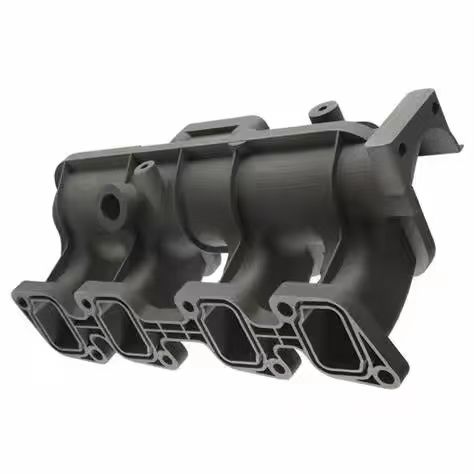
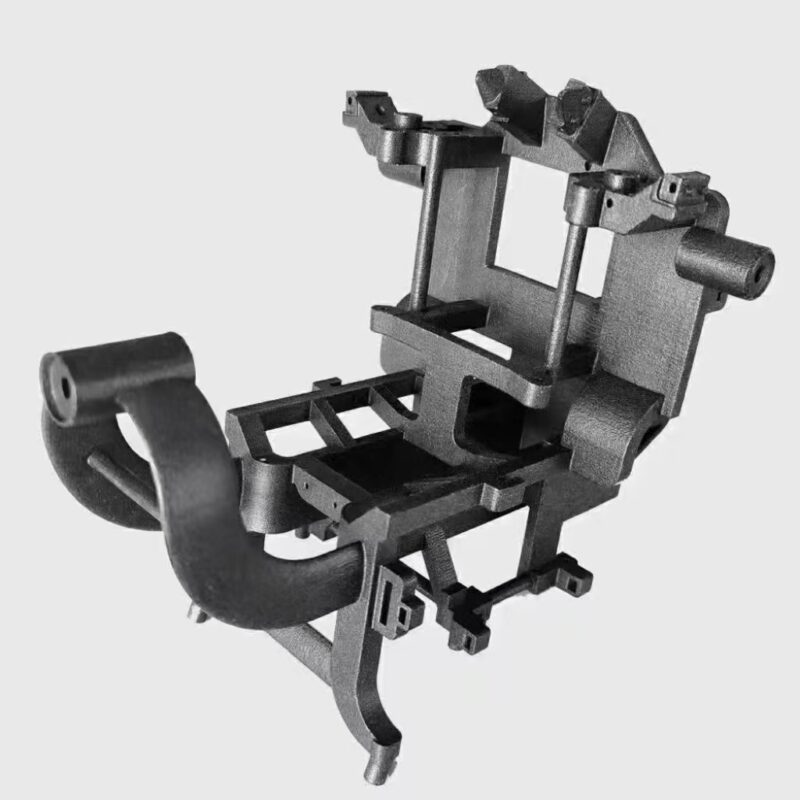
Can 3D-printed prototypes be used directly for functional testing? It’s not a simple "yes" or "no" question.
The answer is: yes, but with strict conditions. If your testing involves only visual verification, assembly interference checks, or low-load mechanism movement simulations, then 3D-printed prototypes are perfectly adequate. However, if you intend to conduct destructive strength tests, fatigue tests, or simulate the performance of final mass-production materials, the choice of process and material becomes critical. Choosing the wrong approach can lead to the prototype shattering the moment it hits the test rig; not only does this waste time, but it can also lead to erroneous judgments about the design itself.
Common pitfalls: What you think is "good enough" often falls far short.
1. Using visual prototypes as functional parts
To save costs, many teams use visual parts printed from SLA photosensitive resin for structural testing. While these resins look convincing, they tend to be brittle at room temperature; they often crack when self-tapping screws are installed, or snap after just a few cycles of engaging and disengaging a snap-fit. If the test involves repeated assembly/disassembly or mechanical stress, SLA resin is usually not the best choice.
The printing method determines whether a part is truly homogeneous or contains "weak planes." Without understanding this distinction, test data holds little reference value.
3. Simulating injection-molded part strength with 3D-printed parts
This is the most common pitfall. Even if a 3D-printed part uses the same material grade as a mass-produced part, its internal microstructure, residual stress, and surface finish differ significantly. Tensile strength and impact toughness values derived from printed parts generally cannot be directly equated to the performance of injection-molded parts. Functional testing should validate the soundness of the structural design, not merely verify figures found on a material property datasheet.
4. Overlooking the dual impact of post-processing on strength
Some post-processing methods can enhance strength—for instance, vapor polishing nylon can seal surface pores. Others, however, can be detrimental; if stress-relief annealing for metal printed parts is incomplete, residual internal thermal stress may cause the part to fracture at loads far below theoretical limits. Post-processing is often a double-edged sword; it must align with the testing objectives.
Signals to watch for before a failure occurs:
Early warning signs visible before testing:
Visible layer lines on the part's surface that run perpendicular to the primary direction of stress. This often indicates that the part is prone to tearing along the weakest interlayer bonding surfaces.
Tapping the prototype and listening to the sound: a dull, "dead" thud—distinctly different from the crisp metallic or hard-plastic ring of mass-produced parts—often suggests internal porosity or areas of incomplete fusion.
The supplier cannot provide actual mechanical test data for the specific material batch, offering only vague assurances like "it's similar to injection-molded parts." Reliable suppliers usually provide tensile test data from "witness coupons" (test bars printed alongside the actual parts) for reference.
Typical signs of trouble during testing:
Failure occurs outside the area of stress concentration—on a non-critical path. For instance, if a bracket breaks in the middle of a section with uniform wall thickness rather than at the designed weak point (such as a corner at the base), the failure is likely due to a printing defect.
Strength values across three samples from the same batch fluctuate by more than ~15%. This suggests instability in the printing process, rendering the data unreliable.
Verification methods: Mitigating risk before testing begins**
I. Ask the right questions
Before placing an order, clarify the following with the supplier: Is there tensile test data available from witness coupons printed alongside the parts? What is the orientation of the parts relative to the direction of applied stress during printing? If the test fails, can you provide a root-cause analysis rather than simply reprinting the part?
II. Check the technical clauses in the contract
Simply specifying "3D-printed nylon part" in the contract is insufficient. The contract should, at a minimum, specify the printing process (e.g., SLS), material grade (e.g., PA12), and tolerance requirements for critical dimensions. If a supplier promises precision at the ±0.01mm level, it implies their CNC machining capabilities and quality control systems can support this standard; including such details in the contract ensures they are legally binding.
III. Practical on-site verification methods
You don't necessarily have to wait to use a universal testing machine. Upon receiving the prototype, you can perform a small-scale destructive test on a non-critical area. You can often make a rough assessment of a material's toughness by using pliers to snap a sacrificial support structure or process tab and observing whether the fracture is brittle or ductile (yielding before breaking). Another method is to use calipers to check if critical mating dimensions fall within tolerance; parts with significant dimensional deviations often suffer from internal density issues as well.
IV. Assessing the Supplier's Relevant Project Experience
If your project falls into sectors with rigorous demands for strength and precision—such as new energy vehicles, medical rehabilitation, or intelligent robotics—it is crucial that the supplier has experience with similar cases. For instance, Jingrui Proto Company once customized core components for an intelligent robotics firm using CNC machining on aluminum alloy combined with hard-coat anodizing; by maintaining precision within ±0.02mm, they met the robot's requirements for motion accuracy and stability. Such cross-industry practical experience can help you avoid common pitfalls in process selection right from the start.
Remediation and Scope of Application After a Setback: Minimizing Loss vs. Stubborn Persistence
If testing has already failed, take these three steps immediately:
Halt testing for all samples in the same batch, as the data is no longer reliable. Send both the failed parts and the untested samples to the supplier for fracture analysis and CT scanning to pinpoint whether the issue stems from the material, the manufacturing process, or the design. If a process defect is identified, require the supplier to adjust parameters, produce new samples, and provide data from accompanying test bars (witness coupons) processed in the same batch.
If the problem lies in the initial selection—for example, if SLA resin simply cannot withstand your load requirements—decisively switch processes. Consider using SLS nylon printing for functional parts or opting for CNC machining. The CNC precision machining services offered by this company support aluminum alloy, stainless steel, copper, and engineering plastics with precision up to ±0.01mm; this is often the more reliable choice for functional testing that requires material properties representative of actual mass production.
When Should You Bring in a Professional Team?
When your testing requirements involve high-low temperature cycling, fatigue life, high-speed impact, or medical-grade biocompatibility, the cost of trial-and-error on your own is prohibitively high. Service providers with nearly two decades of deep experience in rapid manufacturing—such as "Shouban Model Goddess" (Hand-model Goddess)—can offer process selection advice starting from the blueprint optimization stage, preventing you from repeatedly investing in the wrong manufacturing approach. With a track record of over 40,000 projects—and sales representatives handling an average of 280 orders per month—the company has accumulated the expertise needed to help you quickly identify the manufacturing solution best suited to your testing objectives.
Ultimately, the feasibility of using 3D-printed prototypes for functional testing depends not on the printing technology itself, but on whether your choice of process, materials, and post-processing aligns with your testing goals. When aligned, they serve as highly efficient validation tools; without that alignment, you are left with nothing more than a pile of plastic blocks that look the part but cannot actually be used.