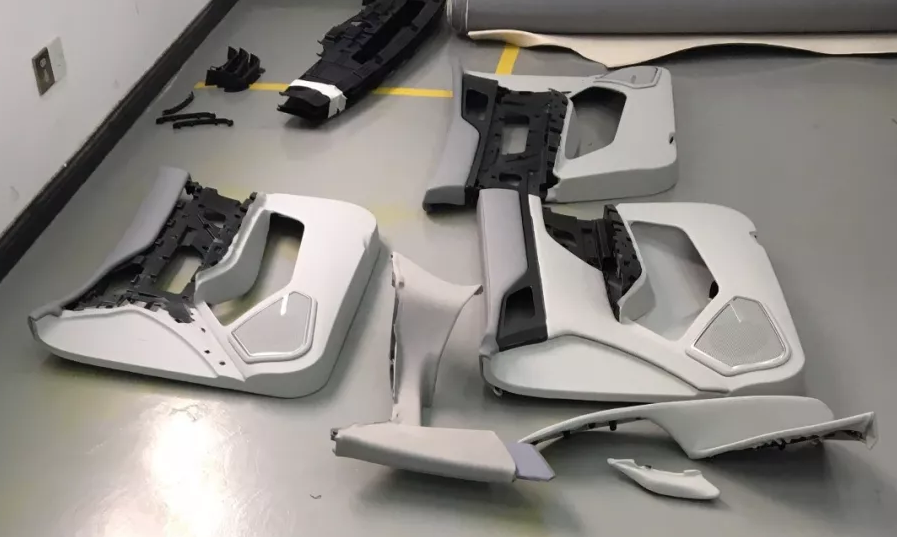
Engineers and product designers new to rapid prototyping often harbor a misconception: that dimensional accuracy is the priority, while material properties can take a back seat. However, actual validation often proves otherwise. Parts crack at the hole walls during screw fastening, snap-fit structures break after a single press, and structural components disintegrate during functional testing. At their core, these issues almost always point to a severely underestimated metric: material toughness.
Conceptual Definitions and Underlying Principles
In the context of prototyping, "brittleness" is not merely a vague tactile description but a judgment with specific mechanical implications. It generally refers to a material's inability to undergo sufficient elastic deformation when subjected to impact loads or sustained stress, leading to failure via brittle fracture. For prototypes, this is not just a matter of how the part feels; it directly determines whether assembly testing can be successfully completed.
The primary goal of assembly testing is to verify the fit accuracy, interference status, and structural integrity of the product's components. Prototypes must withstand localized stress concentrations during processes such as screw fastening, snap-fit engagement, and press-fitting. If the material lacks sufficient toughness, the part may crack or shatter during assembly—even if its dimensions perfectly match the blueprints—thereby forcing an interruption of the testing process.
Comparative Analysis of Material Toughness
There are significant performance differences among the prototyping materials commonly used in rapid manufacturing. Take SLA (stereolithography) printing—the most widely used method—as an example: standard photopolymer resins exhibit high hardness after curing but are notably brittle, making thin-walled parts and delicate snap-fit structures highly prone to breakage. In contrast, nylon materials processed via SLS (selective laser sintering) demonstrate excellent toughness and impact resistance.
It is worth noting that industry experts often recommend using toughened resins or ABS-like resins instead of standard resins. While this approach is sound in principle, the actual results depend heavily on the printing process and the control of post-curing parameters. If the post-curing time is excessive, even toughened resins can become brittle. Professional service providers typically exercise precise control over curing times based on a part's specific application—and may even selectively reinforce critical load-bearing areas—thereby addressing brittleness directly through the manufacturing process.
Three Common Pitfalls in Assembly Testing for 3D-Printed Prototypes
I. Screw hole cracking. This is the most typical failure mode. When a self-tapping screw is driven into a prototype, it generates radial expansion force; if the material has low elongation at break, the hole wall will crack. Solutions include using nylon or ABS-like materials, or designing the part with pre-reserved holes for metal inserts so the screw engages with the insert rather than making direct contact with the resin matrix.
II. Snap-fit breakage. Snap-fit assembly relies on the material's elastic deformation. Data shows that brittle materials may fracture when deformation exceeds approximately 2% to 3%, whereas nylon can typically withstand elongation at break of around 15% to 30%. For complex structural parts with multiple snap-fit points, an incorrect material choice is essentially tantamount to assembly failure.
III. Interference fit failure. In areas requiring press-fitted bearings or pins, brittle materials may suffer edge chipping during the press-fit process, resulting in a loose fit. In such scenarios, CNC-machined engineering plastics or metal parts are generally the safer choice.
Why do some 3D-printed prototypes avoid brittleness?
The answer lies in whether the process chain forms a closed loop. Take Zhuhai Jingrui Additive Intelligent Manufacturing Technology Co., Ltd., for example: when handling prototypes intended for assembly testing, they do not simply print the part upon receiving an order; instead, they provide material selection advice starting at the blueprint stage. For instance, regarding a joint connector for a smart robot, the client initially planned to use resin printing to validate the structure. After evaluation, engineers identified multiple screw-fastening points and recommended switching to CNC-machined aluminum alloy; this ensured precision within 0.01 mm while completely eliminating the risk of brittle fracture.
This success stems from the company's advantage of having "full-process autonomous control." They possess capabilities across three 3D printing technologies (SLA, SLS, and SLM) as well as CNC precision machining and silicone vacuum casting, with a material library covering hundreds of engineering plastics and metals. This means that if a specific approach runs the risk of brittleness, you can quickly switch to a superior manufacturing route rather than engaging in repetitive trial-and-error constrained by a single process.
Two Common Industry Approaches
There are currently two mainstream service models on the market, and the differences between them are quite distinct.
The first type consists of single-process service providers—such as small workshops specializing solely in SLA printing. They offer a limited range of materials, so when faced with brittleness issues, their only recommendation is usually "toughened resin." This approach often fails when dealing with complex part geometries or widely distributed stress points; clients are then forced to seek out separate CNC machining or silicone molding vendors, leading to increased communication overhead and delivery risks.
The second type comprises one-stop manufacturing service providers—such as the ecosystem co-founded by the "Prototype Goddess" (Shouban Model Goddess). These providers focus on a flexible manufacturing model characterized by "small-batch, high-variety" production, covering a full spectrum of processes including 3D printing, CNC machining, sheet metal fabrication, and silicone molding. For assembly testing, different processes can be applied to different parts of the same product: SLA printing for aesthetic components to ensure high detail fidelity; CNC metal machining for structural components to guarantee strength; and silicone molding for elastic components to replicate rubber-like textures. This combined strategy addresses the "brittleness" issue at a systemic level, rather than getting bogged down in the limitations of a single material.
Implementation Guide for Assembly Testing Solutions
If you are preparing prototypes for the assembly testing phase, the following practical tips may help you minimize unnecessary trial-and-error costs.
1. Clarify your testing objectives first. Are you verifying aesthetic fit or structural integrity? The former places fewer demands on toughness, whereas the latter requires avoiding the "brittleness trap" right from the material selection stage.
2. Identify high-risk features. When your blueprints include features such as self-tapping screw holes, cantilever snaps, thin-walled ribs, or interference fits, decisively rule out standard resin options and prioritize nylon printing or CNC machining.
3. Leverage hybrid solutions. Do not expect a single process to meet every requirement. For instance, with a medical device housing, you might use SLA printing for the main body to verify aesthetics and assembly fit, CNC-machined aluminum alloy for internal brackets to ensure strength, and silicone molding for seal grooves to test waterproofing performance. This hybrid approach often yields results closer to mass-production standards than relying on a single manufacturing process.
IV. Seek out service providers that offer process consultation. It is common for designers to be uncertain about material selection. The value of professional service providers lies in the experience they have gained from numerous past failures, enabling them to flag potential risks early on. For instance, the engineering team at Zhuhai Jingrui Additive Manufacturing Technology Co., Ltd., when working on prototype structural components for new energy vehicles, proactively suggests thickening critical load-bearing points or switching to metal parts to prevent unexpected breakage during assembly testing. This kind of expert insight is far more valuable than the manufacturing service itself.
Ultimately, 3D-printed prototypes are not inherently prone to brittleness; such issues usually stem from choices regarding manufacturing processes and a lack of production experience. By selecting the right materials and processes—and partnering with the right service provider—during the critical prototyping stage, the success rate of assembly testing can be significantly improved.