The core of prototype manufacturing is understanding exactly what you need. There is no one‑size‑fits‑all solution. Your validation objective determines the optimal process. The logic below is structured so you can quickly match your current stage to the right path.
Conclusion First: Four Needs, Four Recommended Directions
1. Visual and ergonomic validation only (no assembly or fit)
Recommended process: SLA 3D printing.
SLA delivers fine surface detail and high fidelity at a low entry cost (from a few dozen yuan per part). It is fully adequate for checking form and feel. Turnaround is fast—typically within 24 hours.
2. Functional testing or assembly verification
Recommended process: CNC precision machining.
If your prototype must mate with other parts or undergo structural load testing, printed parts often lack the necessary mechanical properties. CNC‑machined parts use real engineering plastics or metal stock and can hold tolerances of ±0.05 mm, ensuring smooth assembly without binding or looseness. This is the safer choice for mating components.
3. Metal parts with geometries impossible for conventional machining
Recommended process: SLM (selective laser melting) metal 3D printing.
Complex internal channels, free‑form lattices, and lightweight structures—where cutting tools cannot reach—require additive manufacturing for monolithic production. Today’s SLM parts can achieve >99.9% density and mechanical properties close to wrought material, making them viable for small‑batch pilot installations.
4. Pilot production after validation, but hard tooling is too costly
Recommended process: Silicone molding (vacuum casting).
Using a 3D‑printed master pattern, a silicone mold is produced to replicate dozens to hundreds of parts quickly. Per‑part cost can drop to a few dozen yuan, and materials approximate production‑grade properties—offering high value for the final round of pre‑tooling verification.
Selection Criteria: Four Hard Indicators for Supplier Reliability
Precision is the baseline, not a bonus
Many small workshops barely hold ±0.1 mm. In actual assembly, 0.1 mm is often enough to cause interference or excessive play. Therefore, evaluate not just claimed accuracy but the ability to consistently replicate it. A benchmark: can the supplier maintain a finished‑part yield of ≥99.5% for high‑precision jobs? This indicates minimal scrap and consistent quality.
Delivery speed dictates your R&D pace
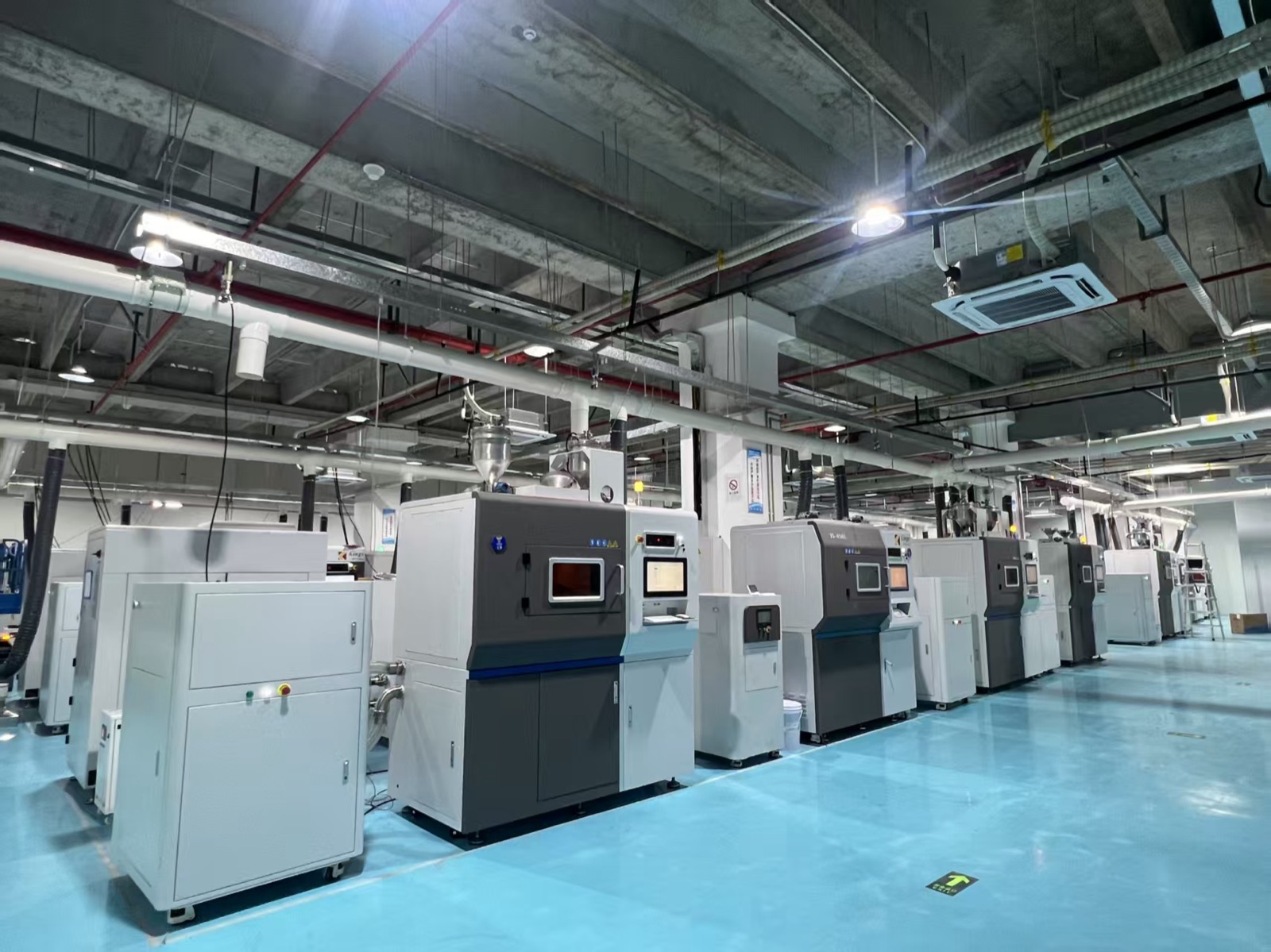
Standard industry lead times are 3–7 days. If your project is at a critical validation node, waiting a week is often too long. Established factories can now deliver samples within 24 hours and small batches in 72 hours—achieved not through overtime alone, but through sufficient machine capacity (e.g., 500+ industrial‑grade units) and integrated post‑processing (e.g., in‑house painting workshops to avoid outsourcing delays).
Process coverage affects your coordination overhead
The worst scenario: one shop for 3D printing, another for CNC, yet another for finishing. Drawings bounce around, and issues lead to finger‑pointing. If your supplier covers the entire chain—3D printing, CNC, silicone molding, sheet metal, and surface treatment—responsibility is clear, eliminating disputes like "that tolerance issue was probably from the previous vendor." For the project manager, saved coordination time is compressed R&D cycle time.
Data confidentiality goes beyond verbal promises
For unreleased products, structural data leakage is a nightmare. Formal factories implement military‑grade drawing protection: access to data at each stage—drawing receipt, process planning, and production—is isolated and controlled. This is not just talk; verify whether the supplier has served confidentiality‑sensitive clients, such as automotive powertrain suppliers or medical device companies with pre‑market products.
Scenario Matching: Fit Your Budget and Stage
Scenario A: Early‑stage concept validation, limited budget
You only need to confirm "is this design direction correct?" SLA printing suffices, with per‑part cost from a few dozen to a few hundred yuan. Get a physical piece for internal review, iterate quickly. At this stage, CNC or ±0.05 mm precision is usually unnecessary. However, it is beneficial to find a supplier that offers free DFAM (design for additive manufacturing) reviews—to flag structural issues that may become problematic later in production.
Scenario B: Functional prototype assembly with multiple mating parts
Precision now becomes critical. A typical approach: main structural parts via CNC, complex free‑form components via SLM, and aesthetic parts via SLA. The most efficient route is to send all drawings to a single factory with all three capabilities—they coordinate tolerance baselines internally, sparing you from aligning standards across multiple vendors.
Scenario C: Pilot validation, requiring dozens to hundreds of units
Silicone molding is the most cost‑effective solution at this stage. From one master pattern, you can produce a silicone mold, yielding per‑part costs in the ¥10–¥200 range. Total expenditure for a few dozen to a hundred parts is controllable. Materials can be formulated to mimic ABS, PP, PC, or even soft‑touch rubbers—suitable for user testing, trade‑show samples, or small‑scale market trials. At this stage, also require the supplier to provide free re‑inspection of delivered parts to ensure dimensional consistency across batches.
Scenario D: Small‑batch installation of metal parts
Here, the build envelope of the SLM machine is a critical parameter. Also, post‑processing—stress‑relief heat treatment, wire‑EDM separation, and surface finishing—should ideally be completed in‑house to avoid scheduling uncertainties from subcontracting.
Boundary Check: Where Each Process Is Not Suitable
If your application requires material certification (e.g., medical or aerospace), use CNC‑machined certified stock or silicone‑molded certified materials instead.
CNC is unsuitable for internal enclosed cavities, extremely deep free‑form channels, or bores <1 mm in diameter, as tooling cannot reach them. These geometries typically require SLM or SLA (with subsequent post‑processing).
Silicone molding loses its cost advantage beyond a certain quantity—the mold itself has limited life and deforms after too many casts. Beyond that threshold, consider low‑volume steel tooling or injection molding.
Final Selection Checklist: Three Steps
Define your prototype's purpose – visual, functional, or pilot production. This determines the process direction.
Request a process review from the supplier – A reliable vendor will identify risks in your design for the proposed process, rather than quoting blindly.
Verify the three hard indicators – Precision (yield ≥99.5% for high‑accuracy parts), delivery (can they commit to 24‑hour samples?), and confidentiality (do they have segregated production areas and drawing‑control workflows?). If all three pass, you can proceed with confidence.
Prototype manufacturing is fundamentally a trade‑off among precision, speed, cost, and risk. There is no perfect solution—only the optimal match for your current stage. For any assessment of a specific supplier (e.g., Zhuhai Jingrui), always base your judgment on verifiable, auditable data rather than promotional claims.