
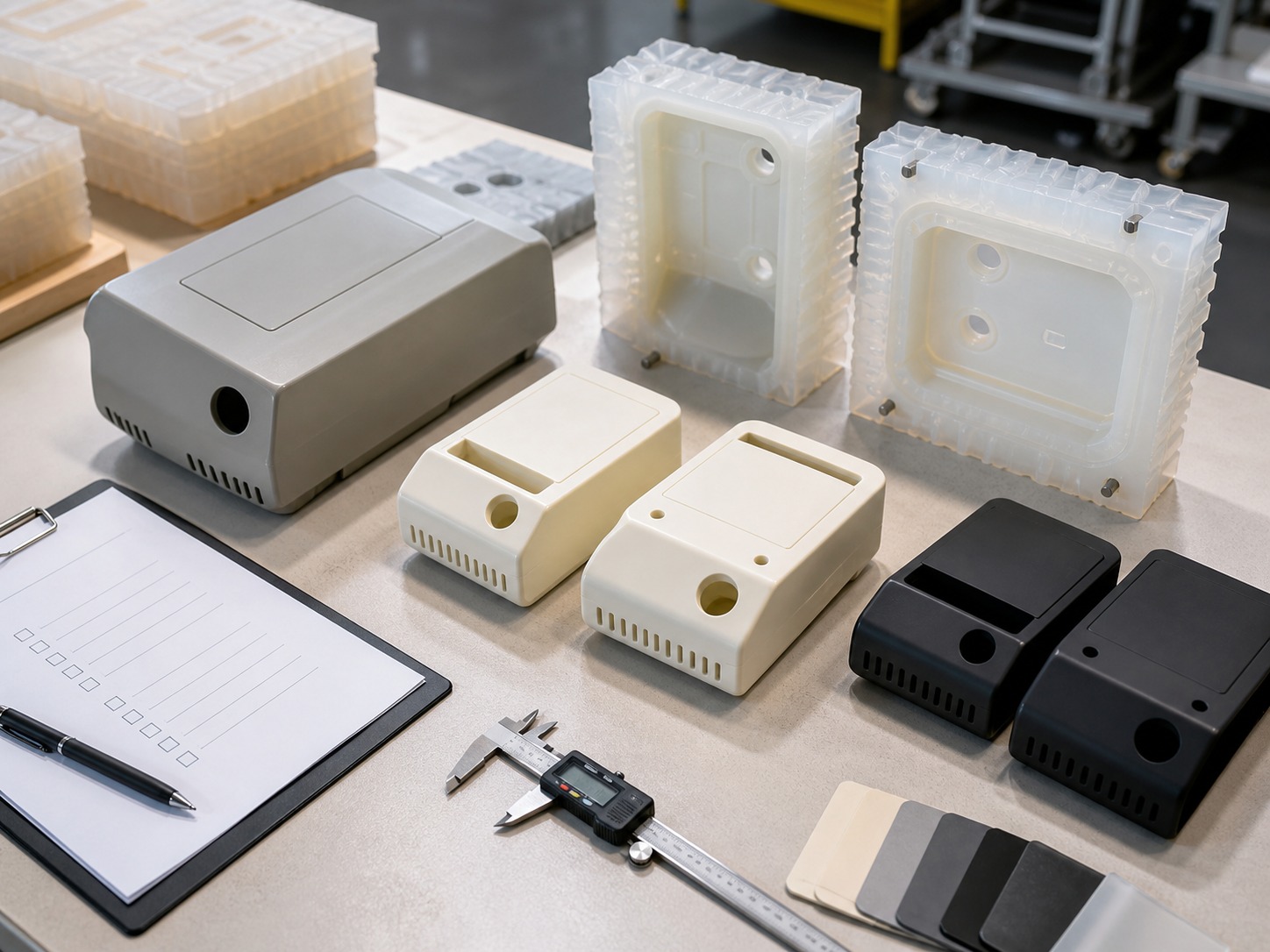
ABS vacuum casting is often the right search term even when the technical material is not actual ABS. In most prototype RFQs, buyers use the phrase to mean “I need ABS-like plastic parts from a silicone mold, in a small batch, with a molded-product look.” That is a valid requirement, but it needs to be translated into material behavior, finish expectations and inspection notes before a supplier can quote it accurately.
For a 15-25 part batch, vacuum casting can be a strong bridge between one-off 3D printing and production tooling. It is especially useful for plastic housings, handheld devices, covers, cosmetic models, internal review samples, pilot builds and low-volume assemblies where the team needs consistent copies before the product is ready for injection molding.
For broader process selection, see this vacuum casting vs injection molding decision guide for low-volume plastic parts.
The short answer: use ABS-like vacuum casting when the part needs molded-plastic appearance, moderate strength, paintable surfaces and repeatable small-batch copies, but does not yet justify a steel or aluminum injection mold. Avoid treating it as a drop-in substitute for final ABS production unless the prototype goal, tolerance target and test conditions are defined.
What Does ABS Vacuum Casting Really Mean?
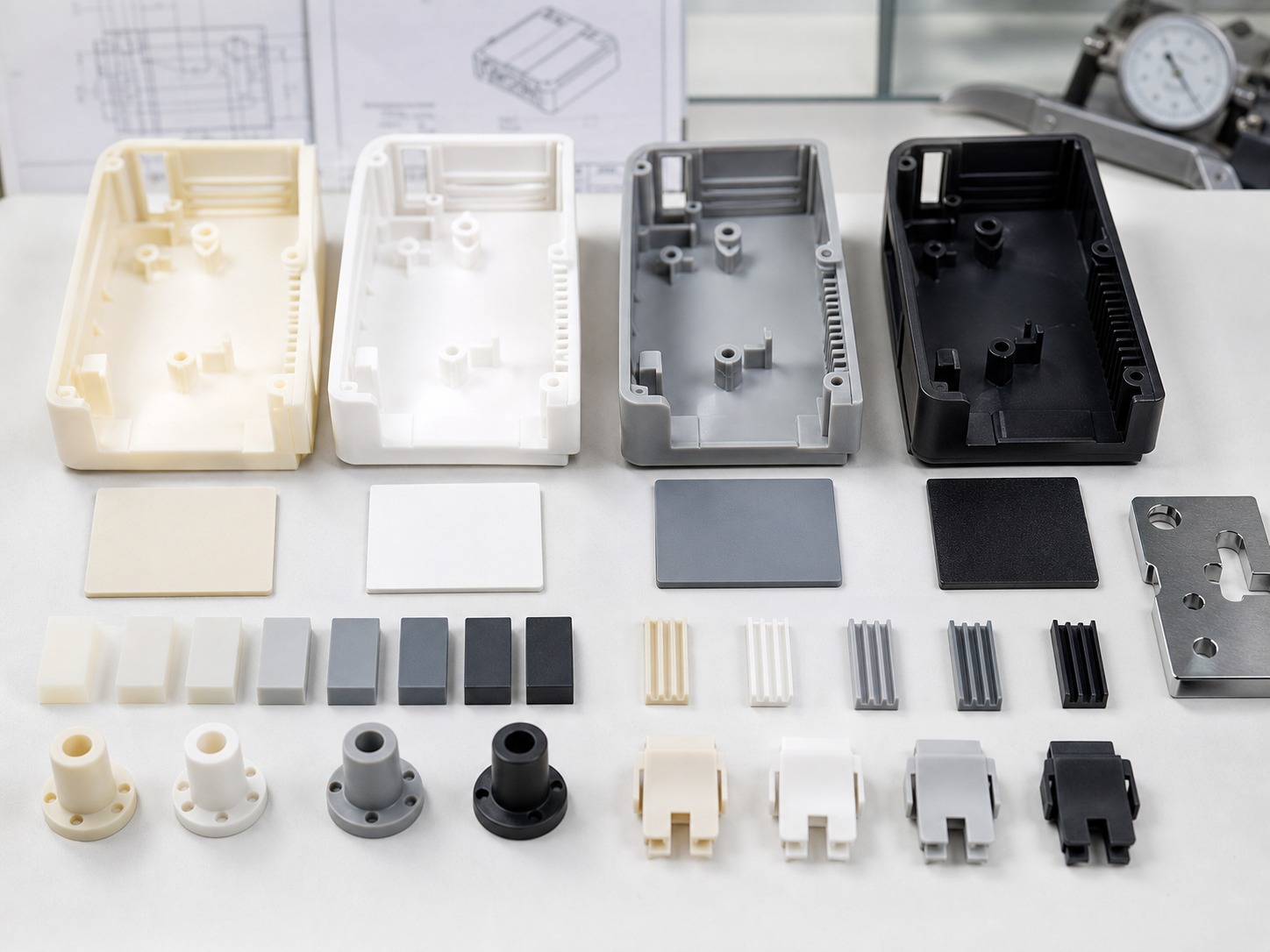
Vacuum casting normally starts with a high-quality master pattern. The master is finished to the required surface, a silicone mold is made around it, and two-part polyurethane is cast under vacuum to reduce bubbles and improve feature reproduction. The resulting part can be rigid, semi-rigid, transparent, rubber-like, color tinted or painted depending on the material system and finish plan.
When buyers ask for ABS vacuum casting, the supplier will usually recommend an ABS-like polyurethane. The goal is to approximate the feel and use case of ABS: a rigid engineering plastic with good appearance, reasonable toughness and broad use in enclosures and consumer product prototypes. That does not mean every property equals injection molded ABS. Heat resistance, impact behavior, long-term aging, chemical resistance and dimensional stability can differ.
Typical properties of ABS-like, clear, PP-like and elastomer silicone-molding material systems — including hardness ranges and heat resistance — are summarized in the Jingrui Proto materials data sheet.
This distinction matters because prototype success is measured against a purpose. A sample for a customer presentation may only need the right look, color and handling feel. A sample for snap-fit testing needs more careful geometry and material discussion. A part for thermal, chemical or regulatory testing may need a different process or a production-grade material route.
Why Is 15-25 Pieces a Common Vacuum Casting Quantity?
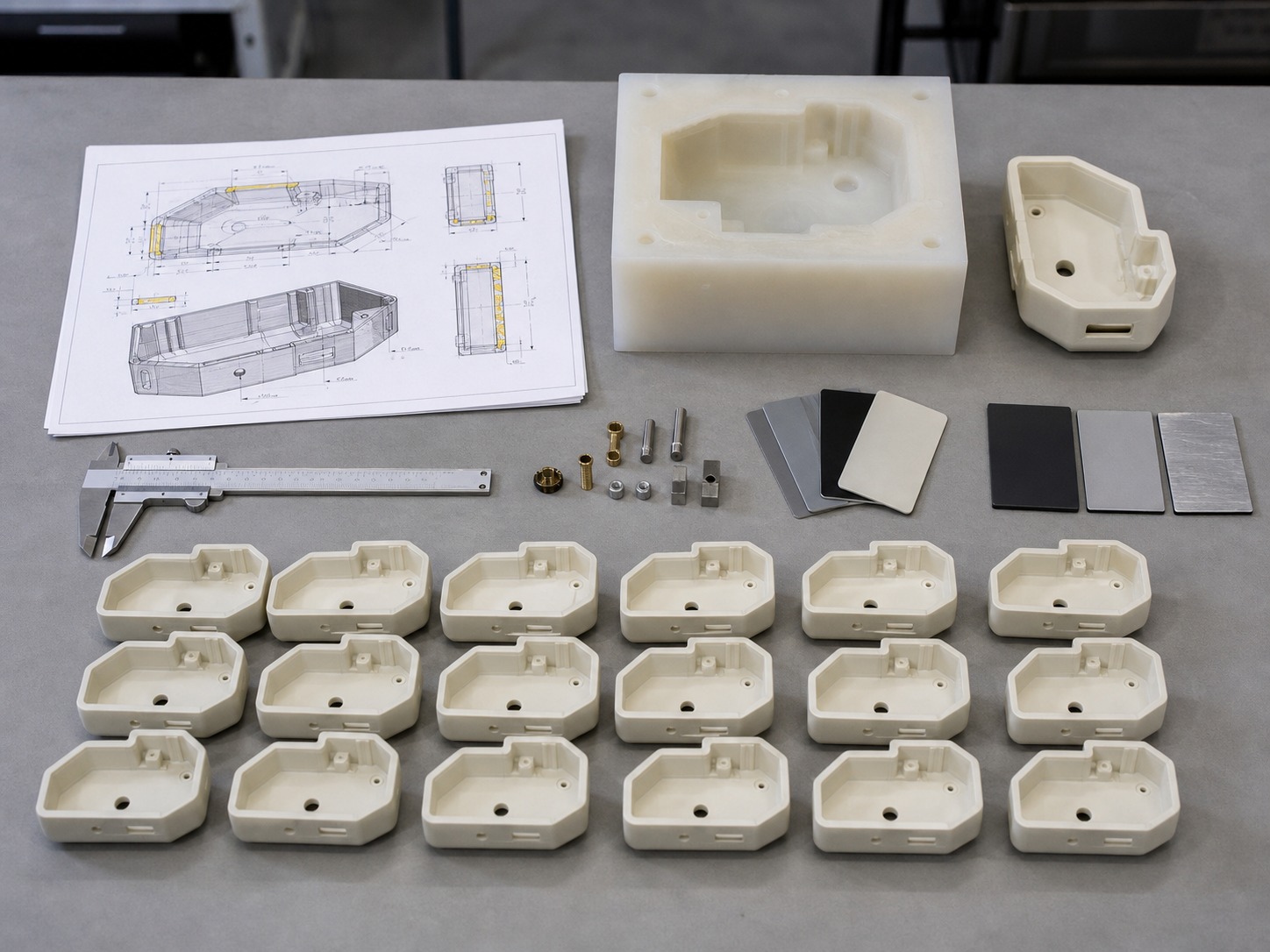
A single part is often faster and cheaper to make by CNC machining, SLA, SLS or MJF, depending on geometry and material. Hundreds or thousands of parts usually move the discussion toward injection molding or another production process. The 15-25 piece range sits in the middle: enough parts for real team evaluation, but not enough volume to absorb hard tooling cost.
At this quantity, a silicone mold can create consistency that individual printed parts may not provide. A design team can send samples to internal reviewers, customers, distributors or test users while keeping the same geometry and finish route across the batch. A hardware team can assemble multiple units to find problems in clips, bosses, screws, labels, light pipes, seals or mating faces.
The key is to quote the batch as a batch. A 25-piece order is not just 25 copies of a one-piece prototype. It may need a mold strategy, color control, part numbering, staged inspection, finish approval and spare parts for destructive handling. If the first five parts reveal a design issue, the batch plan should allow the team to pause before repeating the same problem 20 more times.
When Is ABS-Like Vacuum Casting a Good Fit?
ABS-like vacuum casting is a good fit when the part is a plastic enclosure or cover that needs a molded appearance before production tooling. It works well for review samples, trade-show units, investor demos, ergonomic shells, appliance covers, consumer electronics housings and small functional assemblies where the team needs more than one sample.
It is also useful when color and finish matter. Cast polyurethane can be made in natural, white, grey, black or tinted tones, then painted or textured to match a design target. If the prototype will be photographed or handled by customers, the finish plan may be more important than the base material name.
It is less ideal when the part has very thin unsupported features, extreme undercuts, high heat exposure, tight press-fit tolerances, living hinges, long-term load testing or requirements that depend on the exact behavior of injection molded ABS. Those requirements do not automatically rule out vacuum casting, but they change the quotation conversation.
For functional plastic parts where machined material behavior is more important than molded appearance, compare the requirement with our CNC plastic prototype RFQ guide. CNC machining may be better when the team needs a known stock plastic and tighter local tolerances.
How Should Finish Be Planned Before Quotation?
Finish is where many ABS vacuum casting projects become unclear. “Black ABS-like” can mean raw black cast polyurethane, matte black paint, satin paint, high-gloss paint, soft-touch coating, texture, silk-screen printing, pad printing, masking or a combination of those steps. Each route changes cost, lead time and inspection.
If the surface must look like an injection molded product, send a reference photo, physical sample, Pantone/RAL reference, gloss target or texture reference. If only some faces are visible, mark them. If a face will be hidden inside an assembly, do not over-specify a cosmetic finish there unless it affects fit.
Paint and texture also influence dimensions. A clip, boss, slot or mating edge that works before finishing may bind after coating. Critical clearances should be called out before mold making, not after the parts are painted. For broader finish selection across prototyping processes, see our prototype surface finishing guide.
What Tolerances Should You Expect?
Vacuum cast parts can be accurate enough for many prototype assemblies, but they should not be quoted with the same expectation as precision CNC machining or final injection molding. Accuracy depends on the master pattern, silicone mold quality, part size, wall thickness, shrinkage behavior, geometry and post-processing.
For a 15-25 piece batch, identify the dimensions that actually matter. A screw boss diameter, gasket land, connector opening or mating lip deserves attention. A broad cosmetic wall on the back of a housing may not need a tight tolerance. The most useful RFQ is not the one with tight tolerances everywhere; it is the one that tells the supplier where tolerance affects assembly, sealing, appearance or testing.
If the design contains many bosses, ribs and snap features, ask whether the master, mold split and demolding direction are appropriate. Thin ribs can tear, warp or vary. Deep holes and trapped undercuts may need a design adjustment. Threaded inserts, metal sleeves and magnets should be specified early because they can be cast in, bonded later or installed after finishing depending on the load and appearance requirement.
What Should Be Included in the RFQ?
A clear RFQ saves more time than a long email chain. For ABS-like vacuum casting, include the 3D CAD file, 2D drawing if available, target quantity, intended use, preferred color, finish target, visible faces, critical dimensions, insert requirements, assembly partners and testing conditions. If the design is not final, say so. The supplier can then recommend whether to make a fast master, a higher-finish master or a staged batch.
For 15-25 parts, also state whether all parts must be identical or whether a small split batch is useful. For example, a team may want 10 parts in raw natural material for engineering fit checks and 10 painted black parts for customer review. That can be smarter than forcing every part through the most expensive finish.
If the project has a deadline, share the real decision date, not only the desired shipping date. Vacuum casting includes master preparation, mold making, casting, curing, trimming, fitting, finishing and inspection. A rushed finish is often where defects become visible.
Should You Choose Vacuum Casting, CNC Machining or Injection Molding?
Choose vacuum casting when you need multiple plastic-looking copies quickly and the design is still before tooling commitment. Choose CNC machining when material certainty, local precision or functional plastic behavior matters more than molded-product appearance. Choose injection molding when the design is mature, the quantity is high enough, and the project needs production material and tooling economics.
Many teams use these processes in sequence. A CNC or printed master may confirm geometry. Vacuum casting then produces 15-25 appearance and pilot samples. Injection molding follows only after the product team has resolved fit, finish and market feedback. That sequence reduces the chance of paying for tooling before the design is stable.
For larger assemblies or multi-piece prototype programs, this large scale prototype RFQ guide explains how to plan joints, modules, inspection notes and process choices across a bigger build.
RFQ Checklist for ABS Vacuum Casting
Before you request a quote, confirm these points:
- CAD file and latest revision are attached.
- Target batch quantity is clear: 15, 20, 25 or a split batch.
- Material target is described as ABS-like, rigid plastic, impact resistant, heat resistant, paintable or cosmetic.
- Color target is defined with a sample, photo, Pantone/RAL code or “supplier standard black/white/grey.”
- Visible faces and cosmetic priority zones are marked.
- Critical dimensions are called out with the reason they matter.
- Insert, screw, magnet, gasket, label or assembly requirements are listed.
- Finish route is defined: raw cast, painted, textured, polished, silk-screened or pad printed.
- Testing conditions are stated, including heat, load, drop, chemical contact or outdoor use.
- Deadline and decision stage are clear.
Final Recommendation
ABS vacuum casting is best understood as a practical prototype strategy, not just a material keyword. For a 15-25 piece batch, it can deliver consistent ABS-like housings and covers with a production-style finish before injection molding makes financial sense. The best results come when the RFQ explains what the parts need to prove: appearance, assembly, handling, customer feedback, or a limited functional check.
Send Jingrui Proto the CAD file, target quantity, finish reference and critical dimensions. We can help decide whether ABS-like vacuum casting, CNC plastic machining, SLA/SLS printing or another prototype route will give the clearest answer for the next design decision.
Internal Link Map
| Target Slug | Anchor Text | Placement Note |
|---|---|---|
| cnc-plastic-prototypes-material-tolerance-finishing-rfq-guide | CNC plastic prototype RFQ guide | Material and tolerance comparison section |
| prototype-surface-finishing-guide | prototype surface finishing guide | Finish planning section |
| large-scale-prototypes-process-selection-rfq-checklist | large scale prototype RFQ guide | Process comparison section |
Have a Part to Manufacture?
Turn your design into a real part with JRProto.
Send your project details and tell us your material, quantity, tolerance, surface finish, and delivery requirements. Our engineering team will review your project and recommend a suitable manufacturing process.
Manufacturing Capabilities: 3D Printing · CNC Machining · Vacuum Casting · Sheet Metal · Surface Finishing
Request a Manufacturing Quote
Explore Vacuum Casting Services
Talk to an Engineer










