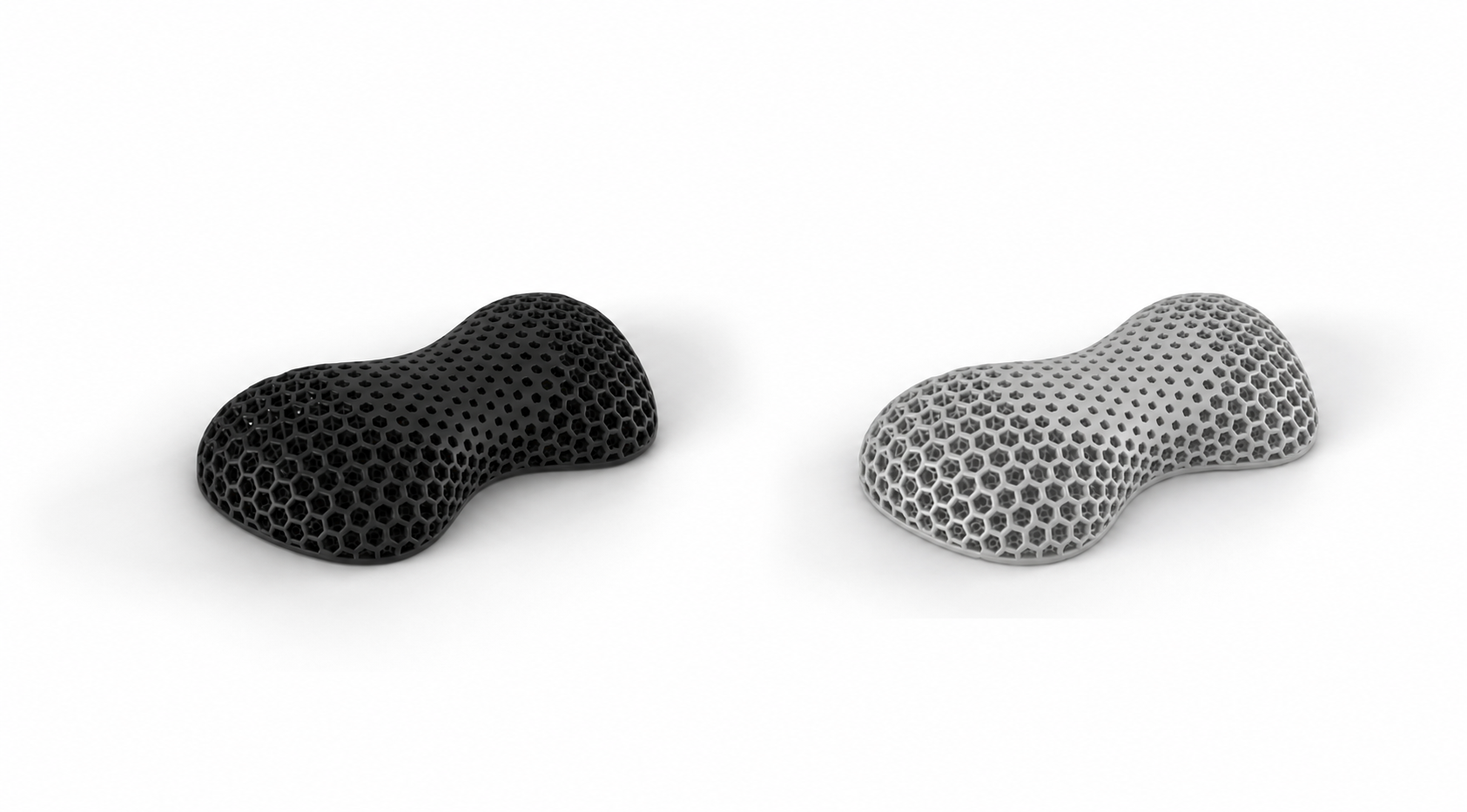
Image: 60005 (L#) wrist-rest product references from the supplied sheet, with lettering removed. These show existing model appearance, not medical or laboratory performance evidence.
Quick Answer
A useful 3D printed mouse wrist rest must fit the workstation and the intended contact area, remain stable on the desk, recover after loading and tolerate its approved cleaning routine. Lattice geometry creates customization options, but does not automatically establish ergonomic suitability, durability or a medical benefit. Retail approval should assess the finished product with the intended mouse, desk surface and user task.
For OEM and private-label buyers, distinguish a cosmetic adaptation of an existing rest from a new mechanical design. Changes in height, contact curvature, lattice structure or base geometry can change how the product behaves. This guide explains the sample and quotation decisions needed before a small-batch launch.
Define how the rest will be used
“Wrist rest” is a retail category name, not a complete use specification. Clarify whether the product is intended as a palm support during pauses, a movable support beside a mouse or another defined desktop accessory. Do not assume that the same shape suits continuous contact, every pointing device or every desk height.
OSHA’s Computer Workstations eTool treats wrist/palm supports as part of the overall workstation arrangement. Its guidance distinguishes resting from active typing and discusses supporting the palm rather than pressing the wrist against a rest. This is general workstation context, not a medical approval of a printed product. The buyer should evaluate the accessory alongside chair, desk and input-device placement.
Start the development brief with the intended device, available space, contact location and use instructions. Include left/right-hand requirements where relevant. A rest that looks symmetrical may still perform differently when positioned beside different mouse shapes or when the user’s working area is constrained.
Existing product reference: 60005 (L#)
Jingrui Proto’s company-supplied records identify 60005 (L#) as an ergonomic wrist-rest model, with black and gray reference colors. The images establish model appearance, not dimensions, material chemistry, a measured pressure distribution or a health outcome. Confirm the intended model and current specifications before ordering.
If your brand needs another height, contour or lattice pattern, describe it as a custom development request. Do not assume that a revised shape inherits unmeasured performance from the existing model. Color, finish, geometry and production requirements should be confirmed together in the quotation.
Jingrui’s 3D printing service overview provides the broader manufacturing context. The suitable process and material for a flexible desk accessory require project review. A lattice photograph cannot identify whether the polymer is a thermoplastic or a light-cured formulation.
Geometry begins with loaded height
Measure the rest’s overall envelope, but also consider the height at the intended contact location under representative loading. A tall unloaded shape can settle considerably; a firm structure may barely move. The relevant comparison is how the finished accessory interacts with the device and user, not the nominal height alone.
Review the crest, side slopes, perimeter edges and transition into the base. A small radius or abrupt change can create an undesirable contact area even when the central surface feels soft. Compare the prototype in its actual orientation with the intended pointing device rather than judging the contour only in CAD.
Keep dimensional changes deliberate. If the first sample feels too high, distinguish a height issue from excessive stiffness or an inappropriate contact region. Lowering the envelope and softening the lattice at the same time may improve the impression without revealing which change solved the problem.
| Design decision |
What to evaluate |
Buyer approval evidence |
| Height and contact contour |
Relationship to the mouse and desk |
Installed fit and loaded-shape review |
| Base footprint |
Stability during placement and contact |
Rocking and sliding checks |
| Lattice region |
Local deformation and recovery |
Consistent compression comparison |
| Edge geometry |
Surface feel during intended contact |
Finished-sample handling review |
| Left/right orientation |
Accessory placement and available space |
Intended-use sample evaluation |
| Logo and decoration |
Contact feel and cleanability |
Final branded reference sample |
Lattice design: balance response and practical handling
Cell shape, member size, orientation and connectivity determine how the structure deforms. A more open appearance does not establish a softer or more durable product. Review the entire section, including a denser base or perimeter, rather than comparing only the most visible surface.
Pay attention to thin junctions and transitions between regions. A local indentation can transfer deformation into a narrow connection. Handling, packing or repeated placement may load that connection differently from the intended contact during use. Inspect the underside and perimeter as well as the top face after evaluation.
Open cells also influence cleaning access and how debris can enter the structure. The smallest printable opening is not necessarily the most practical retail design. Ask whether the proposed pattern can be processed, inspected and cleaned adequately before it is selected mainly for its visual effect.
Select the material and surface together
Request the exact material identity, manufacturing route and delivered-state requirements. Nominal hardness is useful context but cannot describe the response of the whole lattice. Two products made from similar-hardness materials may feel different because their geometry and thickness differ.
Review the intended contact conditions and the available material documentation. Do not infer skin-contact suitability, hypoallergenic behavior or chemical resistance from a generic polymer label. Any specific claim needs evidence applicable to the selected material, finish and use.
Inspect the finished surface for unwanted residue, sharp remnants, tackiness, loose particles and damaged members. Specify how visible appearance and contact feel will be approved. If coloring, coating or another treatment is proposed, confirm that it does not obstruct the lattice, rub off or change the sample’s intended response. Discuss process-compatible options through surface finishing review rather than assuming every finish works on every flexible material.
Compression recovery without a laboratory fiction
A hand squeeze can illustrate that a product bends or compresses, but it does not define the force, deformation or recovery interval. For development comparisons, use a repeatable setup and record the sample’s initial dimensions and condition.
Define the loading location, contact fixture, force or displacement range, hold time and rest period. A broad contact and a small local indentation may reveal different behavior. Keep the method the same across candidates and identify any changes before comparing results.
After unloading, observe both the immediate response and the shape after the agreed recovery period. Record whether the force required for a given deformation has changed. A return to the original height does not automatically establish unchanged support behavior, and residual shape change alone does not explain every durability issue.
No repetition count or recovery percentage is established for 60005 (L#) by this guide. The purpose is to define the evidence a buyer should request, not to replace an unavailable test record with an impressive number.
Desk-use durability includes more than compression
Repeated contact, movement and handling can affect the top surface, edges and base differently. Evaluate the parts of the product that touch the desk, clothing or hand in the intended routine. Document visible damage, changes in feel and any shift in the loaded shape.
Test stability on the proposed desk surfaces. A base that grips one surface may move or mark another. Check rocking, sliding and surface transfer under defined conditions, and state which surfaces were evaluated. Do not describe a base as universally non-slip without a justified scope.
Keep packaging and storage in the evaluation plan. If the rest is packed under compression, inspect its recovery after unpacking. Check whether the packaging damages thin members, distorts the base or leaves surface marks. A product that passes a desktop review can still arrive in an unacceptable state if the packing design is ignored.
Cleaning and care instructions are product specifications
Specify the intended cleaner, contact time, rinsing or wiping procedure and drying conditions. Evaluate the actual finished product rather than relying on a generic material compatibility statement. Open cells can retain moisture or debris, and a treatment that cleans the exterior may not reach every region.
Observe color, odor, surface feel, dimensional change and trapped residue after the proposed cleaning routine. Recheck desk stability if cleaning changes the base surface. Identify whether the same sample was used for mechanical testing so that the sequence of exposure is clear.
Avoid promising dishwasher safety, solvent resistance, sterilization or universal disinfectant compatibility without applicable evidence. A simple, verified care procedure is more useful to a retail customer than a broad claim the supplier cannot support. Include the approved instructions in the packaging and product information plan.
Customization and private-label choices
Separate visual branding from changes that affect function. A logo on a non-contact region may have different implications from a raised logo beneath the palm. A color change may be straightforward commercially but still needs confirmation for the selected material and finishing route.
For a new contour, provide CAD, sketches or reference dimensions and explain what is unsatisfactory about the current shape. A photograph alone may not show the height or contact profile accurately. Where necessary, develop a basic geometry sample before refining the lattice and appearance.
Consider a hypothetical desk-accessory brand planning a black and gray range. It could first approve the contour and base footprint in one consistent construction, then compare the final colors and branding. This example describes a development sequence; it is not a claimed Jingrui customer project or test result.
Move from samples to a controlled small batch
An initial sample answers design questions. A pilot batch addresses whether the approved product can be repeated. Define reference dimensions, visual criteria, acceptable surface condition, labeling and packaging before ordering the pilot.
For low-volume production, identify the digital revision and retain a physical reference sample. Ask how a change in material, geometry, processing or supplier-supported finishing will be communicated. Decide which approvals need to be repeated after a proposed change rather than treating the original sample as permanent authorization for every variation.
Commercial comparison should include development work, samples, agreed inspection, branding and packing. A unit price without these boundaries does not describe the same deliverable as a fully specified private-label order. Confirm the intended quantity and destination without assuming footwear-specific minimum-order terms apply to wrist rests.
RFQ checklist for a mouse wrist-rest project
- Existing model or new concept, with drawings or CAD where available.
- Mouse or pointing-device context, desk surface and intended contact/use instructions.
- Envelope, contact contour, loaded-height concerns and left/right requirements.
- Lattice appearance, material requirements, color and branding placement.
- Compression/recovery, stability, surface and cleaning checks needed before approval.
- Sample, pilot and anticipated repeat quantities stated separately.
- Labeling, care instructions, packaging, documentation and shipping destination.
Use the RFQ to identify open decisions rather than hiding them behind a generic request for “the best ergonomic material.” A supplier can propose a more useful prototype plan when the buyer explains the task, interfaces and evidence required for launch.
Frequently asked questions
Is a soft wrist rest automatically ergonomic?
No. Height, contact position, workstation arrangement and intended use matter as well as softness. Evaluate the product with the actual device and desk setup.
Can a wrist rest prevent a medical condition?
No such claim is established by this guide or the supplied model records. Keep medical or injury-prevention statements out of retail copy unless supported by appropriate evidence.
How do I compare lattice recovery?
Use the same loading location, contact geometry and recovery intervals for each sample. Record dimensions and mechanical response rather than relying only on a hand squeeze.
Are other colors and shapes available?
Black and gray are the supplied reference colors for 60005 (L#). Additional colors or geometry changes can be submitted for feasibility and quotation review.
Does the model include a special non-slip base?
The reference image alone does not establish that feature. Confirm the base construction and test its stability on the intended desk surface.
Can I order a private-label pilot?
Discuss the model, artwork, quantity and sample criteria with Jingrui Proto. Development scope, production route and commercial terms are confirmed for the wrist-rest project.
Request a wrist-rest sample and quotation plan
Send Jingrui Proto your 60005 (L#) inquiry or custom concept with the desk/device context, dimensions, color, branding and quantity. State the fit, recovery, cleaning and stability checks you need so the sample program supports a defined retail or OEM decision.
Author
Jingrui Proto technical content team. Model imagery is a product reference; no medical benefit, measured load capacity or laboratory durability result is claimed.
Related Posts