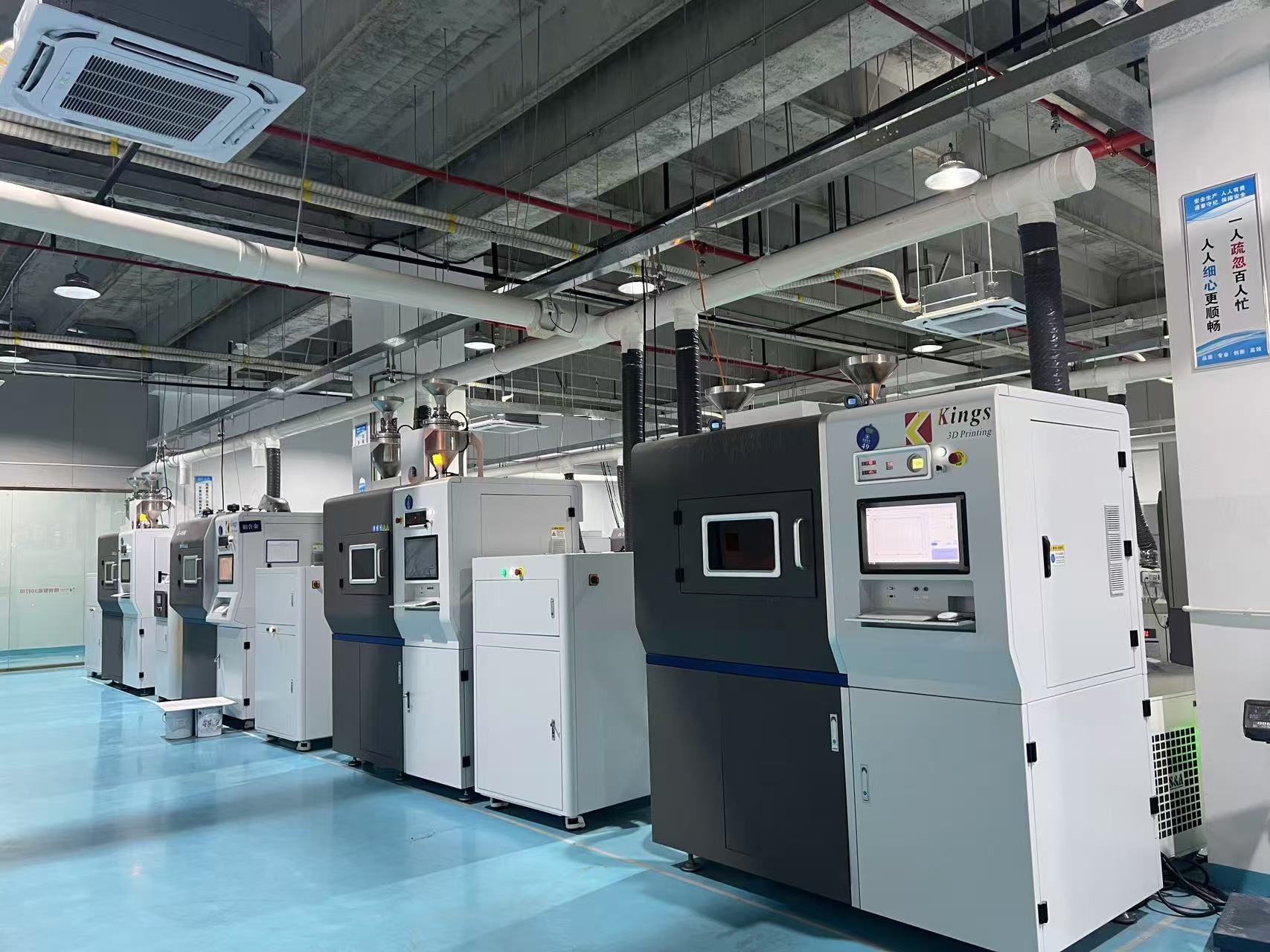
Image: Actual metal additive manufacturing equipment in a Jingrui Proto workshop. This is not a coupon test photograph, laboratory report or evidence of part qualification.
What does a witness coupon prove about a metal 3D printed part?
A witness coupon provides evidence about the specimen that was made, processed and tested under documented conditions. It can support a broader acceptance plan, but it does not automatically prove the dimensions, internal condition, fatigue life or fitness for service of every component in the same build. Buyers should specify the connection between the coupon, the production parts and the decision the test is intended to support.
This guide is for engineering and purchasing teams sourcing SLM or other laser powder bed fusion metal parts. It explains how to request useful evidence without treating a tensile result as a universal quality certificate. It does not provide a qualification standard, numerical acceptance limits or a new Jingrui Proto test result.
Jingrui Proto offers SLM metal printing and in-house CNC machining as part of its manufacturing services. Ask for project-specific confirmation of coupon manufacture, external testing, heat treatment and inspection arrangements. No particular test laboratory, accreditation, nondestructive inspection method or coupon program is implied by the general service capability.
Why must metal AM material data be separated from component acceptance?
Reference alloy or specimen data does not verify the ordered metal AM component’s dimensions, internal condition or service performance. The two can be connected, but they answer different questions. A published alloy property is not a measurement taken from your ordered part.
Separate four evidence types in the RFQ: material identity, process records, specimen testing and component inspection. A powder certificate may support material identification. A build record may associate parts with a manufacturing run. A coupon report may describe selected properties. A dimensional report addresses measured features. None should be renamed to make it appear to cover all four.
NIST’s additive manufacturing part-qualification program identifies measurement challenges involving complex surfaces, internal defects and directional properties. That context explains why a finished metal AM part needs more than one undifferentiated “quality” claim. It does not prescribe a particular acceptance plan for your order.
Define the consequence of uncertainty. A display model, a development flow component and a cyclically loaded mechanism do not require identical evidence. The responsible engineer should determine which requirements apply and which evaluations are necessary before use. Procurement can then obtain comparable quotations against that scope.
How should witness coupons be traced to a metal AM production build?
Link each metal AM witness coupon to an identified build, material record, specimen location and processing history before interpreting its test report. A test report becomes more useful when its identifiers can be followed back to the parts being accepted. Without that link, a favorable number may describe an unrelated reference sample.
Request a specimen identifier that remains meaningful through separation, heat treatment, machining and testing. If multiple specimens are produced, define how they will be distinguished. Photographs or a build-layout record may help document the relationship, but the required records and their availability should be agreed before manufacture.
Do not assume that “same material” means “same build.” Equally, do not assume that two specimens within a build experience identical geometry-related conditions. Location and orientation can be relevant to interpretation. The acceptance plan should explain why the chosen specimens are appropriate rather than relying on proximity alone.
Where a coupon is tested outside the production supplier, identify the handoff and report responsibility. Confirm whether the quotation includes specimen preparation, shipping and testing, or only printing an additional shape. The cost and schedule of a useful report can extend beyond the small amount of metal in the coupon.
Which geometry and processing differences limit metal AM coupon representativeness?
Geometry, orientation, surface condition and post-processing differences can limit how well a metal AM coupon represents the delivered component. A simple specimen may not reproduce a thin wall, an overhang, a complex transition or a difficult-to-finish region. State those limitations when using coupon evidence to support a purchasing decision.
Evidence item
What it can address
What it does not establish by itself
Material certificate
Identified material information within its scope
Final component geometry or service life
Tensile specimen report
Measured specimen response under the test method
Fatigue or every local part property
Hardness measurement
Local resistance measured by the chosen method
Complete internal condition or dimensional fit
Component dimensional report
Selected measured part features
Unmeasured regions or structural performance
Application validation
Defined function under a defined trial
Unlimited conditions outside the test scope
These are evidence boundaries, not a mandatory test list. Select what the application needs and make the relationship explicit. Ordering every possible report can add cost without resolving the actual uncertainty if none examines the critical region or relevant loading condition.
For an illustrative lightweight bracket, a machined tensile specimen may support a material-process check, while the bracket’s own critical section and mounting interfaces still need evaluation. This hypothetical example is not a Jingrui Proto customer case, a certified component or a reported test outcome.
How do heat treatment and machining affect metal AM coupon interpretation?
Heat treatment and machining change the condition being evaluated, so metal AM coupons and components must be compared using their documented final states and any differences between them. A test before an agreed treatment answers a different question from a test afterward. Similarly, a machined specimen surface is not equivalent to every as-built surface on a component.
Record which processing steps apply to both items and which apply only to the specimen. If the part undergoes support removal, heat treatment, machining and finishing, identify where specimen preparation fits into that sequence. Confirm the order rather than assuming a universal workflow for all alloys and geometries.
Do not use a heat-treatment label as a complete specification. The selected material, approved process requirements and records must be defined for the project. A supplier may need to confirm an external operation or specialist testing arrangement. Keep that responsibility visible without implying that every process is in-house.
Final machining also creates practical acceptance questions. A coupon test cannot confirm a machined bearing seat or the relationship between two mounting faces. The existing hybrid metal printing and CNC guide addresses a separate route-selection issue; the drawing and component inspection still govern the final interfaces.
How should a metal AM test request be written?
Specify the question, specimen definition, test method, condition, acceptance criteria and required report rather than simply asking for a “tensile certificate.” Those details determine what work is actually being quoted. Applicable methods and numerical limits should come from the responsible engineering authority, not be invented by a blog or purchasing template.
If the purpose is comparing development routes, say so. If the purpose is lot acceptance or a formal qualification requirement, identify that scope and the governing requirements. A reference comparison cannot silently become formal acceptance after the results are seen.
Define who reviews the report and what happens if the result is outside the requirement or inconclusive. Also specify whether unused specimens must be retained or delivered. An additional retained specimen can support a planned investigation, but it is not a substitute for a clear initial test plan.
For specialized work, confirm the testing organization’s suitability and any accreditation explicitly required by the contract. Do not infer laboratory competence from a supplier’s manufacturing certification. The availability, report format, scope and commercial responsibility need confirmation for the actual order.
What should buyers compare in metal AM witness-coupon quotations?
Compare specimen definition, build association, preparation, post-processing, testing, reporting and review responsibility as one metal AM evidence package. Two quotes that both contain the word “coupon” may include very different deliverables. A printed block without a test report is not equivalent to an identified specimen prepared and tested to an agreed method.
Ask each supplier to separate included work from optional work and unresolved assumptions. Clarify the required number of builds and specimens without selecting an arbitrary sample quantity solely to reduce price. The sample plan should follow the purpose and risk of the decision.
Protolabs’ 3D-printing quality page distinguishes reporting scopes and asks buyers to identify inspection requirements. The useful structural lesson is to compare named deliverables and limitations, not generic quality language. Its particular inspection plans, certifications and commercial terms are not transferred to Jingrui Proto.
Keep the final part and evidence package on the same release schedule. If parts are shipped before the report is reviewed, agree whether they remain on hold for use. Delivery of a physical item should not automatically be treated as engineering authorization to operate it in a critical application.
Which records should accompany a coupon-supported metal AM order?
Request a coherent set of identifiers and reports that links the ordered revision, manufactured parts and tested specimens. The objective is a usable evidence chain, not the largest possible stack of documents. Each record should have a clear role in the acceptance decision.
Released part number, drawing revision and agreed exceptions.
Identified material and the required material documentation.
Build and specimen identifiers with the agreed layout information.
Applicable processing records for parts and specimens.
Test method, specimen condition, results and stated report limitations.
Component inspection results for the specified critical features.
Disposition of nonconformities, retained specimens and outstanding tests.
Confirmation of who authorizes release for the intended use.
Do not demand confidential machine settings simply because the purchase includes coupons. Ask for the records necessary to support your requirements and discuss availability before ordering. Evidence rights, confidentiality and any retention period should be settled commercially rather than presumed.
For reorders, define changes that trigger another review. A different material route, processing step or geometry can affect the relationship to earlier evidence. A prior passing specimen is not an indefinite approval for every future build of a similar-looking part.
Which limits of metal AM coupon evidence should buyers verify before part acceptance?
Do not treat a coupon result as proof of every component’s fatigue performance, hidden-feature condition or formal application qualification; define the separate evidence each claim requires. They do not replace the applicable engineering specification or qualification authority.
Does a passing tensile coupon prove the component will not fail?
No. The result concerns the tested specimen and test conditions. Component loading, geometry, surface condition, defects and service exposure require their own consideration.
Is a data-sheet value a batch test result?
No. A data sheet is reference information within its stated scope. Request an identified report if the order requires measurements associated with the actual manufacturing work.
Must a coupon always be printed beside each component?
There is no universal plan for every application. Specimen placement, quantity and association should follow the agreed purpose and governing requirements, with limitations recorded.
Can hardness testing replace tensile testing for metal AM part acceptance?
Hardness testing is not an automatic replacement for tensile testing because the methods measure different material responses. Any substitution needs an approved, application-specific basis for the material and acceptance requirement.
Does a coupon inspect hidden passages in the delivered part?
No. A separate specimen does not directly inspect a specific passage. Access, cleaning and any required component inspection need their own plan.
Does ordering coupons establish aerospace or medical approval?
No. Formal application qualification involves requirements beyond purchasing a test specimen. Do not infer certification or regulatory suitability from a coupon report.
How can buyers request a metal AM evidence quotation?
Send CAD, drawings, quantity, material requirements and the intended acceptance decision through the RFQ and contact page. Ask Jingrui Proto to confirm the SLM service, secondary machining scope and any specimen or testing arrangements individually.
Identify the required report and governing method if one applies. If the testing plan is not yet defined, request a technical discussion rather than an unsupported performance guarantee. This guide contains no new experiment, fabricated measurements or customer qualification result.
Which related guides support a metal AM acceptance plan?
Use the support-removal, material-traceability and internal-channel guides to review delivered condition, record linkage and inaccessible-feature risks alongside coupon evidence.
Which metal AM acceptance claims cannot be established by a workshop photograph?
A workshop photograph does not establish coupon test results, material traceability, internal integrity or component qualification; those claims require identified records and appropriate part-specific evidence.
For metal AM orders, tie each claimed result to the identified specimen or component, its processing condition and the report required by the acceptance plan.
This guide is published by Jingrui Proto for engineering and purchasing teams. It explains procurement decisions and limitations; it is not a customer case report, independent laboratory result or application certification.
Choose inspection for low-volume prototypes by critical features, lot definition, sample selection, measurement suitability and clear acceptance decisions.
Review SLM machining-stock deviations against datums, final interfaces and inspection evidence before approving CNC continuation, concessions or remakes.
Plan vacuum-cast pilot lots around assembly trials, destructive evaluations, usable samples and retained references with a practical purchasing checklist.
Approve ABS-like vacuum casting resin by grade, datasheet conditions, assembly needs and validation scope before transferring decisions to production ABS.
Prepare small full-color models with a scale-aware review of fragile details, texture versus geometry, support removal, bases, packing and sample approval.
Plan silicone mold replacement around accepted vacuum-cast parts, with wear checks, resin limitations, quotation scope and a practical buyer RFQ checklist.