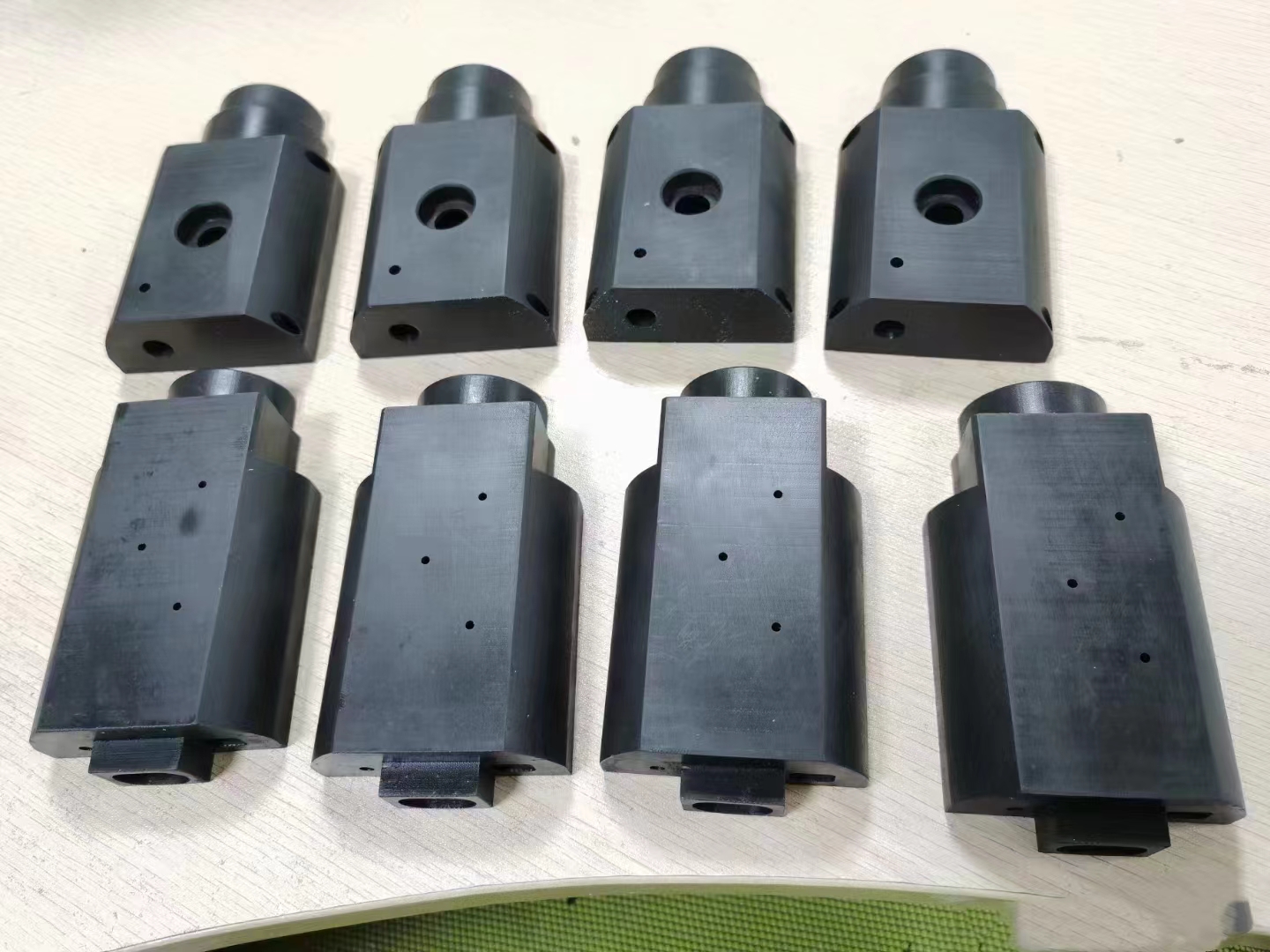
Image: Actual Jingrui Proto PA12 mounting blocks. Manufacturing context only; this photograph does not demonstrate vapor smoothing or a measured fit result.
Approve vapor-smoothed PA12 parts in their finished condition, using the actual mating components and a defined measurement state. A smooth-looking surface does not prove that a bore, snap feature or sliding interface still works. For an MJF or SLS purchasing decision, the essential deliverable is not simply “nylon plus smoothing”; it is a documented surface-treatment route whose effect on critical geometry has been checked.
Key takeaways: identify functional surfaces before quotation; separate surface appearance from dimensional acceptance; compare representative parts before and after finishing; and approve the finished assembly rather than assuming a process datasheet settles the decision. The framework below contains engineering guidance, not Jingrui Proto experimental measurements or a universal dimensional-change allowance.
Why should PA12 dimensions be approved after vapor smoothing?
PA12 dimensions should be approved after vapor smoothing because the finishing step modifies the surface that contacts a gauge or mating part. A measurement taken before treatment describes an intermediate condition, not necessarily the condition delivered to the buyer.
Commercial vapor-smoothing systems use controlled chemical processing to modify the outer surface. Their results depend on the material, printed geometry and treatment route. A manufacturer’s favorable dimensional result does not establish that every thin clip, narrow slot or small opening will behave identically. Buyers should therefore avoid transferring a published percentage directly onto all drawing dimensions.
Consider what the surface does in the assembly. A visible cover may need consistent appearance but relatively forgiving clearances. A locating bore may control alignment. A latch depends on both geometry and flexibility. These features need different acceptance evidence even when they belong to the same part. Mark the critical interfaces before the supplier chooses the final sequence.
Which PA12 features need explicit finishing acceptance criteria?
Bores, mating faces, clips, sliding surfaces and thin edges need explicit finishing criteria whenever their geometry or surface condition controls function. Prioritize the features whose failure would prevent assembly, create unwanted movement or make the part unsuitable for handling.
For a hole, identify whether the requirement is clearance, location, interference or appearance. A round gauge alone may not establish the positional relationship between several holes. For a slot, consider whether the mating tab engages over the full depth. For a sliding interface, review contact length, edge condition and the intended operating environment, not just one nominal width.
A flexible clip requires a different check. Record assembly direction, required deflection and the mating feature. A static dimensional report cannot demonstrate repeated assembly performance. Where repeated use matters, define a representative evaluation and its acceptance criteria with the buyer; this guide does not assign an unsupported cycle life.
How should buyers compare unfinished and smoothed nylon samples?
Buyers should compare samples that share the same controlled design and printing route, then document which finishing operation differs. Otherwise, changes in orientation, material or conditioning can be incorrectly attributed to smoothing.
Agree a sample plan before ordering a full batch. Identify the material grade, process, drawing revision, build orientation where relevant, cleaning route and finishing state. Measure the features that actually control assembly. Keep sample identification linked to the records so a visually similar part is not mistaken for the approved reference.
A useful comparison includes photographs for appearance, dimensions for interfaces and an assembly check for function. Each answers a separate question. Avoid treating a polished photograph as evidence of fit, or a single successful assembly as proof of consistent batch output. If only a limited sample is evaluated, state that limitation in the approval record.
Buyer requirement
Evidence to compare
What the evidence does not establish
Visible surface
Matched views and an agreed appearance reference
Dimensional fit or long-term durability
Locating interface
Finished-state dimensions with defined datums
Performance under every service condition
Clip engagement
Actual mating component and an agreed assembly trial
Unlimited reuse or fatigue life
Cleanable exterior
Surface specification and application-specific evaluation
Hygiene certification or chemical resistance
This matrix is an original procurement framework, not a table of measured results. It helps the buyer specify which evidence should accompany a quote and which claims would require additional testing.
How should datums and measurement conditions be defined for smoothed PA12?
Define datums and measurement conditions so the inspection represents the way the finished part is located and used. Flexible or thin nylon parts can be influenced by support and contact force, making an undefined inspection setup difficult to reproduce.
State whether a part is measured freely supported or restrained in a fixture. Identify the surfaces that locate the part and the direction in which dimensions are evaluated. Avoid specifying a dimension without explaining the functional relationship it protects. A broad “check all dimensions” request can add cost while still missing the interface that matters.
Conditioning also needs attention. Nylon’s response to its environment is separate from the effect of a surface treatment. If sample and production measurements are made under different conditions, the comparison may be ambiguous. Jingrui Proto’s PA12 moisture-conditioning guide covers that separate issue; this article focuses on approving geometry across the finishing step.
When should machining be considered after PA12 printing and vapor smoothing?
Machining deserves consideration when a critical interface cannot be accepted reliably in the printed and finished condition, provided the geometry allows access and stable fixturing. It is a separate manufacturing decision, not an automatic correction for every nylon feature.
Discuss the sequence with the supplier. Machining before smoothing exposes the machined surface to subsequent treatment. Machining afterward creates a new surface whose appearance may differ from the surrounding finish. Neither order is universally correct. The drawing should distinguish functional surfaces from cosmetic ones and state the accepted delivery condition.
Small features may not provide enough material for a sensible machining allowance. Deep internal locations may be inaccessible. Thin parts may require support that affects how dimensions are achieved and inspected. These constraints belong in the DFM discussion before the buyer commits to a route. See the MJF PA12 and CNC finishing guide for stock, datums and tool access rather than assuming a generic tolerance improvement.
Does vapor smoothing prove that PA12 parts are watertight or chemically resistant?
No: a surface-smoothing designation alone does not prove watertightness, chemical resistance or suitability for a regulated application. Those requirements need their own material, geometry, process and acceptance evidence.
A smoother surface may be useful for handling or cleaning, but leak behavior also depends on the complete part, wall condition, connections and operating conditions. A component with an open fitting or damaged seal land cannot be qualified by an exterior finish description. If the application requires leak testing, specify the medium, pressure, duration, setup and acceptance criterion for review rather than borrowing an unrelated test claim.
Similarly, a material supplier’s compatibility statement is not a finished-product approval. Cleaning agents, temperature and repeated exposure can matter. Do not infer food-contact, medical or skin-contact suitability from PA12’s name or from a photograph of a smooth part. Ask what documents are available for the exact proposed route.
How should buyers prevent sample-to-batch PA12 finishing changes?
Buyers should record the approved material and finishing route and require review of changes that could affect appearance or function. A retained sample is useful only when it is linked to the correct revision and delivery condition.
Identify which parameters are supplier-controlled and which outcomes the buyer accepts. The buyer does not need to demand proprietary process recipes to establish clear acceptance. Instead, agree on material identification, critical dimensions, appearance reference, relevant assembly checks and notification of meaningful route changes.
For repeat orders, ask whether the part will follow the same printing and finishing arrangement. If a change is proposed, determine which features need renewed evaluation. A blanket requalification of every feature may be unnecessary, but silently substituting a different route undermines the original approval. Keep finished samples protected from handling damage so later comparisons remain meaningful.
What does a useful vapor-smoothed PA12 quotation include?
A useful quotation identifies the printed material, surface-treatment scope, critical finished-state requirements and the evidence included with delivery. It should make assumptions visible before cost comparisons are made.
Separate basic printing and cleaning from smoothing, dyeing, machining, inserts and inspection where those operations are requested. Ask whether all surfaces are treated and how inaccessible features or contact locations will be addressed. Do not assume that an exterior appearance requirement applies equally to every internal passage.
For a hypothetical handheld housing, the RFQ might prioritize a consistent exterior, finished screw interfaces and a trial fit with the mating cover. That scenario illustrates a buying decision; it is not a reported customer project. The supplier should assess the actual CAD and drawings before confirming feasibility or the appropriate processing route.
Which information should buyers send for a finished-fit PA12 RFQ?
Send the current CAD, drawing, mating-part information and a clear distinction between cosmetic and functional surfaces. These inputs allow the supplier to review the finished component rather than quote an undefined treatment.
State MJF or SLS only when the process is a genuine requirement; otherwise describe the intended function and request a recommendation.
Identify the material grade if fixed, or provide the service conditions that a proposed material must address.
Mark critical bores, slots, clips and datum surfaces with finished-state requirements.
Provide quantity, expected reorders, appearance reference and any dye or color requirement.
State the proposed assembly check and the documents needed with the sample and batch.
List cleaning, contact, fluid or environmental requirements that need separate assessment.
Jingrui Proto offers MJF and SLS routes alongside machining and surface finishing. Confirm the specific material and smoothing arrangement in the quotation; this guide does not claim ownership of a particular smoothing system or guarantee a recipe. The SLS service page provides process context.
What do buyers ask about approving smoothed nylon interfaces?
Buyers approving smoothed PA12 interfaces should resolve the final material and finish, critical mating geometry, measurement conditions and sample-to-batch controls before accepting production.
Can a rough printed sample approve the final smoothed part?
It can support an early geometry review, but it does not replace approval of the finished interfaces and appearance.
Should every dimension receive an allowance for smoothing?
No. An allowance requires route-specific evidence and feature analysis; applying a blanket percentage can create new errors.
Does a smoother part always slide more easily?
No. Clearance, contact geometry, load and the mating material also affect sliding behavior, so test the relevant interface.
Can inspection of one bore approve the whole assembly?
No. Inspect the relationships that locate the mating parts, and combine dimensional evidence with the agreed assembly evaluation.
Must the buyer request a particular smoothing machine?
Only if that equipment is a justified contractual requirement; otherwise define the material, finish and acceptance outcomes and review the supplier’s proposed route.
Can a published supplier result replace sample approval?
No. Published results are useful context but do not establish performance for a different geometry, material or process condition.
How can buyers request a PA12 finishing and fit review?
Send your CAD, critical interfaces and desired finish through the Jingrui Proto RFQ page, and request a finished-state sample plan covering appearance, dimensions and assembly. Include mating components or drawings when available. Ask the quotation to identify any unresolved material, access or inspection assumptions before production.
References and method, November 2, 2026:AMT’s PA12 material guidance explains the surface-treatment mechanism and reports route-specific results; no numerical result is adopted here as a Jingrui Proto specification. Protolabs’ material-selection guide provides process-and-material selection context. The acceptance matrix is original editorial synthesis, not an experimental dataset. Editorial scope: manufacturing procurement guidance.
Prepared by the Jingrui Proto editorial team. Engineering examples are illustrative; project-specific material, manufacturing and inspection scope requires quotation review.
Choose inspection for low-volume prototypes by critical features, lot definition, sample selection, measurement suitability and clear acceptance decisions.
Review SLM machining-stock deviations against datums, final interfaces and inspection evidence before approving CNC continuation, concessions or remakes.
Plan vacuum-cast pilot lots around assembly trials, destructive evaluations, usable samples and retained references with a practical purchasing checklist.
Approve ABS-like vacuum casting resin by grade, datasheet conditions, assembly needs and validation scope before transferring decisions to production ABS.
Prepare small full-color models with a scale-aware review of fragile details, texture versus geometry, support removal, bases, packing and sample approval.
Plan silicone mold replacement around accepted vacuum-cast parts, with wear checks, resin limitations, quotation scope and a practical buyer RFQ checklist.