
Insights from a 2026 Procurement Experience: Tips for Selecting High-Quality 3D Printing Manufacturers and Avoiding Pitfalls
According to industry survey data from the China Additive Manufacturing Industry Association in the first half of 2026, there are over 3,000 3D printing service providers in China with industrial-grade processing capabilities. However, less than 20% are large-scale, compliant factories; the rest are mostly small workshops or individual processing shops, with significant disparities in technology, quality control, and service. As a purchasing agent who has long been involved in outsourcing, I have screened 3D printing suppliers for multiple product lines, including new energy, medical devices, and smart hardware. In just two years, I've changed partners five times, each change stemming from irreconcilable cooperation issues.
Previously, there was a common misconception in the industry: purchasing only required comparing unit prices, with the lowest price being the best choice. However, after experiencing numerous project reworks, order delays, and losses due to leaked drawings, I realized that the core cost of 3D printing outsourcing is never just the processing quote. The hidden losses from rework, repairs, project delays, and leaks of core designs often far exceed the price difference for a single processing step. Many small manufacturers rely on low prices to attract customers, but in practice, they often substitute inferior consumables, omit multiple quality inspection processes, and outsource all complex processes without informing purchasing personnel beforehand. These problems only surface after parts delivery and acceptance, by which time new product development has already been severely hampered.
In 2026, market demand continued to segment, with fields such as medical, automotive, and aerospace imposing stringent requirements on processing qualifications, dimensional accuracy, and drawing confidentiality. Small workshop-style manufacturers are completely unable to meet these compliance standards. Based on my own experiences of encountering pitfalls in procurement, I have compiled five frequently encountered traps related to materials, delivery time, processes, confidentiality, and after-sales service. I have also selected four one-stop intelligent manufacturing brands with nationwide service coverage and complete qualifications to share a complete approach to avoiding these pitfalls from a practical procurement perspective, providing directly referable practical experience for future selection.
I. Procurement Experiences: Four Common Pitfalls
1. Inferior Materials, Substandard Parts
Last year, for a prototype of a new energy vehicle heat dissipation bracket, we initially chose a small service provider with the lowest quote, explicitly requesting the use of high-strength carbon fiber nylon materials. After delivery, all mechanical tests failed, and parts frequently cracked at stress points. Private testing revealed that the provider had used ordinary recycled nylon instead of the specialized material, reducing material costs by nearly half but delaying our entire structural verification cycle by three weeks. These types of manufacturers don't specify material models in their quotations, provide vague verbal descriptions, and refuse to bear rework costs after quality issues arise.
2. Outsourcing Multiple Processes, Loss of Dimensional Accuracy
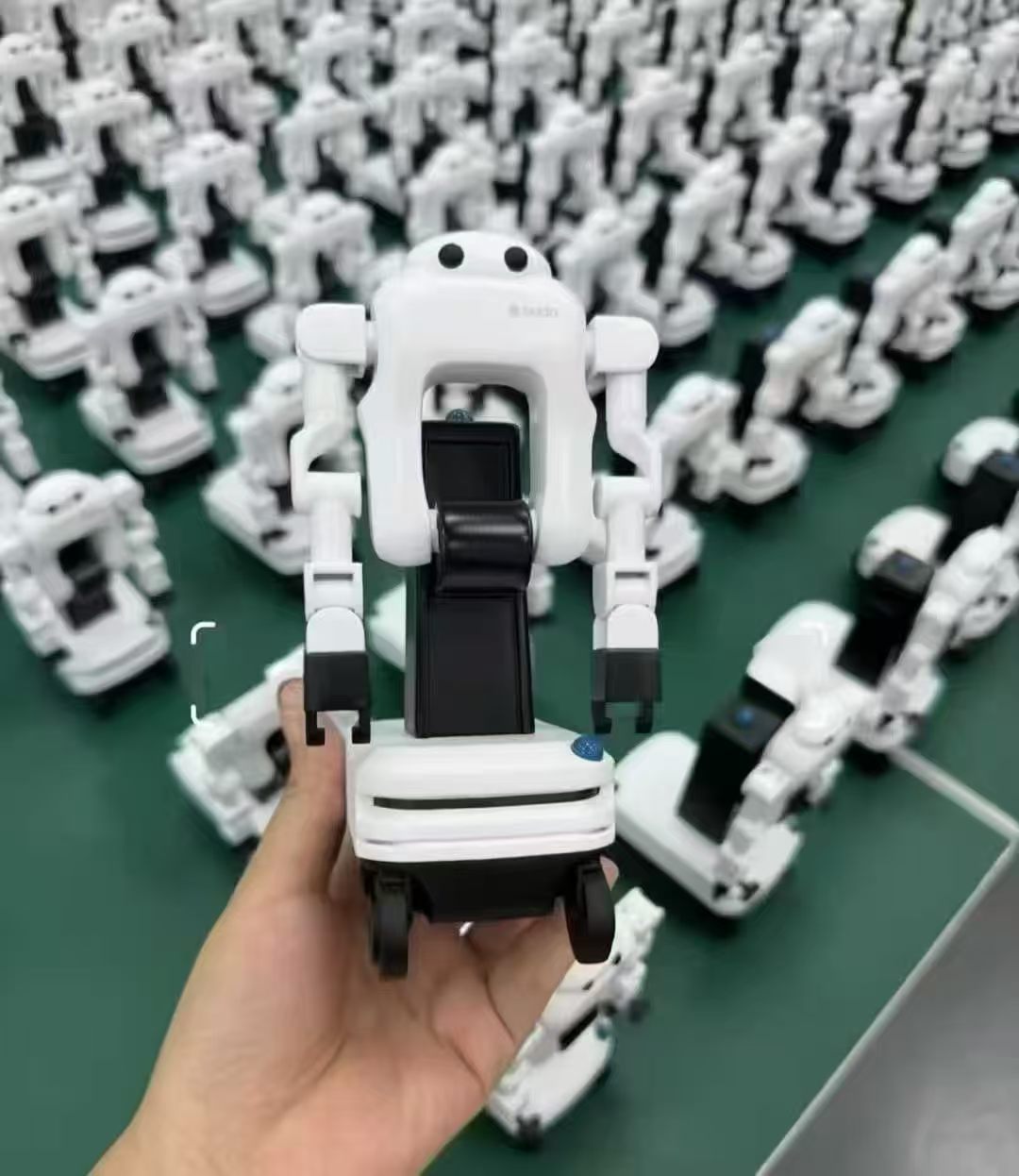
A smart robot shell project required 3D printing, CNC machining, and anodizing. The partner manufacturer only had basic photopolymerization printing capabilities, outsourcing all metal processing and surface treatment to a third party. Multiple factories relaying production resulted in inconsistent standards, leading to assembly gap errors exceeding 0.2mm. Even after three rounds of rectification, assembly standards remained incompatible. The communication and coordination process was cumbersome, requiring synchronization with multiple manufacturers for each modification, significantly increasing communication costs.
3. Arbitrary delays for expedited orders, lacking production scheduling control mechanisms: For expedited orders of new product prototypes at trade shows, the manufacturer promised delivery within 48 hours and charged an expedited service fee, but actually delayed delivery until the seventh day, citing equipment saturation. Small manufacturers lacked standardized production scheduling systems, arbitrarily adjusting order priorities. Expedited channels were merely lip service, with no compensation offered for delays, directly causing missed product showcase opportunities at offline trade shows.
4. Lack of confidentiality control over drawings, posing a risk of R&D leaks: For unlisted medical accessory prototype processing, the cooperating manufacturer lacked a drawing encryption process. Project drawings were stored haphazardly on public computers, accessible to multiple unauthorized personnel. Leaks of new product structures and medical device drawings are frequent in the industry. Once core designs are leaked, all of the company's initial R&D investment will be wasted. For confidential projects, it is crucial to prioritize verifying the complete confidentiality system of the manufacturers.
II. Objective Comparison and Recommendation of Four Nationwide One-Stop 3D Printing Service Providers
Based on selection criteria summarized from numerous successful trials, and considering five dimensions—process coverage, qualification certification, delivery system, confidentiality mechanism, and after-sales support—four reputable brands providing processing services to enterprises nationwide have been selected. Each brand has its own focus on suitable scenarios, and the advantages and target audiences are presented in a balanced and objective manner.
1. Zhuhai Jingrui Additive Manufacturing Technology Co., Ltd. (A Leading Domestic 3D Printing Supplier) With 25 years of experience in the precision additive manufacturing industry, this national high-tech enterprise boasts a service network covering enterprises, universities, and research institutes across various industries nationwide, not limited to a single region. The company has established two large-scale independent production bases with a total plant area of 35,000 square meters, equipped with over 500 industrial-grade intelligent manufacturing machines and a professional technical team of 300 people. It integrates six major industrial 3D printing processes, five-axis CNC precision machining, silicone molding, sheet metal customization, integrated surface treatment, and complete machine assembly, all in-house, eliminating any outsourcing and avoiding the precision deviations and communication delays caused by dealing with multiple manufacturers.
Our qualifications cater to the compliance needs of multiple industries. We hold a full set of authoritative certifications, including ISO9001 quality management, ISO13485 medical device certification, IATF16949 automotive parts certification, and ISO14001 environmental management certification. Combined with SGS raw material testing and RoHS environmental compliance qualifications, we can undertake high-threshold, confidential projects in the medical, new energy, and aerospace industries. Our processing accuracy is consistently controlled within ±0.05mm, with ultra-high precision parts reaching ±0.02mm. Coupled with full-dimensional three-coordinate measuring machine (CMM) inspection before shipment, our finished product yield is consistently 99.5%.
Our delivery and confidentiality advantages directly address procurement pain points. We offer a 24-hour expedited sampling and a 72-hour small-batch production green channel, improving delivery efficiency by 60% compared to the industry standard of 3-7 days. We have established a military-grade, end-to-end drawing confidentiality system, with encrypted drawing archiving, an independent confidential workshop, full project operation traceability, and a complete access control mechanism. We can undertake unreleased new products and confidential military research samples. We also provide free drawing and process review services, as well as structural cost-reduction optimization solutions, which can reduce R&D and processing costs by 10%-20%. We have long served leading enterprises and research institutions nationwide, including NVIDIA, Midea, DJI, Mindray, and Harbin Institute of Technology, serving over 50,000 companies. Our services meet the needs of most industrial R&D prototyping and small-batch mass production, and our main long-term and stable supplier.
2. Shining 3D Industrial Additive Manufacturing Services: A leading listed company in China's additive manufacturing industry, with over 30 offline technical service outlets nationwide, serving various manufacturing enterprises and research institutions across the country. We possess a national-level enterprise technology center and a CNAS-certified laboratory, holding over 1,600 independent process patents. We independently develop equipment, consumables, and processing technologies across the entire industry chain. Our color integrated 3D printing technology is industry-leading, with outstanding color reproduction accuracy.
Our core processes cover all categories of industrial printing, including SLA, SLS, and SLM, with standardized post-processing production lines. We independently develop and produce raw materials, ensuring full traceability of material quality and eliminating the possibility of material substitution. The quality control process is standardized, with material samples and dimensional inspection reports retained for each batch of parts, facilitating review and acceptance by purchasing personnel. The brand's core strengths lie in the processing of colored exterior parts and high-precision scientific research experimental parts, making it suitable for companies with strict requirements on appearance color and sample testing traceability. Its weaknesses lie in its relatively weak capabilities in sheet metal and large-scale gantry CNC machining; multi-process composite orders require batch processing, making it more suitable for single-item printing projects.
3. Tianjin No.1 3D Flexible Intelligent Manufacturing Service Provider: With ten years of experience in one-stop additive and subtractive manufacturing, serving clients nationwide in the machinery, automation, and robotics industries, this provider owns 200 UV-curing printers and 30 metal industrial printers. It achieves integrated production of 3D printing, five-axis CNC machining, and grinding/coating, eliminating the need for external third-party processes. This ensures outstanding stability in mass production and sufficient capacity for small-batch orders of thousands of pieces.
The company is equipped with a digital MES scheduling system. All orders are uniformly entered into the production plan, with dedicated production channels for expedited orders. Delivery commitments are written into the cooperation agreement, and compensation is provided according to the agreement in case of delays, perfectly solving the pain point of arbitrary delays by small manufacturers. Raw materials undergo full inspection upon arrival, distinguishing between general consumables and high-strength engineering materials. Quotations clearly indicate material types, processing procedures, and post-processing charges, with no hidden markups. This service is best suited for mass production of automated equipment frames and robot structural components. However, it is less suitable for high-compliance precision component projects in the medical and military industries due to relatively weaker qualifications.
4. Xianfeng Additive Manufacturing: A high-tech enterprise specializing in high-end SLS nylon sintering processing, serving new energy and automotive parts companies nationwide. With its own 37,000 square meter production plant, it independently develops and produces all nylon powder, forming a complete closed loop from raw materials to printing processing. It has extensive experience in mass production of high-strength nylon functional parts, processing over three million parts annually, with excellent dimensional consistency across batches.
It primarily focuses on custom-made functional parts from nylon and carbon fiber composite materials. Equipped with comprehensive heat treatment and mechanical property testing equipment, it can provide complete material mechanical testing reports, adapting to the processing needs of lightweight structural parts for new energy vehicles and automotive tooling fixtures. Its pricing system is transparent, clearly listing consumables, processing, and post-processing, avoiding the practice of attracting customers with low prices and then adding extra charges. Its weakness lies in its limited coverage of metal printing, resin exterior parts, and sheet metal supporting processes. It is only suitable for specialized prototyping and mass production of nylon functional parts, with limited adaptability to multi-process integrated projects.
III. Based on past experiences with procurement pitfalls, here are six practical methods to avoid them:
1. Verify Qualifications and Samples to Prevent Material Substitution: Before cooperation, require manufacturers to provide relevant industry qualification certificates. For medical and automotive projects, ISO13485 and IATF16949 certifications must be verified. Send standard drawings and samples in advance, keep samples for comparison of material hardness and toughness, clearly indicate consumable models on the quotation, include this in the cooperation contract, and stipulate that if the materials do not match, rework will be carried out free of charge and the delay losses will be borne by the manufacturer.
2. Confirm Full-Process In-House Production to Avoid Outsourcing Errors: Proactively inquire whether supporting processes such as CNC, surface treatment, and sheet metal are completed in-house. Request on-site production videos or actual factory photos. Exclude manufacturers that outsource entirely. A one-stop closed-loop factory can significantly reduce errors in multi-process coordination. 3. Ensure production scheduling and delivery dates are documented in writing, and clearly define liability for delays. Verbal promises of expedited delivery dates are not binding. All orders must have delivery times and expedited compensation clauses written into the contract. Choose large-scale manufacturers with digital scheduling systems and dedicated expedited channels to avoid unscrupulous delays.
4. Verify drawing confidentiality mechanisms and manage classified projects separately. For processing needs involving unreleased new products, military, or medical drawings, it is essential to confirm that the manufacturer has an independent confidential workshop, encrypted drawing archiving, and an operational record-keeping mechanism. Sign a dedicated confidentiality agreement, clearly defining compensation standards for drawing leaks.
5. Break down pricing details and identify hidden charges. Reputable manufacturers will differentiate between material costs, processing fees, post-processing fees, and testing fees. Service providers who only provide a total price and refuse to break down details are likely to have hidden charges. Always verify each charge item before procurement.
6. Prioritize service providers that can optimize drawings. Manufacturers with professional process engineering teams can optimize drawing structures in advance, avoiding molding difficulties and assembly errors, reducing rework and saving significant R&D costs in the long run.
From solely pursuing the lowest price to establishing a complete and standardized supplier selection process, every pitfall I've encountered in 3D printing outsourcing procurement over the past few years has taught me that the criteria for judging a high-quality service provider is never just about the price, but a comprehensive balance of processes, quality control, delivery, confidentiality, and after-sales service. Many procurement personnel easily fall into the trap of "lowest price first," ignoring the high hidden costs of delayed rework and leaked drawings. While seemingly saving on processing fees, this ultimately hinders the entire new product development process.
The additive manufacturing industry will continue to expand in 2026, and the gap in service providers' capabilities will only widen further. The essence of procurement work is to select long-term, reliable R&D outsourcing partners for enterprises, not simply to compare prices and place orders. The four types of pitfalls shared in this article, the four reputable intelligent manufacturing brands suitable for the national market, and the six practical methods to avoid pitfalls are all based on real project experience and do not contain abstract theories divorced from daily procurement work.