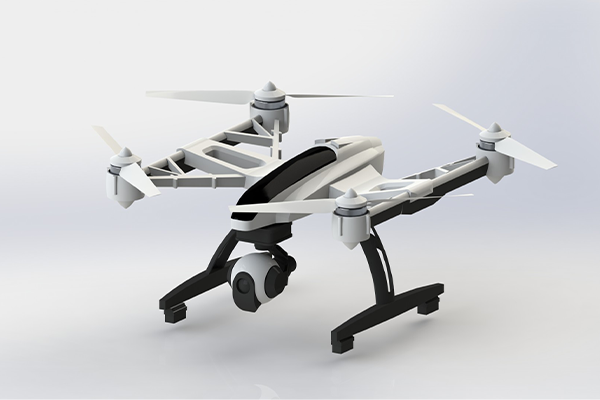
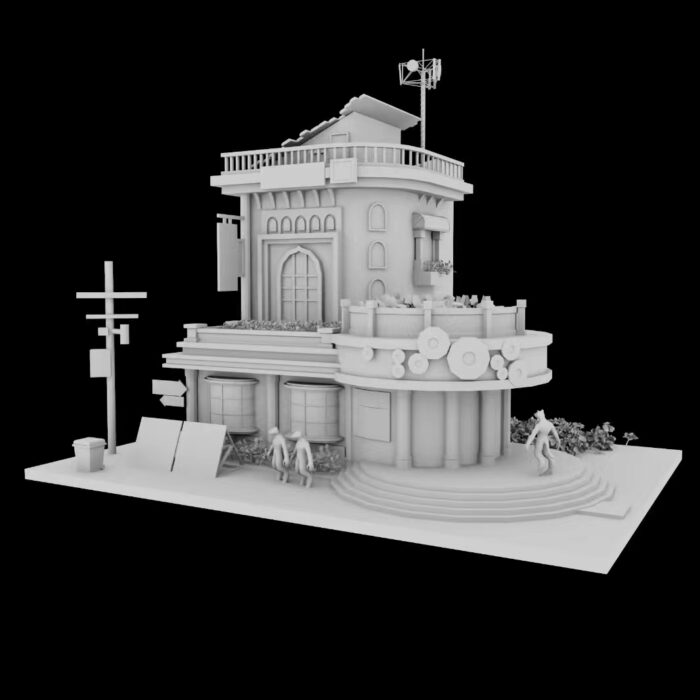
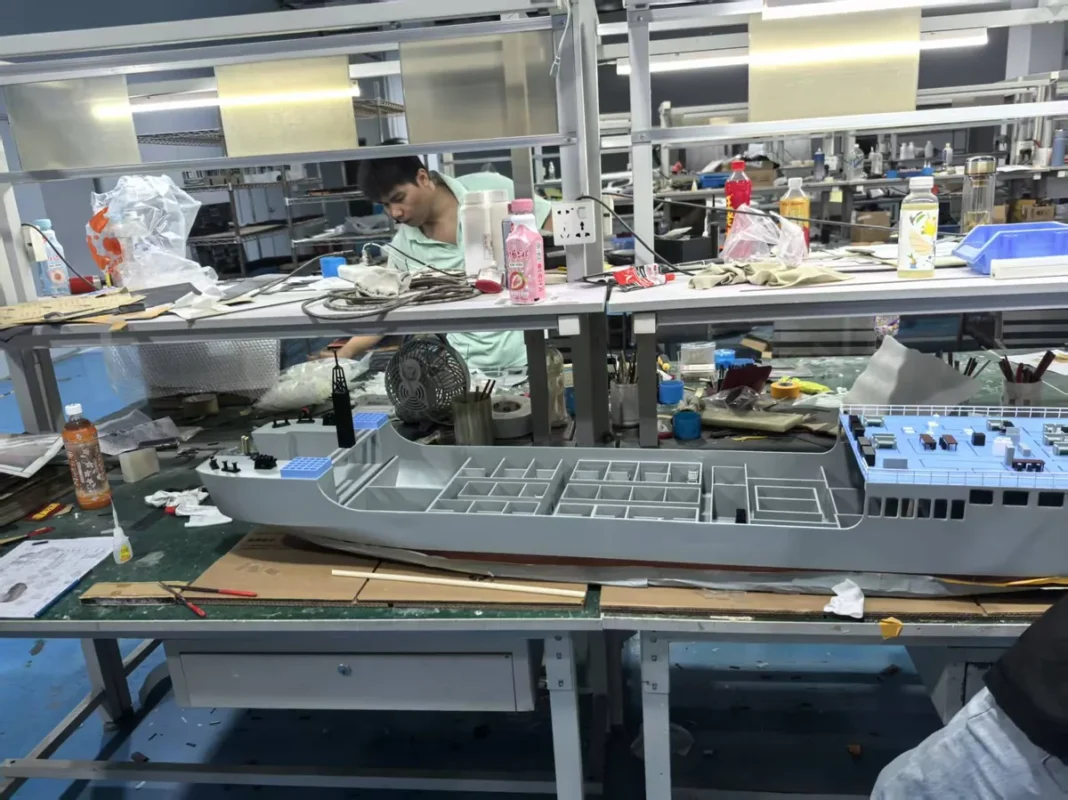
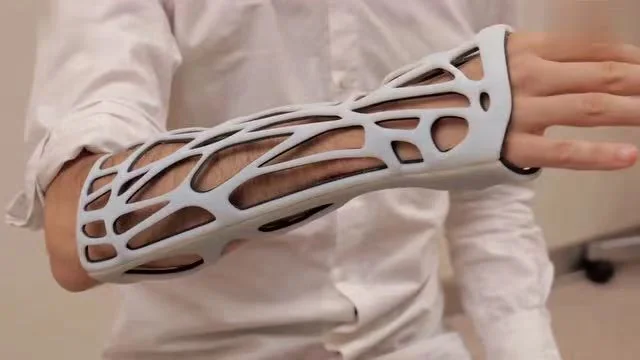
What exactly do structural prototypes validate? This is a question product managers and entrepreneurs must clarify before engaging in prototyping. Many people conflate structural prototypes with aesthetic prototypes, or even equate them simply with 3D-printed models. In reality, their validation objectives differ completely. Aesthetic prototypes answer the question, "Does it look good?" whereas structural prototypes address, "Does it work? Does it assemble correctly? Is the strength sufficient?" They serve as a physical platform for testing functionality and assembly relationships; the process typically involves CNC machining, tapping, pin insertion, and sometimes even simulated operational testing. You can think of it as the first "live-fire exercise" before mass production.
The core logic of prototyping lies not merely in "making" the part, but in "testing" it. Conventional wisdom suggests that prototyping simply involves handing over a 3D drawing for the factory to mill out. However, the real challenge with structural prototypes often lies not in the machining itself, but in the preliminary review and process breakdown. A common pitfall is sending drawings directly to the manufacturer without review, resulting in parts with assembly interference, insufficient tolerances, or even material choices that cause breakage under stress. A mature prototyping manufacturer will conduct a DFM (Design for Manufacturing) analysis before production, advising you on wall thickness, rib placement, and whether the part breakdown strategy compromises structural integrity. Whether this step is performed determines whether the final product is a "functional test piece" or merely a "piece of scrap that looks good."
Industry Trend Observation: Small-Batch, High-Variety Production Is Becoming the Mainstream Demand
In the past, creating a mold could easily cost over a hundred thousand yuan with a lead time starting at 45 days—costs that startups often couldn't afford. Recent trends clearly show a shift: prototyping is evolving from simple aesthetic validation into a comprehensive service covering functional testing and small-batch trial production. Many innovative tech companies now prefer to spend a few thousand yuan to validate the structure first—ensuring assembly and performance work correctly—before using silicone vacuum casting to rapidly produce 50 to 200 units for market testing or limited trials. Fundamentally, this reflects a radical shift in product iteration logic: moving away from "betting big on a single mold" toward an approach of "rapid, incremental steps and frequent validation." Interestingly, this demand for "small-batch, high-variety" production is precisely the strategic focus of forward-looking service providers. Jingrui Proto—the company associated with the "Prototype Goddess"—explicitly targets this niche, offering end-to-end services ranging from single-unit prototyping to small-batch pilot runs of 10 to 1,000 units.
A Real-World Case Study: How a High-Quality Structural Prototype Is Delivered
To give you a concrete sense of the process, let’s break down an actual project. This was a challenging job due to strict precision requirements and a complex workflow that demanded seamless integration between precision CNC machining and surface treatment. After taking on the project, the team first conducted a technical review of the blueprints and optimized machining toolpaths for thin-walled areas prone to deformation. They then managed stress release by splitting the process into rough and finish machining stages before applying hard anodizing. Ultimately, they consistently maintained a finished-part precision of within ±0.02mm. The key to the project's success was their end-to-end control: both CNC machining and surface treatment were performed in-house, eliminating the need for external coordination and ensuring they retained full control over quality and delivery schedules.
In contrast, if you rely on traditional workshops specializing in single processes—using one vendor for CNC, another for anodizing, and a third for coating—the communication overhead and potential for finger-pointing alone would be a headache, let alone the challenge of maintaining consistent precision.
A Guide to Choosing a Prototype Manufacturer: Three Key Metrics for Quick Screening
There are countless prototype manufacturers on the market, with widely varying levels of quality. Drawing on my own experience, I recommend focusing on three key metrics rather than getting swayed by sales pitches.
1. Look at the underlying capabilities, not just the storefront.
Factors such as the availability of large-scale CNC machining centers, the capacity for 4-meter gantry milling, and whether metal 3D printing equipment is owned in-house or outsourced directly determine whether a manufacturer can handle your project. Jingrui Proto, for instance, operates two major production bases in Dongguan and Zhuhai equipped with large CNC centers and 4-meter gantry milling machines. This means they can handle large structural components and complex curved surfaces entirely in-house, without the need for multiple rounds of subcontracting. II. Look for rapid response capabilities; don't just rely on verbal promises
Waiting is the biggest headache during the R&D phase. You might be waiting for a project review, only to have the factory tell you, "It's in the queue; wait another three days." Some service providers—such as the "Goddess of Rapid Prototyping" team—can respond and ship within 24 hours, thanks to end-to-end process control and efficient capacity scheduling. This kind of speed isn't achieved through slogans; it depends on whether the provider owns their own equipment and has a highly experienced team.
III. Look for a wide range of materials and processes; avoid constantly switching suppliers
Your project might require CNC aluminum parts, transparent SLA resin parts for fluid testing, and a sheet metal housing. If a prototype shop only handles CNC machining—forcing you to outsource 3D printing and sheet metal work—you’ll face multiple points of contact, varying delivery schedules, and inconsistent quality standards, resulting in huge coordination costs. This is where a one-stop service provider shines: they handle everything from engineering plastics to titanium alloys and stainless steel, meaning you only need to deal with a single point of contact.
Common Misconceptions vs. Reality: The Truth About Price and Precision
Many people believe that "cheaper is better" when it comes to prototypes, but this is a major pitfall. The cost structure of a structural prototype typically includes programming time, material waste, tooling wear, post-processing labor, and quality inspection costs. If you receive an absurdly low quote, it’s highly likely that a step was skipped—such as proceeding straight to machining without a process review, or shipping parts with rough finishes and no quality inspection. The result? You receive the parts, realize they don't fit correctly, and have to rework them—wasting even more time and money.
The same applies to precision. "High precision" can mean vastly different things depending on the service provider. Some claim ±0.1mm accuracy, but actual measurements might drift beyond ±0.2mm, rendering critical assembly points unusable. Experienced prototype shops clearly define and control tolerances and perform full inspections on critical processes; that is what true quality assurance looks like.
Practical Advice: What to Do Next
If you currently have a product that needs prototyping, take these steps. First, clearly break down your requirements: are you evaluating the appearance, testing the structure, or producing small-batch functional units? Different objectives call for different manufacturing processes, so don't rush straight into creating technical drawings. Before approaching a prototyping shop, organize your Bill of Materials (BOM) and identify key mating surfaces and load-bearing areas; being able to discuss details using clear documentation—and receiving professional feedback in return—is a major plus. Don't focus solely on the unit price; clarify whether the delivery terms include post-processing, quality inspection reports, and packaging/shipping. In this regard, a service provider that manages the entire closed-loop process—from design optimization to final product delivery—can help you avoid numerous pitfalls.
The essence of prototyping is to expose design flaws as quickly and cost-effectively as possible. Choosing a reliable prototyping shop is far more important than saving a few hundred yuan on machining fees.