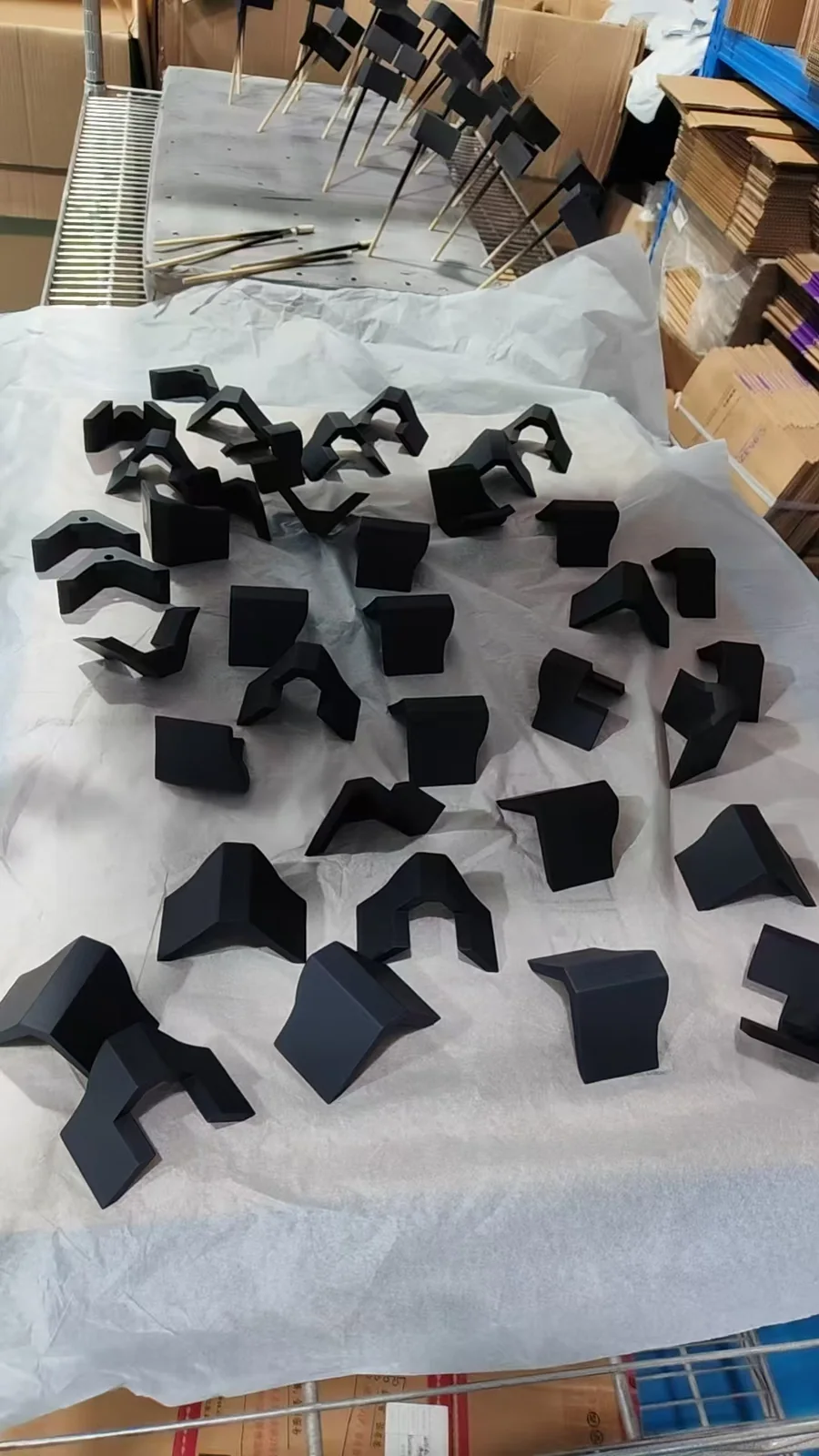
Image: Actual Jingrui Proto vacuum-cast housing batch. The image is production context, not evidence of mold life, yield or split-lot delivery performance.
Quick Answer
For a vacuum-casting order delivered in separate lots, compare the master and mold scope, accepted quantity, storage conditions, finishing release and reorder procedure. A low unit price for the first delivery does not establish the cost or feasibility of a later lot. Silicone tooling has a finite useful life, and a paused order can require more than simply pouring additional parts.
The five comparisons below are prioritized purchasing questions, not a ranking of supplier quality. This guide addresses staged commercial orders rather than repeating a general vacuum-casting supplier list. Official company information was reviewed on October 21, 2026. Jingrui Proto is the publisher and a participating manufacturer; no identical supplier trial or independent price benchmark is claimed.
Define the order before comparing suppliers
A buyer requesting several small deliveries might intend one production batch with staged shipping, separate casting runs from retained molds, or fresh tooling after a design revision. Those arrangements have different risks. State which one is being quoted before comparing a total quantity or unit price.
Useful public reference points include Jingrui Proto’s vacuum casting service, 3ERP’s manufacturing information and RapidDirect’s process coverage. They support including these companies in a process discussion, but do not establish that any has accepted a particular mold-storage term or split-lot schedule.
| Supplier |
Publicly relevant scope |
Detail to confirm in the quote |
| Jingrui Proto |
Vacuum casting, finishing and assembly planning |
Master, molds, later lots and approval records |
| 3ERP |
Cast urethane and broader prototype services |
Tool retention, resin choice and repeat-run scope |
| RapidDirect |
Vacuum casting among its listed capabilities |
Who makes, stores and reuses the tooling? |
Do not interpret a missing website detail as evidence that a supplier cannot offer it. Ask the same written question and compare the documented proposals.
1. Compare the master and mold deliverables
Identify whether the quote includes a new master, adaptation of an existing master, silicone molds and any necessary fixtures. A finished master and a digital file are different assets. Determine which will be retained and what is needed to replace tooling if a later casting run cannot use the original mold.
Ask whether the appearance reference is the master, a raw casting or a finished first article. Texture, trimming and finishing can alter what the buyer ultimately sees. Approving a master does not automatically approve every later surface operation or the complete delivered part.
For a hypothetical staged housing order, one supplier might include new master preparation while another assumes the buyer provides an approved master. Their tooling charges do not describe the same scope. Make the assumption visible in the comparison sheet instead of treating the difference as evidence of superior efficiency.
Retention is not the same as ownership
Specify access, retention period and the information available for reorders. Payment for a tooling line item should not be assumed to settle every question of ownership, storage or transfer. Agree the commercial terms explicitly and identify any additional handling or replacement work required.
2. Compare accepted output rather than nominal shots
Silicone molds are consumable production tools. Geometry, resin system, demolding stress, surface requirements and handling affect their useful life. Do not treat a generic shot count as a guaranteed number of accepted parts from every mold.
Ask how the supplier defines the quoted quantity. Does it mean manufactured castings, inspected accepted parts or parts ready after finishing? Establish who accounts for rejects and what happens if the mold no longer produces the agreed condition before the remaining delivery is complete.
Inspect features that are sensitive to tool deterioration, such as edges, delicate details, texture or parting regions. Define acceptance criteria against the actual intended use. A display surface and a hidden locating feature may need different checks, and neither is fully described by the phrase “good quality.”
The quotation should explain whether replacement molds are included, separately priced or reviewed only if needed. This is a commercial boundary to agree, not a reason to presume that a named supplier has poor yield. No universal tooling life or accepted-output percentage is claimed here.
3. Compare what happens during the pause
A split order may leave molds, masters, raw parts or finished parts in storage. These are different inventory states. Identify which one the buyer intends to retain between deliveries and what condition must be confirmed before work resumes.
If tooling is retained, agree its identification, storage responsibility and condition review before reuse. If raw parts are stored, define whether trimming or finishing remains outstanding. If finished parts are stored, confirm protection of cosmetic surfaces, inserts and packing materials.
Separate stock reservation from future manufacturing capacity. A supplier holding a mold has not necessarily reserved machine time, finishing capacity or the original material supply for a later date. Ask when the schedule for the next lot becomes committed and what new inputs are required to release it.
For a paused program, require notice of material or process changes that affect the approved part. A substitute resin that appears similar should not be accepted merely because the original purchase quantity was small. Review the intended use and any necessary reapproval before restarting.
4. Compare resin and finishing release by lot
| Material direction |
Useful comparison |
Limit to preserve |
| Rigid ABS-like PU |
Handling and housing simulation |
Not the same resin as molded ABS |
| Clear or translucent PU |
Appearance and viewing intent |
Clarity and color require sample approval |
| Flexible PU |
Deformation and handling response |
Hardness alone does not define behavior |
| Painted or textured PU |
Delivered color and surface |
Finish and fit must be reviewed together |
Confirm the exact selected casting system and any required documentation. A simulation label should not silently become a claim of equivalence to a production thermoplastic. If the part will be exposed to heat, chemicals or repeated loading, identify the conditions and the evidence needed before accepting the material.
For finished parts, retain an approved reference for color, texture and gloss. Ask whether later lots will be compared with the same reference and under the same agreed conditions. A saved paint description does not fully describe the visible result if preparation, application or the substrate changes.
Specify masking, insert installation and critical-feature inspection in the delivered state. Painting can affect a mating surface or edge; a raw casting approval may not cover the final assembly interface. Discuss the surface finishing route before the order is divided into separate releases.
5. Compare the reorder and change procedure
A later lot can be a reorder of an unchanged design or a new release requiring revised tooling. Define how CAD, drawings, master references and finish approvals are linked. A message saying “make the rest like before” is unreliable when several sample revisions exist.
State which changes require a new first article. They may include a new mold, a revised master, a changed resin or a changed functional finish. The supplier should identify what has changed and propose the appropriate checks rather than treating every later run as automatically covered by the first approval.
For a revised design, determine whether retained molds remain usable for any purpose. Separate obsolete tooling from current tooling so it is not used accidentally. Agree how accepted earlier parts and newly revised parts will be identified in packaging and records.
Confirm the required record for each delivery: revision, accepted quantity, agreed inspection, approved deviations and relevant material information. A first-shipment report should not be assumed to describe parts produced much later under different conditions.
Three practical order structures
One option is a single casting campaign followed by staged shipments. It can reduce uncertainty about later mold reuse, but creates finished- or raw-part inventory and storage responsibilities. Inspect the packing and retained-part condition appropriate to the chosen state.
A second option is separate casting runs using retained tooling. It avoids producing all parts immediately, but depends on tool condition, material availability and a fresh production release. Ask what must be checked before the next lot begins and how replacement tooling is handled.
A third option is to treat a later requirement as a newly quoted build from controlled files and references. That can be useful when the design or demand remains uncertain. It offers no automatic continuation of earlier price or schedule, so compare the development flexibility against the cost of a new release.
These are purchasing options to negotiate. We do not claim that every named supplier offers all three under standard terms or that one structure is universally cheapest.
Make quality and schedule assumptions visible
Define cosmetic faces, functional interfaces, trimming limits and the sampling or inspection agreed for each lot. Jingrui Proto can plan drawing review, appearance checks and project-specific measurement within its casting workflow. No photograph of a previous housing batch proves the inspection history of a new order.
Management-system certifications and available inspection equipment support company qualification, but do not establish a particular mold’s life or a universal casting tolerance. Request the relevant evidence for the drawing and delivered condition. Keep factory qualification separate from first-article and lot acceptance.
Compare schedule milestones from approved inputs through casting, finishing, inspection and dispatch. Identify the buyer approvals that can pause work. A stored master does not eliminate every production step, and a manufacturing-complete date is not the same as arrival at the destination.
RFQ checklist for a split-lot casting order
- CAD, drawings and the released revision, including any existing master reference.
- Total accepted quantity and the intended delivery structure.
- Material system or simulation objective, finish and functional requirements.
- Tooling scope, retention, condition review and replacement responsibility.
- Storage state between deliveries and the party responsible for it.
- First-article approval, lot checks, records and change-notification triggers.
- Packing, destination, forecast dates and the point at which schedules become committed.
Ask suppliers to mark exclusions explicitly. A useful comparison includes not only the first lot’s cost but the conditions under which the remaining parts can be delivered. This makes an apparently inexpensive offer easier to assess without inventing supplier-specific price or performance data.
Frequently asked questions
Does one silicone mold guarantee the whole order quantity?
No. Tool life depends on the part, resin, demolding and required condition. Agree accepted output and the treatment of replacement tooling in the quote.
Is storing a mold the same as reserving capacity?
No. Storage, material supply and future production capacity are separate arrangements. Confirm the release and scheduling procedure for later lots.
Can ABS-like PU be called injection-molded ABS?
No. It is a different material category. Use the exact selected system and evaluate it against the intended prototype or pilot use.
Should later lots use the first lot’s finish approval?
Use the controlled reference if the relevant construction and process remain applicable. Define what changes trigger another sample approval.
Which supplier is cheapest for split deliveries?
This guide does not establish a price ranking. Compare written quotes with the same accepted quantity, tooling, storage, finish and delivery scope.
What is the most useful first question?
Ask whether the proposal means one campaign with staged shipping, separate runs from retained tooling or a new release for each later build. That distinction governs the rest of the comparison.
Request a staged-order quotation
Send Jingrui Proto your files and delivery plan. Specify the accepted quantity, lot structure, material, finish and reorder expectations. For broader supplier discovery, consult the separately maintained vacuum casting company shortlist.
Author
Jingrui Proto editorial team. The five comparisons are a commercial planning framework, not an independently measured supplier ranking or a mold-life guarantee.
Related Posts