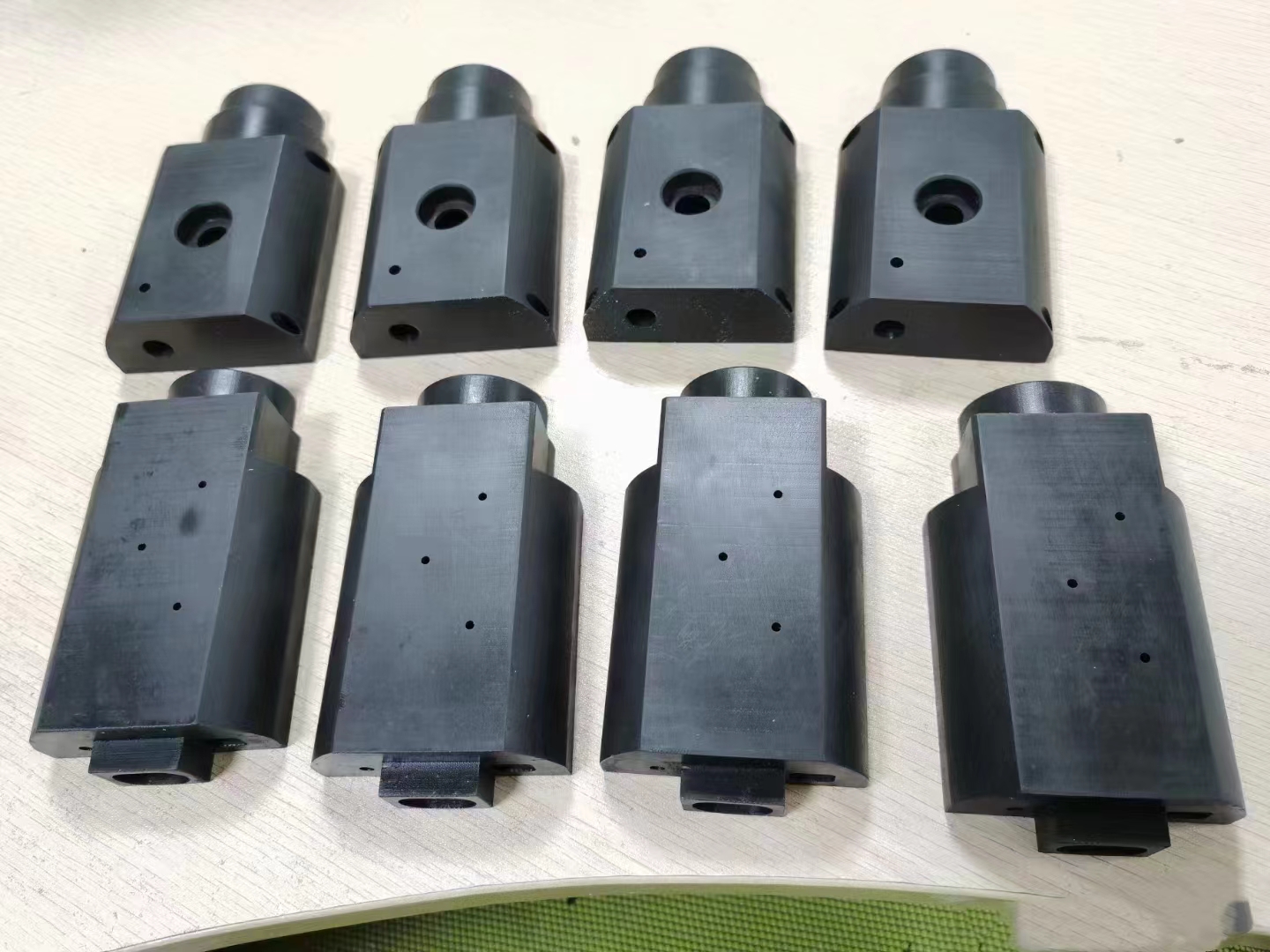
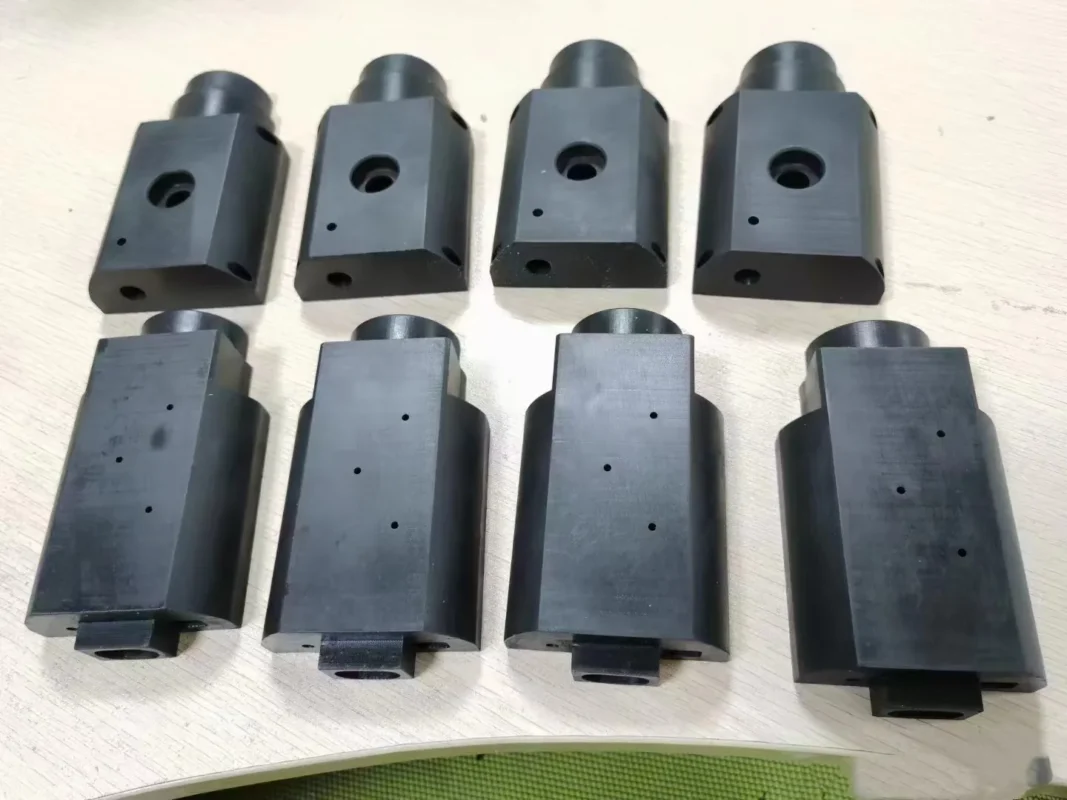
Image: Actual Jingrui Proto MJF PA12 mounting blocks. The image does not establish moisture conditioning, dimensional stability or environmental test performance.
When should buyers check PA12 prototype fit before and after moisture exposure?
Record a defined baseline fit check before exposure and repeat the agreed checks after representative moisture exposure when service conditions could affect the acceptance decision. A freshly delivered nylon sample, a sample stored in humid air and a sample exposed to liquid water are not automatically equivalent references. Record the material grade, process, finishing, storage and measurement conditions before comparing results.
This guide helps buyers ordering MJF or SLS nylon housings, brackets and mating components. It addresses acceptance planning, not a universal conditioning recipe. A particular temperature, humidity, exposure time or drying cycle should come from the selected material documentation and the application-specific validation plan. Do not borrow an arbitrary treatment from a filament-printing discussion.
Jingrui Proto offers MJF and SLS prototyping. Its public MJF PA12 functional-housing case provides a real manufacturing reference, but it does not establish moisture-conditioned dimensions or environmental performance. Those requirements need explicit review and quotation for your part.
Why can moisture change the interpretation of a nylon fit check?
Polyamides can absorb moisture, and the resulting material condition can influence dimensions and mechanical behavior. The significance depends on formulation, geometry, exposure and the function being evaluated. “Low moisture absorption” is a relative material characteristic, not a statement that a nylon part remains unchanged in every environment.
For a locating bracket, dimensional movement may affect a pin interface. For a flexible latch, a change in stiffness may alter assembly behavior even when a basic dimension remains acceptable. A satisfactory caliper reading therefore cannot answer every question about a moisture-exposed assembly.
Distinguish the material effect from unrelated causes. Print orientation, cooling, finishing, clamping and measurement technique can also influence observed fit. If supplier and buyer measurements differ, first compare their methods and material conditions. Do not immediately conclude that shipping moisture caused the difference without evidence.
HP’s materials portfolio separates material grades and application characteristics. Its published information is a starting point for selecting the exact documentation, not a guarantee for a different grade or part geometry. Request the proposed grade and relevant data sheet with the quotation.
How do PA12 powder handling and finished-part moisture conditioning differ?
PA12 powder handling concerns feedstock and manufacturing control, while finished-part moisture conditioning defines the state in which the printed component is measured or evaluated. Evidence about one does not automatically establish the other. Buyers should avoid treating instructions for wet filament, powder storage or printer operation as a validated finished-part test.
A quotation should identify the actual production material and delivered state. If post-processing introduces liquids or heat, ask whether it affects the condition at inspection. Also clarify when measurements are taken relative to cleaning, dyeing, smoothing or any other agreed operation. A report without that context can be difficult to compare with incoming inspection.
The buyer does not need to prescribe the supplier’s entire process to obtain useful acceptance evidence. Instead, specify the required end condition and ask the supplier to explain the route and limitations. Where a controlled conditioning step is genuinely necessary, agree who performs it, what record is supplied and what happens if the part falls outside acceptance.
Do not improvise oven drying or boiling as a corrective action for an unexpected fit. An unsuitable treatment can change the part or invalidate earlier evidence. Preserve the received condition, document the discrepancy and request an agreed investigation before altering the reference sample.
Which environmental conditions should a PA12 RFQ distinguish?
Separate ordinary indoor storage, humid-air exposure, intermittent wetting, immersion and elevated-temperature use because they describe different conditions. A part intended for a dry equipment enclosure should not be qualified with the same assumptions as one washed repeatedly or held near warm fluid.
Intended condition
Information the buyer should provide
Question for qualification
Indoor assembly
Expected storage and assembly environment
Is the received condition representative?
Variable humidity
Range and duration relevant to the product
Does fit remain acceptable after exposure?
Cleaning or splash
Liquid, contact duration and cleaning procedure
Are material, finish and geometry suitable?
Sustained immersion
Fluid, temperature and exposure duration
What separate validation is required?
Warm loaded assembly
Temperature, load, support and humidity
Which effects need combined evaluation?
This table identifies questions rather than claiming compatibility. Water, cleaning agents and other liquids cannot be treated as equivalent. State the actual chemical and use condition when known. If exposure is uncertain, record that uncertainty and ask for a validation proposal instead of selecting a material from a broad label such as “chemical resistant.”
For an illustrative sensor bracket, the engineering team might prioritize the clearance around a locating pin after humid storage. A decorative cover may instead prioritize appearance and seating against its frame. These hypothetical examples show why the exposure plan should follow function; they are not reported Jingrui Proto test results.
Which PA12 mating dimensions should buyers check after moisture exposure?
Prioritize PA12 features that control location, clearance, motion or sealing, and recheck them against the same mating geometry in an agreed support and moisture condition. Applying equally tight tolerances to the entire model rarely explains which environmental changes matter. A functional drawing should connect each selected feature to its counterpart.
Identify the mating material as well. A nylon housing paired with a metal frame presents a different stack of influences from two nylon parts. Include the frame or its controlled drawing where it is needed for interpretation. The supplier cannot determine a required clearance solely from the nylon component’s nominal dimensions.
Define how the part is located during measurement. A thin cover can appear to change shape when the support or fastener condition changes. Comparing one free-state measurement with another clamped measurement confounds the environmental comparison. Use the same datum references, support and measurement sequence where practicable.
Record both dimensions and the functional observation. A defined assembly check can capture interference or an unintended load path that individual dimensions overlook. Conversely, a part that can be forced into place has not necessarily passed its specified clearances. Use the MJF mating-part tolerance guide to prepare the interface requirements.
How can buyers design a useful PA12 conditioning comparison?
Use an agreed baseline, a defined exposure and a repeatable recheck, with enough records to distinguish the specimens and conditions. The appropriate sample count and acceptance limits must follow product risk and the purpose of the trial. This article does not supply an invented statistical plan or claim that a single specimen validates production.
Start by identifying the sample revision, material, process and finishing. Record the initial environment and the timing of baseline checks. Define the exposure medium or atmosphere, duration, temperature, loading and support. Specify when the recheck takes place after exposure so handling delays do not become an uncontrolled difference.
Do not change multiple unrelated variables while attributing the result to moisture alone. If a conditioned sample also uses a different finish, build orientation or drawing revision, document those differences. A development trial may intentionally compare several routes, but the report should identify what can and cannot be concluded.
Agree how specimens will be retained and labelled. Keep raw observations, not only a final pass/fail sentence. Photographs, measured features and assembly notes should reference the same sample identifiers. If the outcome is inconclusive, record that honestly rather than converting a visually acceptable result into a material qualification claim.
Can coatings or smoothing eliminate moisture-related risk in PA12 parts?
No; coating or smoothing PA12 does not by itself establish moisture-proof behavior or stable fit under the intended exposure, so the finished system still needs appropriate validation. Its effectiveness depends on coverage, material compatibility, geometry, wear and the actual environment. Validate the finished system when that system is the intended deliverable.
Edges, holes, interfaces and later machining deserve attention because their surface condition may differ from the exterior. A good-looking coated face does not establish complete coverage inside a passage or around a fastener. Identify masked and uncoated regions in the quotation and include them in the environmental review.
Finishing can also change dimensions directly. If a surface is smoothed, coated or machined after the baseline check, that baseline may no longer describe the final component. Define the sequence and choose the approval stage accordingly. For hybrid parts, the existing MJF and CNC finishing guide covers a separate machining-access decision.
Ask whether the proposed treatment is necessary for your function rather than adding it automatically. An extra process can introduce cost, handling and new acceptance requirements. A simpler part with an appropriate clearance and an agreed storage condition may be more practical, provided engineering confirms it meets the actual need.
What PA12 condition and handling records are needed for shipment and incoming inspection?
Record the PA12 grade, delivered moisture condition, relevant storage and packaging assumptions, and the incoming measurement method needed to compare results with approval evidence. This is an agreement about evidence and handling, not a claim that every shipment needs a particular sealed bag or moisture indicator.
If special packaging is required, specify it before ordering and confirm feasibility. Packaging can help control exposure during transport but does not establish long-term service suitability. State how the parts will be stored after arrival and how long they may wait before assembly or testing.
Incoming inspection should preserve traceability to the supplier’s sample and report. Compare the same features using compatible methods. If a discrepancy appears, retain the packaging and record observed conditions before reworking, washing or heating the part. Those actions can obscure the original state and complicate a useful investigation.
For repeat orders, identify which material, finish and approval conditions should remain consistent and which changes require review. This does not require identical build positions for every order. It requires a clear relationship between the approved evidence and the manufacturing route being repeated.
Which PA12 moisture-conditioning assumptions should buyers verify before accepting parts?
Confirm the grade and printing route, exposure and measurement state, mating geometry and evidence scope before accepting PA12 fit claims. Application limits still require the actual grade documentation and an appropriate validation plan.
Is PA12 immune to water because absorption is relatively low?
No. A relative absorption characteristic does not establish zero uptake, leak tightness or unlimited immersion suitability. Evaluate the requirement that matters to the product.
Can SLS and MJF parts share one conditioning result?
Not automatically. Material formulation, processing and finishing can differ. Confirm whether the evidence actually represents the proposed route rather than transferring it solely because both parts are called PA12.
Is an as-received PA12 dimension enough to approve fit after moisture exposure?
An as-received PA12 dimension is not enough to establish fit after a different moisture exposure. Use it as a documented baseline and agree the exposure, recheck condition and relevant mating features.
Can PA12 assembly fit be assessed without the mating geometry?
Fit cannot be assessed from an isolated PA12 drawing alone when clearance depends on an unspecified mating component. Provide a controlled counterpart model or drawing, or an agreed functional envelope.
Should every PA12 prototype be dried before testing?
No universal rule applies. The relevant state depends on the intended test and material documentation. An arbitrary dry state may be less representative than the actual service environment.
Does a development moisture-exposure trial qualify a PA12 production batch?
A development moisture-exposure trial does not automatically qualify a PA12 production batch. Define separately whether the evidence supports a route comparison, lot acceptance or long-term product qualification.
How can buyers request PA12 parts with meaningful fit evidence?
Send CAD, mating drawings, quantity, exposure conditions and the required acceptance checks through the RFQ and contact page. Ask Jingrui Proto to confirm the proposed material grade, printing route, finish, measurement condition and any separately scoped environmental work.
Jingrui Proto’s SLS service and material information can support the initial route discussion. No moisture trial or numerical property result is claimed in this guide; its purpose is to make the quotation and approval requirements explicit before parts are manufactured.
Which related guides help buyers approve functional nylon parts?
Use the PA12-versus-PA11 material guide, MJF orientation-approval guide and snap-fit procurement guide to separate material, build-route and joint-behavior decisions.
Which PA12 fit claims require part-specific environmental evidence?
A PA12 grade, finish and conditioning route need evidence tied to the actual interfaces and exposure; neither a stock material sheet nor a housing photograph qualifies the finished assembly.
For PA12 fit approval, record the selected grade, finish, moisture exposure, support state and counterpart revision before comparing the measurements.
This guide is published by Jingrui Proto for engineering and purchasing teams. It explains procurement decisions and limitations; it is not a customer case report, independent laboratory result or application certification.
Choose inspection for low-volume prototypes by critical features, lot definition, sample selection, measurement suitability and clear acceptance decisions.
Review SLM machining-stock deviations against datums, final interfaces and inspection evidence before approving CNC continuation, concessions or remakes.
Plan vacuum-cast pilot lots around assembly trials, destructive evaluations, usable samples and retained references with a practical purchasing checklist.
Prepare small full-color models with a scale-aware review of fragile details, texture versus geometry, support removal, bases, packing and sample approval.