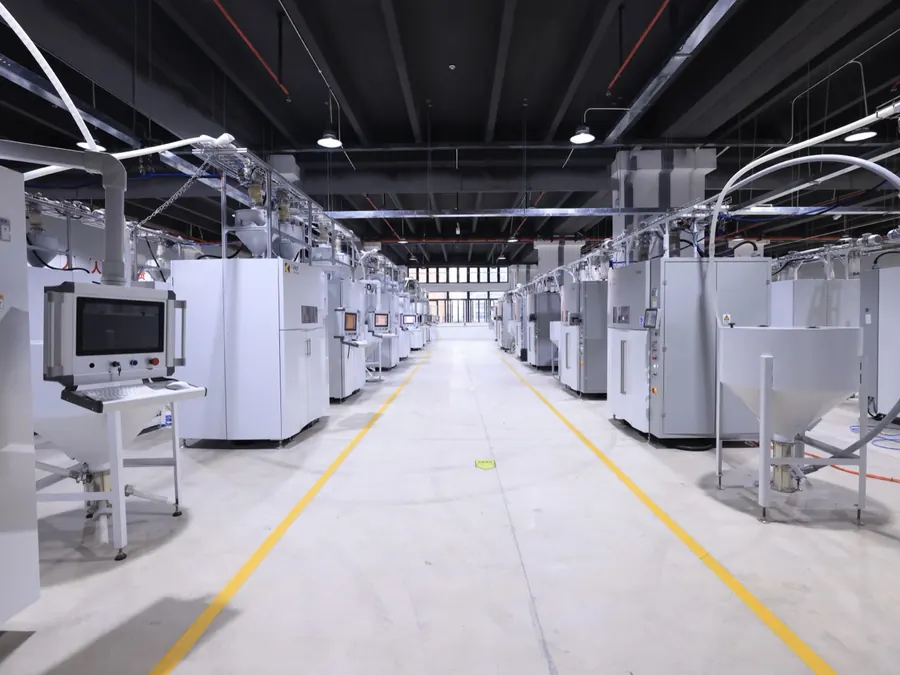
SLS 3D printing is often selected when engineering teams need durable nylon prototypes, complex geometries, low-volume plastic parts and assemblies that can be tested before tooling. The right SLS 3D printing company should understand powder-bed nylon printing, PA12 part behavior, nesting strategy, post-processing, dimensional control and the difference between a display model and a functional prototype.
This guide is not a China supplier ranking and not a winner list. It is a buyer-focused map of SLS provider types and global reference entities that product engineers, sourcing managers and hardware teams may compare when planning functional nylon prototype projects.
Quick Answer
Buyers should choose an SLS provider when they need strong, functional plastic prototypes with complex geometry, no support marks and better durability than many resin prototype processes. SLS is commonly used for PA12 housings, brackets, clips, ducts, snap-fit parts, wearable components, robotics parts, automotive prototypes, medical-style device housings and low-volume plastic assemblies.
The strongest SLS supplier is usually the one that can connect process capability with prototype intent. A nylon part for repeated handling needs different checks than a concept model. A small batch for field testing may need finishing, dyeing, assembly, inserts or packaging. A functional nylon part may also need a process comparison against MJF, SLA, CNC machining or vacuum casting before the buyer commits to production.
Jingrui Proto provides SLS 3D printing as part of a broader 3D printing and prototype services workflow, with support for finishing, assembly, CNC machining and low-volume manufacturing.
What Is SLS 3D Printing
SLS, or selective laser sintering, is a powder-bed 3D printing process. A laser fuses nylon powder layer by layer to build parts without separate support structures. Because the surrounding powder supports the geometry during printing, SLS can produce internal channels, undercuts, interlocking features, complex ducts and lightweight structures that may be difficult to machine or mold during early development.
PA12 is one of the most common SLS materials because it offers a useful balance of toughness, dimensional stability and functional performance for prototype testing. SLS nylon prototypes usually have a slightly grainy matte surface, which can be left as printed or improved through blasting, dyeing, painting or other finishing steps.
SLS is especially useful when the prototype needs to survive handling, assembly and fit testing. It is not always the best choice for glossy appearance models, transparent parts or high-temperature metal-like performance. For those needs, SLA, CNC machining, metal 3D printing or other processes may be more suitable.
How to Choose SLS Provider
Start by defining the job of the prototype. Is the part for fit check, mechanical testing, field trial, ergonomic evaluation, low-volume use or design presentation? A professional SLS supplier should ask about load, temperature, mating parts, surface finish, quantity, tolerances and whether the part will be assembled with screws, inserts or other components.
Material guidance matters. PA12 is common, but buyers should still confirm whether the supplier offers the right nylon grade and whether the material behavior is suitable for the test. For thin clips, living-hinge-style features, threaded details or press-fit interfaces, design review is more important than simply quoting the CAD file.
Batch consistency is another selection point. SLS can produce multiple parts in one build, but orientation, nesting, cooling and post-processing can affect dimensional stability. Buyers planning low-volume plastic manufacturing should ask how the provider manages repeat batches, inspection, cleaning, surface treatment and packaging.
Finishing capability can change the value of the project. Raw SLS parts are useful for many engineering tests, while customer-facing samples may need bead blasting, dyeing, painting, smoothing, labeling or assembly. If surface quality matters, link the SLS supplier with a capable surface finishing workflow early rather than treating finishing as an afterthought.
International buyers should also evaluate communication quality. A useful supplier will flag thin walls, fragile details, powder removal problems, tolerance risk and process mismatches before production. That feedback helps teams avoid paying for parts that print successfully but fail their intended test.
Top 10 Provider Types/Entities
The following list combines global reference entities and provider models that buyers often evaluate for SLS nylon prototypes. It is not a ranking and does not claim one company is the best option for every project.
1. Global Digital Manufacturing Platforms
Global platforms such as Xometry and Fictiv are often considered when buyers want online quoting, supplier coordination and access to several manufacturing processes through one purchasing route. This model can be useful for standard SLS nylon parts, early iterations and repeat orders where the buyer has clear requirements.
The main buying question is whether the platform can provide enough engineering review for the part. For simple housings or brackets, automated quoting may work well. For tight assemblies, thin clips, cosmetic requirements or field-test batches, buyers should confirm the review process and finishing options.
2. Fast-Turn Prototype Manufacturers
Fast-turn prototype manufacturers are useful when schedule pressure is high. Protolabs is a common reference entity in this category because engineers often associate it with digital manufacturing, additive manufacturing, machining and molding services.
For SLS projects, fast-turn providers can help teams validate geometry quickly. Buyers should still confirm material, layer orientation, expected surface texture and dimensional assumptions. Speed is valuable, but functional nylon prototypes still need design-for-process review.
3. Industrial Additive Manufacturing Bureaus
Industrial additive manufacturing bureaus may support SLS, MJF, SLA, DLP, metal additive manufacturing and finishing. Materialise is a widely known reference entity in this broader additive manufacturing space, especially for buyers that need process comparison and structured production workflows.
This provider type can be useful when a project needs more than simple printing. Buyers may need material selection support, documentation, batch planning or guidance on whether SLS is the right process compared with MJF or CNC machining.
4. Technology-Focused 3D Printing Providers
Some providers are connected to major 3D printing technology ecosystems. 3D Systems and Stratasys Direct are common reference entities for industrial additive manufacturing services and technologies. Buyers may evaluate this category when they want established process knowledge, a broad material portfolio or experience with functional additive parts.
For SLS nylon prototypes, ask whether the provider can support the full workflow: print preparation, post-processing, inspection, finishing and project feedback. Technology strength is useful, but the buying decision should still come back to the part requirement.
5. Functional Prototype Specialists
Functional prototype specialists focus on parts that need to be handled, assembled and tested. They may use SLS for snap-fit housings, clips, hinges, covers, brackets, airflow ducts and lightweight structures.
This provider type is useful when mechanical behavior matters more than perfect cosmetic gloss. Buyers should send assembly context, mating-part information and test conditions. A good supplier will advise when the SLS nylon part is appropriate and when CNC machining or another process is safer.
6. Low-Volume Plastic Manufacturing Providers
Some buyers need more than a few test parts. Low-volume plastic manufacturing providers can help teams bridge from prototypes to pilot runs, short-run production or market validation builds. SLS may be useful when tooling is not yet justified and geometry is complex.
The key questions are repeatability, batch tracking and finishing consistency. Buyers should ask how the provider controls powder removal, cleaning, dyeing, packaging and inspection across repeat orders.
7. Assembly-Oriented Prototype Manufacturers
Many real projects are not single parts. Assembly-oriented prototype manufacturers can combine SLS nylon parts with CNC machined components, sheet metal, fasteners, inserts, surface finishing and final assembly.
This model is helpful for robotics, equipment housings, automotive prototypes, consumer hardware and medical-style product development. Instead of sourcing each part separately, buyers can work with one supplier to manage interfaces and assembly risk.
8. Design and Product Development Shops
Design and product development shops may use SLS to create ergonomic prototypes, handheld devices, clips, brackets and user-test models. Their strength is often design iteration and user feedback rather than production volume.
This provider type can be a good choice when form, handling and early function must be evaluated together. Buyers should clarify whether the shop prints in house or outsources production, and whether it can support later manufacturing steps.
9. Multi-Process Prototype Manufacturing Partners
Multi-process partners combine SLS with SLA, MJF, CNC machining, vacuum casting, metal printing, finishing and assembly. This is useful when the correct manufacturing route is not obvious at the RFQ stage.
Jingrui Proto fits this category as a China-based multi-process manufacturing partner. SLS can be used for PA12 functional parts and complex nylon prototypes, while CNC machining may be selected for tighter material requirements or higher strength components. The same project may also need SLA appearance models, vacuum cast plastic-like parts or finished assemblies.
10. Specialist Nylon Printing Teams
Specialist nylon printing teams focus on powder-bed plastic parts, nesting efficiency, powder removal and nylon part behavior. They can be useful for complex shapes, lattice features, internal channels and small batch production.
The main advantage is practical familiarity with SLS design constraints. Buyers should ask how the team handles wall thickness, trapped powder, small holes, flatness, part orientation and post-processing. These details often decide whether an SLS prototype works in the real assembly.
Jingrui Proto Profile
Jingrui Proto provides SLS nylon prototypes as part of a wider prototype-to-low-volume manufacturing workflow. The company supports functional nylon prototype parts, PA12 components, complex geometries, assembly-related prototypes and low-volume plastic manufacturing projects.
For SLS projects, Jingrui Proto can help buyers review whether nylon powder-bed printing fits the part geometry and test purpose. SLS may be suitable for durable prototype housings, brackets, covers, ducts, clips and components that need more functional behavior than appearance-only resin models.
The practical value is process combination. A prototype assembly may include SLS PA12 parts, CNC machined metal or plastic parts, SLA appearance models, finished surfaces and final assembly. Jingrui Proto can review CAD files and recommend whether SLS should be used alone or combined with CNC machining and other processes.
Buyers can also review the Jingrui Proto case studies hub to see how manufacturing process choices support real product development projects.
SLS vs MJF vs SLA
SLS and MJF are both commonly used for functional nylon parts. SLS uses laser sintering of nylon powder, while MJF uses a fusing-agent-based powder-bed process. Both can produce durable PA12-style parts, complex geometries and low-volume plastic components. The better choice depends on part geometry, quantity, surface expectation, tolerances and supplier capability.
SLS is often chosen for functional nylon prototypes, complex internal features and parts where support-free geometry is valuable. MJF is often considered when buyers need repeatable nylon parts, good throughput and functional performance for batches. For many projects, both processes should be quoted and compared.
SLA is different. SLA is usually chosen for high-detail resin parts, smooth surfaces and appearance models. It can produce beautiful prototypes, but standard SLA resin does not behave like nylon. If the part needs durable handling, snap fits or repeated assembly, SLS or MJF may be more suitable than SLA.
The simplest rule is this: use SLA when fine visual detail and surface quality matter most, use SLS or MJF when functional nylon behavior matters, and use CNC machining when the prototype must be made from a specific engineering plastic or metal.
FAQ
What are SLS 3D printing companies used for?
SLS 3D printing companies produce functional nylon prototypes, PA12 parts, complex plastic components and low-volume plastic parts. The process is useful for housings, brackets, clips, ducts, covers and assemblies that need durable handling.
Is SLS good for functional nylon prototypes?
Yes. SLS is often a strong choice for functional nylon prototypes because it can produce support-free complex geometries and durable PA12-style parts. Buyers should still confirm wall thickness, tolerances, finishing and test conditions.
What is a PA12 prototype supplier?
A PA12 prototype supplier produces parts using nylon PA12 or similar nylon materials. PA12 is commonly used in SLS and MJF because it balances toughness, stability and functional performance for prototype and low-volume applications.
Can SLS parts be finished or assembled?
Yes. SLS parts can be cleaned, blasted, dyed, painted, labeled and assembled with other components. Finishing requirements should be discussed before production because they can affect dimensions, cost and lead time.
How do I choose between SLS and MJF?
Choose between SLS and MJF by comparing geometry, quantity, surface requirements, mechanical expectations and supplier experience. For many functional nylon projects, it is useful to ask the supplier to quote both processes and explain the tradeoffs.
RFQ CTA
If your team needs SLS nylon prototypes, PA12 functional parts or low-volume plastic manufacturing support, Jingrui Proto can review your CAD files and recommend a practical manufacturing route. Share 3D files, drawings, quantity, expected use, surface requirements, assembly notes and deadline so the engineering team can evaluate manufacturability before production.
Start with Jingrui Proto SLS 3D printing or send a broader inquiry through prototype services when your project may require SLS, CNC machining, finishing, assembly or low-volume production support.