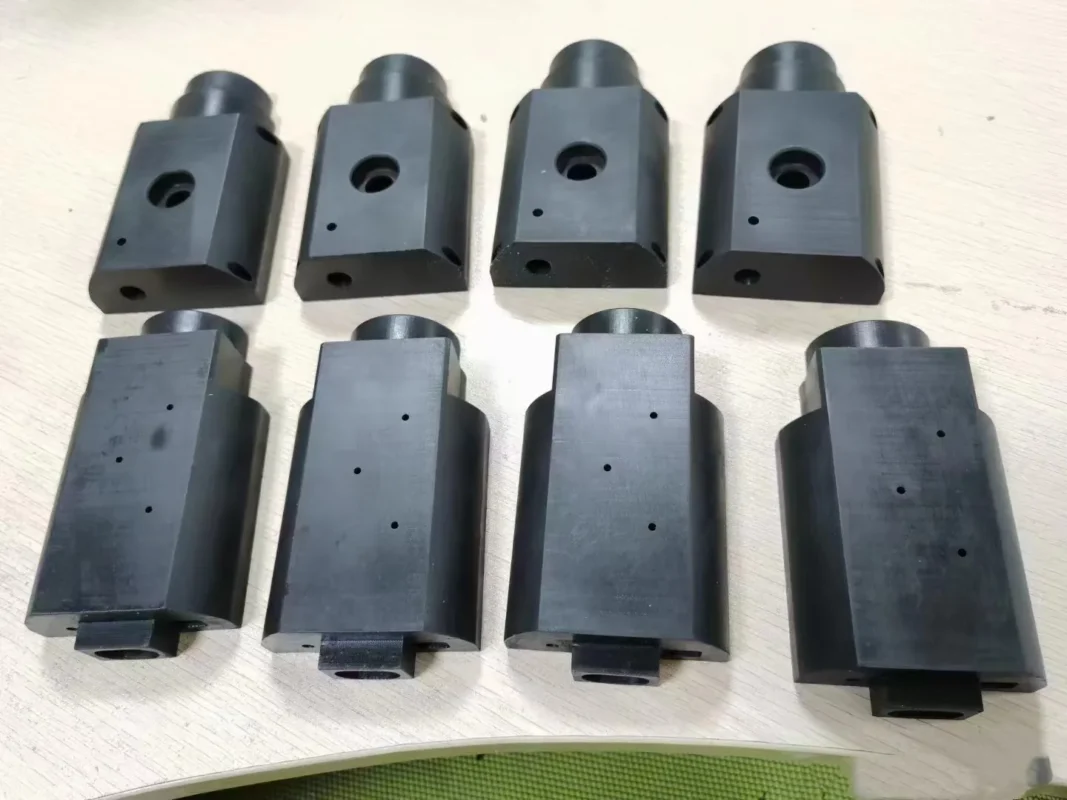
Image: Actual Jingrui Proto nylon equipment housing. Its photograph does not establish build orientation, dimensional accuracy or batch consistency.
Quick Answer
Approve an MJF PA12 sample against the manufacturing conditions that matter to the product, not only its CAD shape. Identify cosmetic faces, critical interfaces and intended loading, then ask how orientation, nesting, cooling and post-processing will be handled for the batch. A sample accepted in one delivered condition should not silently approve a different route or finish on later parts.
This is a procurement guide for teams moving from one or several samples to repeated nylon components. It focuses on controlling the relationship between sample approval and manufacturing decisions. It does not offer universal orientation angles, guaranteed tolerances or a claim that every part must occupy the same position in every build.
Explain what the sample must represent
An MJF sample may be used for geometric review, assembly, appearance or another defined evaluation. Those objectives can place different priorities on orientation and finishing. A sample selected because it looks good on a desk may not represent the interface that matters during installation.
Write down the decision before ordering. If the part locates a component, identify the relevant datums and counterpart. If it is a visible cover, mark its viewing faces and appearance reference. If it will flex or carry a load, describe the application and the evidence required rather than using a broad request for production quality.
Keep the approved CAD and physical sample linked to a revision. Record the supplied material and delivered finish as well. That does not require access to every proprietary machine setting; it requires enough definition to understand which features and conditions were actually accepted and what must be reviewed if they change.
Distinguish orientation from placement in the build
Orientation describes how the part is positioned relative to the build directions. Placement describes where it sits among the other parts and surrounding powder. The two decisions are connected but are not the same instruction. Asking to repeat the orientation does not automatically require an identical full build layout.
Nesting can change the space available around components and the arrangement of similar parts. A supplier may adjust the layout as quantities change. Ask which customer requirements constrain those decisions and what evidence will demonstrate an acceptable batch, instead of assuming the buyer must prescribe the complete packing arrangement.
HP’s public MJF design handbook portal treats design and process considerations as part of obtaining useful printed parts. Use manufacturer guidance to frame questions for the selected material and equipment configuration. Do not transfer an example’s limits or settings directly into a supplier commitment.
Mark cosmetic faces before discussing angles
Describe which surfaces people will see, touch or compare with other components. Marking an exterior face as important is more useful than demanding a particular angle without explaining the reason. The supplier can then discuss surface trade-offs and identify conflicts with other requirements.
The appearance of a delivered component also depends on cleaning, coloring and any additional surface treatment. An orientation review alone cannot establish the final visual result. If the acceptance sample is dyed or smoothed, record that condition so an unfinished batch is not compared against it as though the routes were identical.
Agree the reference and viewing conditions appropriate to the project. Phone images can document identity and obvious defects, but uncontrolled lighting makes subtle appearance comparisons difficult. Where texture or color matters to the purchasing decision, discuss a physical reference or another suitable approval method.
Relate critical features to their actual function
Identify the holes, pads, slots and mating regions that control assembly. A drawing full of equally tight dimensions can hide the few relationships that matter. Explain what the counterpart does and whether the requirement applies as printed, after finishing or after a secondary operation.
For a locating feature, size and location are different requirements. For a flexible cover, the supported or assembled state may matter to the check. The supplier needs these details when considering orientation and inspection. A general process accuracy statement cannot replace the feature-specific acceptance plan.
Published research on MJF geometry and dimensional accuracy examines results under defined experimental conditions. Such studies are useful technical context, not a universal performance promise for a different geometry or supplier. Request evidence appropriate to the actual part rather than copying a result from a test specimen.
Decide which conditions need control and which may vary
| Requirement |
Define for approval |
Question for the batch |
| Visible exterior |
Important faces and finish |
Does the proposed route preserve appearance? |
| Mating interface |
Datum, counterpart and state |
How will final fit be checked? |
| Flexible region |
Intended movement and test |
Does a change affect prior evidence? |
| Repeated copies |
Accepted variation |
Which items represent the batch? |
| Secondary machining |
Stock and locating plan |
Is the printed intermediate still suitable? |
Some requirements can be defined by the delivered result. Others may justify a manufacturing restriction or an agreed review before a process change. Discuss that distinction with the supplier. Locking an unnecessary detail can limit efficient nesting, while leaving an essential assumption undocumented can weaken sample approval.
Do not demand identical build position as a substitute for inspection. It may not be practical or sufficient. A useful agreement identifies the required result, relevant controlled conditions and the evidence used to release the batch. The precise balance depends on the product and risk being evaluated.
Keep cooling and release conditions visible
Powder-bed printing involves a thermal process and a subsequent cooling stage. The supplier should review the route for the geometry and material. Buyers should not invent a universal cooling duration or ask the workshop to accelerate release solely because the outside of the build appears ready.
Ask whether the proposed sample and production routes differ in a way that affects acceptance. If a change is necessary, identify the features requiring another review. The objective is a justified transition, not a blanket claim that one approved sample guarantees every future build.
For dimension-sensitive evaluation, agree when and in what condition the part is measured. Relevant environmental or conditioning assumptions should be stated where they matter. Do not compare reports taken under unrelated conditions without reviewing their significance, and do not invent a fixed stabilization interval for all PA12 parts.
Separate printed geometry from finishing and machining
Cleaning and surface treatment can alter the appearance or condition at interfaces. If the delivered part includes dyeing, smoothing or machining, identify the sequence and which stage the acceptance requirements describe. A pre-finish measurement does not necessarily establish the final delivered interface.
Where machining is proposed, keep the finished drawing and stock-added intermediate distinct. A different orientation or printing approach may require another review of locating surfaces and available material. This article does not replace the separate machining-stock and fixture review for a hybrid component.
Jingrui Proto offers MJF printing and in-house CNC machining. Ask for a project-specific proposal linking the printed route to any selected secondary work. These capabilities do not establish that every interface needs machining or that every nylon geometry can be held safely for it.
Make first-article release specific
Record the sample’s revision, material, finish and inspection condition. Identify the accepted features and any open limitations. An appearance approval should not silently become functional approval, and a fit approval should not automatically establish cosmetic uniformity across a collection of parts.
Agree which sample or subset will represent the next quantity. Where multiple builds or revisions are involved, explain how those populations are identified. A report or photograph without a clear connection to the delivered items can be difficult to use when an assembly discrepancy appears later.
The public MJF mounting-block case provides disclosed process context. It is not evidence that a new part will reproduce the same orientation, finish or dimensional behavior. Ask the supplier to demonstrate the requirements of your component rather than extending a different project’s photographs into a performance guarantee.
Review changes instead of treating them all alike
A new quantity, geometry revision or finish request can affect the manufacturing proposal. Moving a feature may change how it is oriented or inspected even if the overall envelope remains similar. Ask the supplier to identify which accepted assumptions are affected and whether another sample is appropriate.
Separate administrative file corrections from engineering changes. Renaming a file is not equivalent to thickening a wall or relocating a bore. Maintain a clear revision history and retain the approved functional requirements so that a manufacturing review is based on the actual difference.
For repeat procurement, discuss how a change in material, process route or secondary operation will be proposed. Do not assume a particular retention policy or internal approval system without confirmation. Put the required notification and buyer disposition into the order where they matter.
Compare production-like sample quotations fairly
Request the same material, delivered finish, important features and approval evidence from each supplier. A basic printed sample and a finished, inspected first article are different scopes. Compare the complete deliverables before interpreting a price difference as a manufacturing advantage.
Separate preparation, printing, finishing, hardware and additional inspection. If a supplier proposes an orientation review or sample iteration, identify what question it is intended to resolve. The value is the uncertainty removed from the buyer’s decision, not the number of documents or screenshots generated.
Jingrui Proto’s materials information can support an initial discussion, but the actual PA12 grade and project conditions need confirmation. A generic nylon label or photograph of a black part is not enough to establish the manufacturing route or behavior of a particular component.
MJF Sample-to-Batch RFQ Checklist
- State the purpose of the sample and intended batch quantity.
- Provide controlled CAD, drawing and mating information.
- Mark cosmetic faces and functionally important regions.
- Identify the material and delivered finishing requirements.
- Explain which conditions or changes require buyer review.
- Agree measurement state, inspection scope and sample identification.
- Separate any machining intermediate from the finished model.
- Define first-article release and unresolved acceptance questions.
- Request comparable scope for repeat orders and alternative routes.
Frequently Asked Questions
Should I prescribe the build angle in the RFQ?
Explain the requirement first. A specific angle may be justified for an approved route, but it should serve a functional or cosmetic objective. Ask the manufacturer to review conflicts with access, other features and the proposed batch arrangement.
Is nesting the same as orientation?
No. Orientation concerns the part’s build directions; nesting also concerns placement among other parts. A repeat orientation does not necessarily imply an identical full layout. Define the conditions relevant to acceptance rather than using the terms interchangeably.
Does one good sample prove batch consistency?
It provides evidence for the identified sample and accepted scope. Batch release still needs an agreed plan for quantities, revisions, finishing and checks. Do not extend the sample’s conclusion beyond what it actually demonstrated.
Can coloring hide a change in surface condition?
Appearance can change with finishing, but cosmetic similarity does not prove identical geometry or material behavior. Record the delivered route and inspect the features that matter, rather than relying on color alone.
Must every process change require a new sample?
Not necessarily. Review how the change affects accepted requirements and decide what evidence is needed. The buyer and supplier should agree that approach before relying on earlier results for an altered route.
What should accompany a reorder?
Provide the accepted revision, sample or appearance reference, material, finish and inspection requirements. Identify any changes explicitly and ask the supplier to flag manufacturing differences affecting prior approval.
Request a Batch-Readiness Review
Send Jingrui Proto the CAD, target quantity and marked cosmetic and functional features through the RFQ and contact page. Ask for the proposed delivered condition, sample approval scope and changes requiring review before the batch proceeds.
Author
Jingrui Proto manufacturing content team. No company-specific test results, universal print orientations or material-retention procedures are inferred from illustrative examples.
Related Posts